- Ministry spokesman says IMF aware of developments and Pakistan has not requested for delay
- Pakistan is expected to debate the mini-budget in parliament during the upcoming week
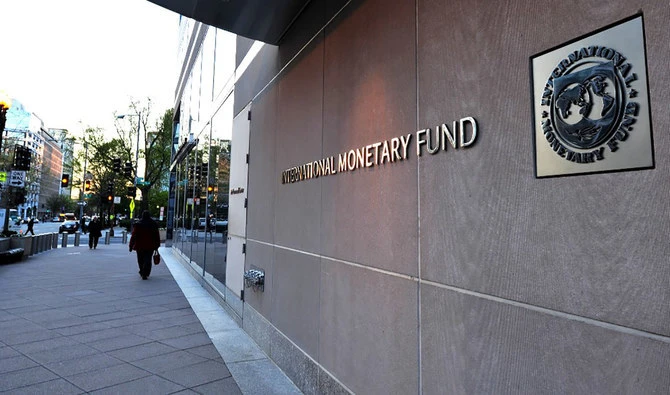
KARACHI: The International Monetary Fund (IMF) executive board will initiate the process for the 6th review of Pakistan loan program once prior actions, including legislative backing of supplementary finance bill also known as minibudget, are completed, a spokesman for the Pakistani finance ministry said on Sunday.
In late December 2021, the Pakistani government tabled the Finance (Supplementary) Bill 2021 and State Bank (Amendment) Bill 2021 in the National Assembly to meet one of the five conditions set by the IMF for the revival of $6 billion IMF loan program Pakistan secured in 2019, which has been stalled since March 2021.
The parliamentary backing of the bill would allow government to generate additional revenues of around Rs343 billion mainly through eliminating sales tax exemptions on nearly 150 items.
“Pakistan has tabled the bill in the National Assembly, which would be debated in the coming week, and the IMF is well aware of the developments,” Muzzamil Aslam, a spokesman for the finance ministry, told Arab News.
“As soon as the prior actions are passed by the assembly, the Fund will take up the review,” he said, clarifying, “Pakistan has not requested for a delay in the 6th review.”
Earlier this month, the finance ministry said the government had introduced both bills in the National Assembly and the IMF had moved the 6th tranche recommendation to its board for consideration on January 12.
As soon as prior actions were completed by Pakistan, which the government was pushing hard, the IMF board would consider them for approval. IMF board could move whenever these actions were completed, it said.
“If the prior actions are passed by the Assembly on January 13-14, then it will be taken up on January 16,” Aslam said. “I mean within two days of the prior actions’ completion, the IMF would take up the matter.”
He said January 12 was a tentative date and Pakistan’s name had not been added to the [IMF board’s] schedule so far.
Pakistan’s parliament is expected to debate the finance bill during the upcoming week.
In November 2021, Pakistani authorities and IMF staff had reached a staff-level agreement on policies and reforms needed to complete the 6th review under the $6 billion loan program.
The revival of the program would make available $1,059 million that would bring total disbursements to Pakistan to about $3,027 million and help unlock significant funding from bilateral and multilateral partners, according to the IMF.
The IMF has given a five-point action plan to Pakistan, including withdrawal of tax exemptions, passing of the State Bank (Amendment) Bill and increase in energy tariff.
Pakistani economists fear the passage of mini-budget would fuel the already increasing inflationary pressure on the country. However, finance minister Shaukat Tarin has repeatedly denied the notion, saying the measures are not inflationary in nature and only luxury items are being taxed.
Pakistan recorded an increase of 0.08 percent in weekly inflation during the week ending on January 06, mainly due to an increase in the prices of food and non-food items.
Monthly inflation rose to a 22-month high of 12.3 percent in December 2021, driven by higher food inflation, increase in energy tariffs, and rise in prices of petroleum products.
“In 2021, inflation averaged 9.5 percent slightly higher than the 9.4 percent inflation recorded in 2020. In the first half of the current fiscal year (1HFY22), inflationary pressures were more prominent as it increased to 9.8 percent versus 8.6 percent in same period last year,” a research report by Topline Securities said last week.
The report predicted an uptick in inflation going forward in the remaining half of the fiscal year due to “expected withdrawal of tax exemptions, increase in energy tariffs and higher petroleum levy.”
Pakistani parliamentarians are also concerned about the expected inflationary pressure.
“This is not governance, this is signing the lives and livelihoods of hardworking Pakistani people off to the IMF,” Sherry Rehman, parliamentary leader of the opposition Pakistan Peoples Party (PPP) in the Senate, said in a statement this week.
“There is a mini-budget every week; prices of all essential items such as flour, sugar, electricity, fuel and medicine have all skyrocketed during the tenure of the government and yet they claim that there is no inflation in the country,” she said.
“Gas alone has risen by a massive 300 percent, despite this, the supply of gas is abysmal throughout the country; people cannot cook food and industries can no longer function.”