- Pakistan began a phased lifting of its countrywide lockdown in May pushed primarily by fears of an economic meltdown
- Near-term economic outlook has worsened notably and growth is estimated at –0.4 percent in 2020, IMF says
ISLAMABAD: The International Monetary Fund has said this week it expects “gradual recovery” next year as the Pakistani economy reopens slowly after strict lockdown was imposed in March to contain the spread of the novel coronavirus.
Pakistan began a phased lifting of its countrywide lockdown as early as mid-April despite a rising rate of cases – a move pushed primarily by fears of an economic meltdown. The country has reported 243,599 COVID-19 cases and 5,058 deaths.
“The near-term economic outlook has worsened notably, and growth is estimated at –0.4 percent in FY 2020,” the IMF said in a report called “Policy Actions Taken by Countries” that reviews measures taken by Pakistan since March. “A gradual recovery is expected in FY 2021 as the economy reopens.”
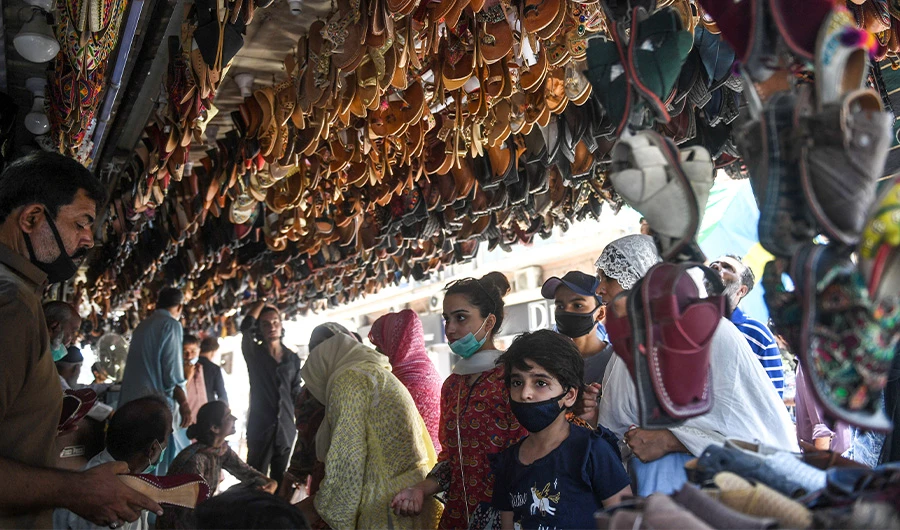
The report outlined how Pakistan’s government gradually started easing lockdown restrictions, allowing ‘low-risk industries’ to restart operation and ‘small retail shops’ to reopen with newly developed Standard Operating Procedures. In addition, restrictions on domestic and international movements — domestic flights, train services, and international flights — have also been eased. ‘Selective’ lockdown arrangements remain in place through the closure of shops on weekends and the sealing of specific areas of high risk.
Last month Pakistan announced its annual budget for financial year 2020-21, setting ambitious targets of 2.1% GDP growth, a 7% fiscal deficit and an increase in tax revenues, even as it reeled from a surge in coronavirus cases.
The GDP target is much higher than a recent World Bank projection that Pakistan will have another year of negative growth at -0.2%, while the fiscal deficit is much lower than the 9.4% it is expected to hit in the current year.
Headline inflation that hit a decade-high of 14.56% in January is estimated at an average rate 6.5% in the next year.
Economic analysts have termed the targets unrealistic, forecasting that the government will need to introduce a mid-year supplementary budget given the economic disruptions caused by the pandemic.