- IMF projects Pakistan’s current account deficit at 5.3 percent of GDP during the current fiscal year
- Global lender also projected the country’s inflation rate to remain on the higher side
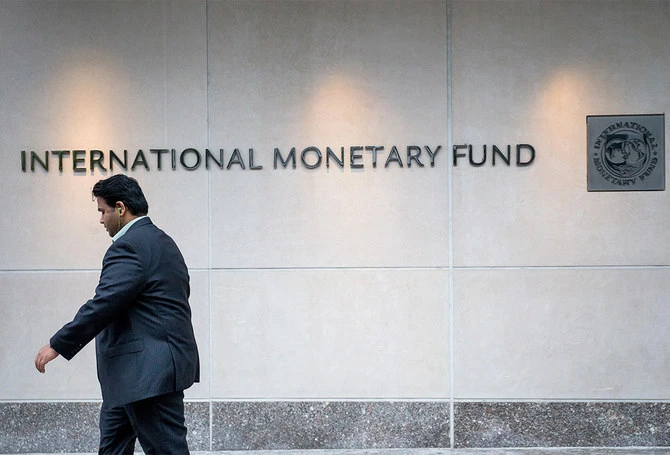
KARACHI: The International Monetary Fund (IMF) has predicted Pakistan’s economic growth to remain at 4 percent during the current fiscal year, lower than the 4.8 percent target set by the government, in the backdrop of a global economic slowdown.
The global lender in its World Economic Outlook (WEO) 2022 has projected that global growth will slow from an estimated 6.1 percent in 2021 to 3.6 percent in 2022 and 2023, largely due to the economic impact of the Russian invasion of Ukraine.
Pakistan’s growth forecast is in line with other global institutions including the World Bank which has projected a 4.3 percent growth, the Asian Development Bank has projected a 4 percent growth rate, while Moody’s has predicted that the South Asian country’s economic growth will range from 3-4 percent for the current fiscal year.
The fund estimates that the growth will increase to 4.2 percent in 2023.
Pakistan’s previous government had set a 4.8 percent growth target for the current fiscal year in the budget announced last year.
The IMF also projected the country’s inflation rate to remain on the higher side, estimating that it will remain at 11.2 percent during the current fiscal year before dropping to 10.5 percent in FY23 as compared to 8.9 percent of FY21.
The newly elected government of Pakistan, headed by Prime Minister Shehbaz Sharif, is also grappling with the fuel subsidy announced by the previous government through a relief package.
It is also trying to tackle the outgoing government’s decision to keep the prices of petroleum products unchanged till June 2022, a move many described as a “populist measure” taken to counter higher inflationary pressure.
The incumbent government decided on Friday to retain its predecessor’s fuel subsidies as a rollback would have proven to be a difficult move from a political point of view.
Pakistan’s top economic decision-making body, the Economic Coordination Committee (ECC) on Tuesday approved the supplementary grant of another Rs 68.74 billion that will be paid to the country’s oil marketing companies and refineries to cover the price differential claim (PDC) on fuel under the petroleum relief package.
“Due to the continuously rising trend of oil prices in the international market, the quantum of subsidy for the month of April 2022 has been higher than March 2022,” the Ministry of Finance said in a statement on Tuesday.
“Further, the previous government did not consider the PDCs for the first fortnight of April 2022. Substantially, the present government has to bear the burden of a higher quantum of subsidy as PDCs of the OMCs,” the statement added.
The country has imported 96 percent more petroleum products during the current fiscal year till March 2022. The imports of petroleum amounted to $14.8 billion as compared to $7.5 billion of the previous year.
Pakistan to witness a historic budget deficit by the end of the current fiscal year by hitting the Rs 5.6 trillion level, according to the newly appointed finance minister, Miftah Ismail, who vowed to do away with subsidies on fuel.
“We cannot let our fiscal and external financial position deteriorate further and have our development partners walk out. Tough choices need to be made,” he said in a tweet on Saturday.