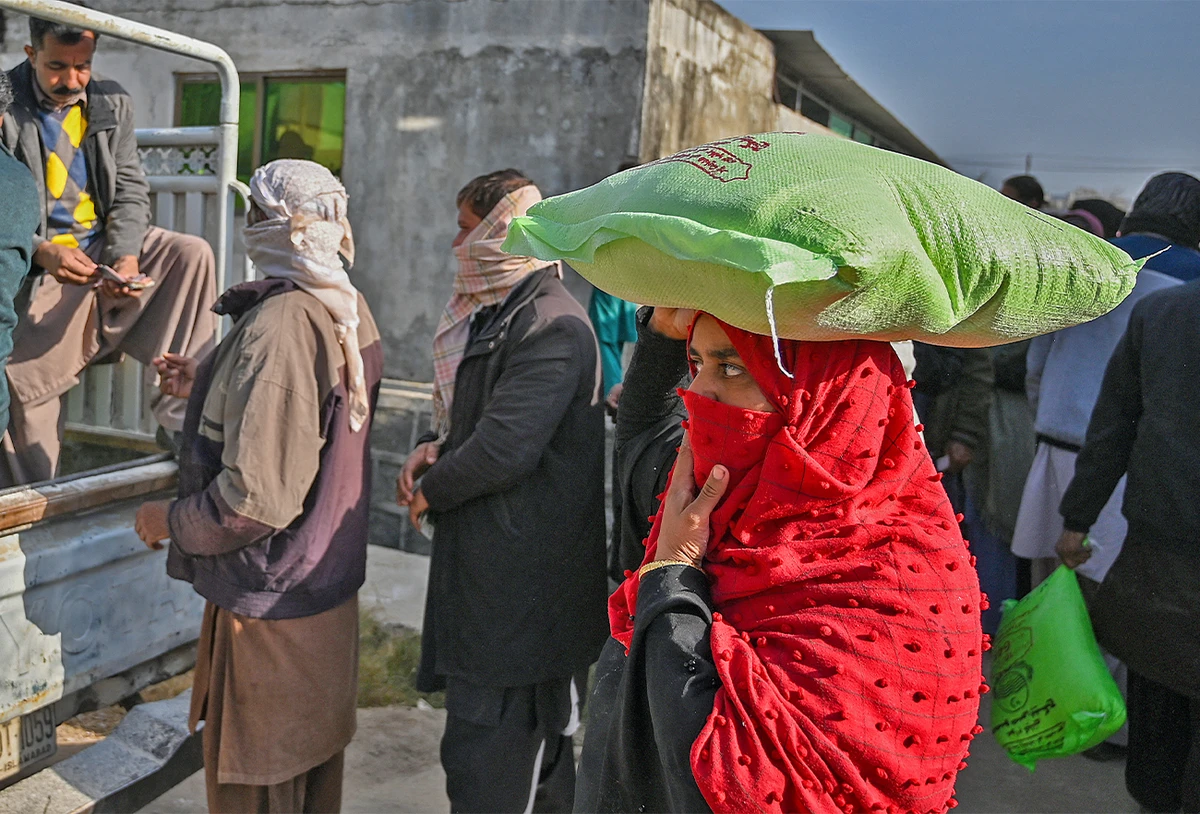
ISLAMABAD: High food prices and a heavy reliance on imports are threatening Pakistan’s food and nutrition security as the country reels from the effects of devastating floods that washed away large swathes of agricultural land last year, the World Food Program’s (WFP) floods situation report for Pakistan said on Thursday.
The South Asian country witnessed flash floods triggered by unusually heavy monsoon rains last summer that killed at least 1,700 people and affected 33 million, and incurred $30 billion in economic losses, according to government estimates. Reconstruction and rehabilitation efforts are still ongoing and far from over.
Worsening the impact is a full-blown economic crises in Pakistan, with inflation hitting multi-decade highs, the national currency plummeting to historic lows against the greenback, and foreign exchange reserves falling to critically low levels, barely enough to cover less than one month of imports.
To prevent the outflow of dollars from the country, the government has imposed bans on the import of all but essential items and raw materials, creating hurdles in production.
“High food prices and a heavy reliance on imports continue to threaten Pakistan’s food and nutrition security, the World Food Program said in its Pakistan Floods Situation Report put out on Thursday.
“Meanwhile, the 2022-2023 Rabi season1 [of crops sown after monsoon rains], combined with the unstable availability of wheat flour, has resulted in significant price fluctuations and uncertainty affecting other essential goods’ prices.”
According to the report, 14.6 million people required emergency food assistance in Pakistan, seven million children were in need of nutrition services, four million kids lacked access to health services and 5.5 million people no longer had access to safe drinking water.
Citing WFP’s monitoring data, the report said the floods had caused a 53 percent increase in new malnutrition cases across Pakistan from July 2022 to January 2023 among children enrolled in 50 pilot facilitation centers of the Benazir Nashonuma Programme, a national social protection scheme aimed at improved health and nutrition.
“Additional funding is urgently required to treat moderate and acute malnutrition (MAM),” the report said, “to prevent the progression to severe acute malnutrition.”