- Overseas investors chamber says net foreign direct investment fell to $1.7 billion in fiscal 2026
- Investors group urges regulatory relief, energy security, faster state-enterprise privatization
KARACHI: A chamber representing multinational companies in Pakistan told a visiting International Monetary Fund delegation this week that economic stabilization had yet to revive investment, citing a 32 percent fall in net foreign direct investment to $1.7 billion last fiscal year.
The IMF mission is visiting Pakistan to conduct the latest reviews of the country’s economic bailout and climate-resilience financing program. It is also carrying out an Article IV consultation, the Fund’s regular assessment of a member country’s economy, financial risks and government policies.
Pakistan is operating under a 37-month, $7 billion Extended Fund Facility approved in September 2024 and a separate $1.4 billion Resilience and Sustainability Facility intended to help the climate-vulnerable country withstand natural disasters and other long-term shocks. The IMF said in May that total disbursements under the two programs had reached approximately $4.8 billion. Successful reviews are required before further disbursements can be approved.
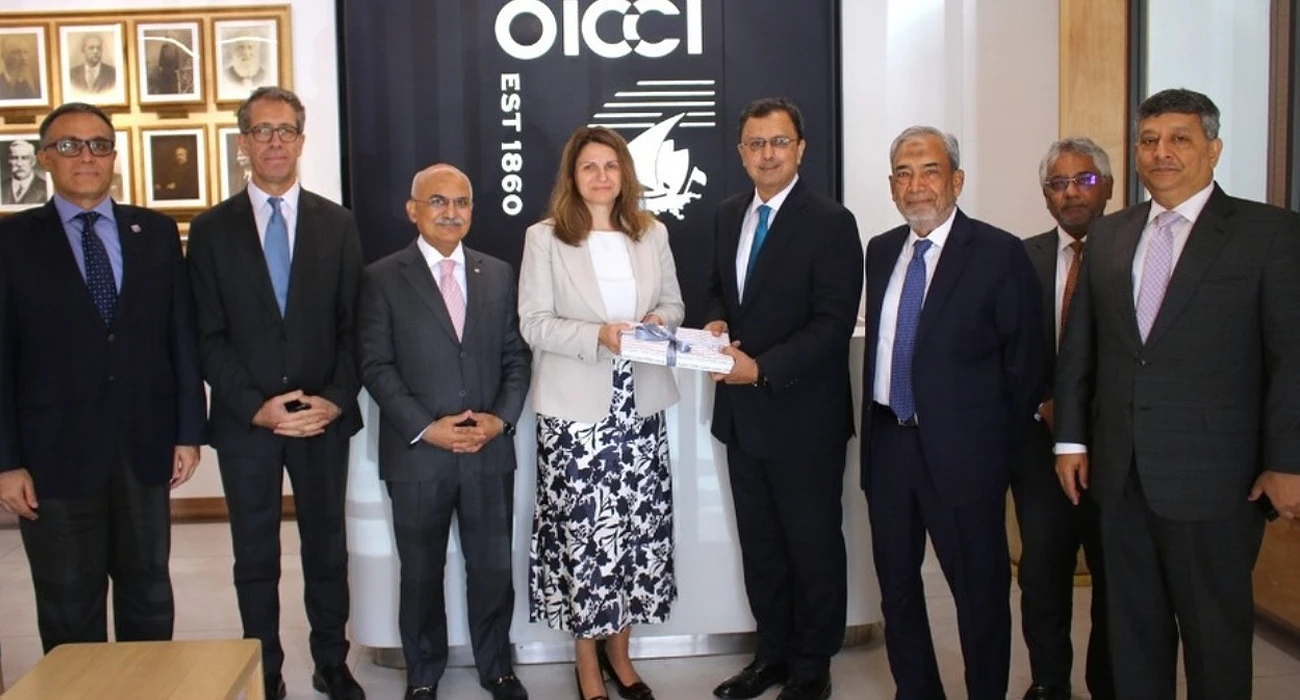
On Thursday, members of the visiting IMF delegation met leaders of the Overseas Investors Chamber of Commerce and Industry and representatives of multinational companies in Karachi to discuss investment, exports, energy security and structural reforms.
“The Chamber highlighted the decline in FDI despite improvements in Pakistan’s external position and sovereign credit profile, noting that net FDI fell by around 32 percent to $1.7 billion in FY26,” the OICCI said in a statement.
“OICCI called for lower regulatory and compliance burdens, stronger investor protection and clearer coordination among federal and provincial authorities.”
Pakistan’s fiscal year 2026 ended on June 30.
The country’s economy has stabilized since a balance-of-payments crisis brought it close to default in 2023. Foreign-exchange reserves have subsequently increased, inflation has eased from earlier peaks and international credit-rating agencies have upgraded Pakistan’s sovereign standing.
However, the OICCI said greater regulatory certainty and stronger investor protections were needed to translate those gains into private investment. It also urged Pakistani businesses to reinvest domestically, arguing that foreign companies took their cue from the confidence demonstrated by local investors.
The chamber said Pakistan would be unable to maintain faster economic growth without increasing exports and other sources of foreign exchange needed to pay for imports and service external debt.
“Pakistan cannot sustain higher growth without expanding its capacity to earn foreign exchange,” it said.
The OICCI called for more competitive and productive export industries, deeper trade and investment relations with major markets and greater regional commerce where commercially viable.
It also urged immediate energy-conservation measures and a medium-term plan to reduce Pakistan’s dependence on imported fuel as the US-Iran war and disruptions to regional shipping drive up global oil prices. Pakistan imports much of its petroleum, leaving its economy and foreign-exchange position particularly exposed to increases in international energy costs.
The chamber called for a single energy-security strategy covering electricity, natural gas and petroleum, including investment in oil refining and opportunities for regional energy cooperation.
Its other recommendations included accelerating the reform and privatization of loss-making state-owned companies and extending taxation to under-taxed areas such as agriculture, property, retail and small and medium-sized businesses instead of repeatedly increasing the burden on companies already operating within the formal economy.