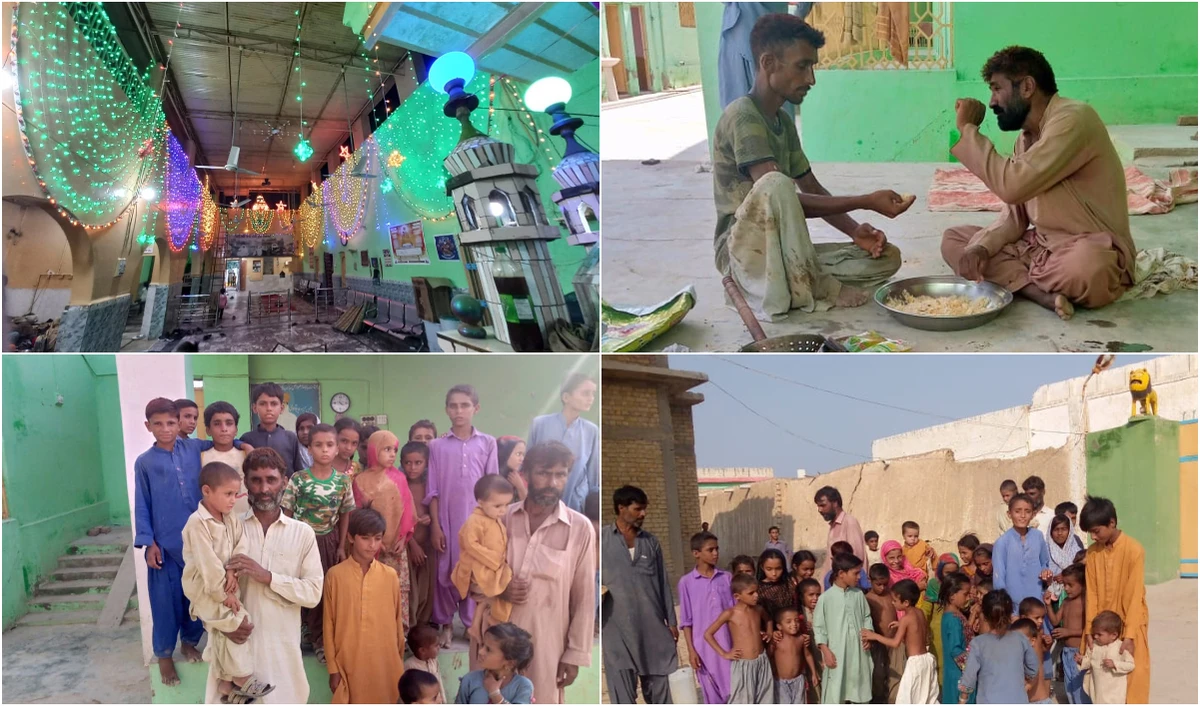
- Over 300 people arrived at Baba Madho Das temple in Balochistan's Jalal Khan village last month
- Other than two Hindu families at the village all sheltering at temple are Muslims, caretaker says
QUETTA: When authorities issued a flood alert for Jalal Khan in southwestern Pakistan last month, Muhammad Alam and over 300 other residents of the village knew they had to quickly reach safer ground.
Their only option: a 200-year-old Hindu temple, built from concrete, situated at a height and the only structure standing between the villagers and the deluge.

Jalal Khan is in Kachi district in Pakistan's Balochistan province, where almost 300 people have died since monsoon rains began in mid-June. The nationwide death toll from this season’s deadly monsoons is close to 1,500, with over 33 million people rendered homeless.
As Pakistanis around the country sit under the open sky while the government scrambles to arrange tents and other essentials, the residents of Jalal Khan have found shelter at the Baba Madho Das temple.
“Three days of torrential rains and flooding hounded our entire village [so] we started walking through water to reach a safe place,” Alam, 42, who left home on August 26 with 12 family members and livestock, told Arab News.
“The Baba Madho Das temple is situated at a height and built with concrete, hence we had no option but to take shelter inside.”

Nand Lal, 40, a caretaker at the temple, said the temple had around 100 rooms, of which 30 were damaged by rainfall, while the remaining 70 were now being used to provide shelter to flood affectees.
Almost all those who have arrived seeking help were Muslims, he said.
“Though there are only two Hindu families living in Jalal Khan village, but for the sake of humanity and interfaith harmony, we have been providing assistance to Muslim families for the last 20 days,” Lal told Arab News in a telephone interview.

Of around 300 people who initially came to the temple, half had left.
“Still, 150 people have been living inside the temple. We have been providing healthcare facilities and food without any government support,” Lal said.
Fayaz Jan, 31, who came to the temple on August 27 with five children and livestock, said he was thankful to the temple administration but lamented the lack of government support.
“Ironically, the district administration and provincial government are completely oblivious of our plight and didn’t provide us a single sack of flour,” Jan told Arab News. “But we are thankful to this Hindu temple, which has provided us shelter and given food to our children.”

The deputy commissioner of Kachi district, Mr. Imran Bangulzai, refuted complaints that the government did not send relief goods to Jalal Khan, adding that he had paid a visit to the village himself last month.
“Non-government organizations, the Pakistan Army and district administration have been jointly working in the flood-hit areas of district Kachi," Bangulzai told Arab News. "We have been distributing all necessary items among the people affected by rains and floods.”
The official praised the Hindu community for providing shelter to people and said it had set a "good precedent of interfaith harmony."