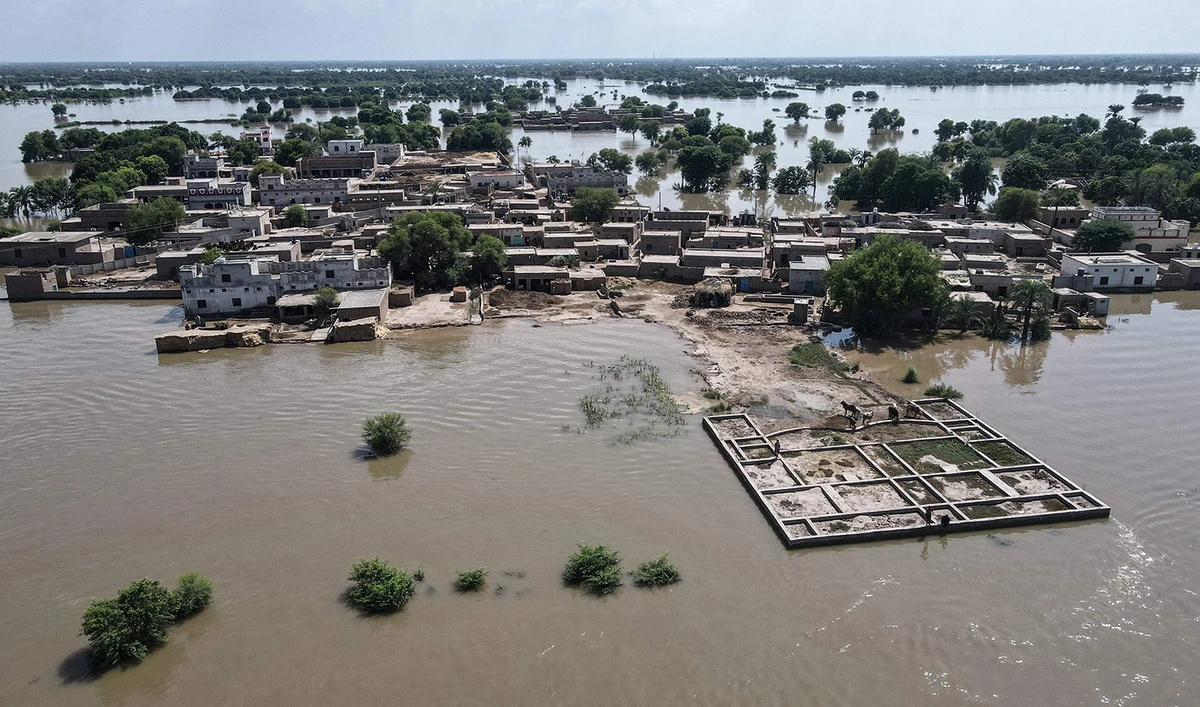
- South Asian cities account for all six of the highest-risk cities in assessment
- Study warns Pakistan has limited capacity to close urban climate adaptation gap
ISLAMABAD: Five Pakistani cities rank among the world’s 10 least resilient to climate risks, according to a study conducted this year, highlighting the vulnerability of the South Asian nation’s urban centers to extreme heat and other climate hazards.
The study by AlphaGeo, a climate intelligence and geospatial analytics company, assessed 72 major cities worldwide for their exposure to six physical climate hazards and their capacity to adapt.
It assigned each city a resilience-adjusted risk, or RAJ, score reflecting the level of climate risk remaining after existing adaptation measures, with a higher score indicating greater residual risk.
“The 6 highest-risk major cities globally are all in South Asia: Ahmedabad (41), Hyderabad Pakistan (41), Multan (38), Dhaka (36), Kolkata (35), and Lahore (35), driven largely by heat exposure,” the study said.
“These cities have adaptation rates that remain relatively low given the scale of physical risk.”
AlphaGeo’s Climate Risk & Resilience Index, or CRRI, measures physical exposure to inland and coastal flooding, heat stress, drought, wildfires and hurricane winds, and then accounts for a city’s capacity to adapt to those hazards.
The findings showed a particularly pronounced concentration of climate vulnerability in South Asia, which accounted for all six of the highest-risk cities in the assessment.
At the other end of the ranking, Chicago was rated the most resilient major city in the assessment, while Addis Ababa, Melbourne, Barcelona, Buenos Aires, Paris and Nairobi were also among cities with relatively low residual climate risks.
The study warned that countries whose major cities retain high climate risks without sufficient improvements in adaptation could face growing costs from disaster response, infrastructure repairs and population displacement.
“Bangladesh and Pakistan warrant particular attention given the combination of high urban RAJ scores and limited capacity to close the adaptation gap at the pace the physical risk profile demands,” it said.