- Healthcare professionals say waterborne diseases, neonatal and pregnancy complications on the rise in flood-hit areas
- People displaced floods in the country's south and southwest urge the government to help rebuild their homes
LARKANA/USTA MUHAMMAD: Faiz Ali brought his eight-year-old son for a skin disease treatment to a hospital from a nearby relief camp in the southern Pakistani district of Larkana. The 35-year-old father of six had his everything destroyed by recent floods in the Sindh province and didn't know how he would feed his family upon return to his village.
Unprecedented rains and glacier melt in the north triggered massive floods in the Pakistan that have killed around 1,400 people and affected 35 million since mid-June, besides washing away homes, infrastructure, livestock and crops. The Pakistani government has estimated the flood-related damages at around $30 billion.

In a trip arranged for media by the federal government, Arab News visited flood-affected areas and relief camps in the most affected southern Sindh and southwestern Balochistan provinces, where several villages and towns have sunk under the water.
For several kilometers during the aerial visit, the only visible thing on the ground were treetops, while at some places where the water level was slightly lower, rooftops popped out of the floodwaters.
Ali, whose son caught the skin disease at the relief camp for affectees, said his small, multipurpose shop at the village was the only source of livelihood for his family.
“Everything is destroyed, swept away by the floodwater,” he told Arab News at Larkana Civil Hospital on Saturday.
“We are worried about the coming days. What will we do to rebuild our homes and restart our business?”

The Larkana district this year received the highest rainfall in Sindh at around 750mm, according to officials.
While the provincial government is trying to provide relief to affected people, the destruction caused by monsoon downpours and subsequent deluges is huge and it will take months to drain floodwater from villages and towns.
Aslam Kalhoro, a 45-year-old resident of another village in Larkana, said he had never witnessed such rains throughout his life.
“We have lost everything. Our houses, goods, earnings and livestock. I am 45-year-old and I have never seen this much rain,” he told Arab News.
“I have five children and don’t know how I will feed them once we go back to our village as everything is destroyed.”
Murad Ali Shah, the chief minister of Sindh, told Arab News his government was fully cognizant of the difficulties faced by the affectees.
“We are doing our best to provide relief to the flood-affected people, but this catastrophe needs time and consistent support,” he said.
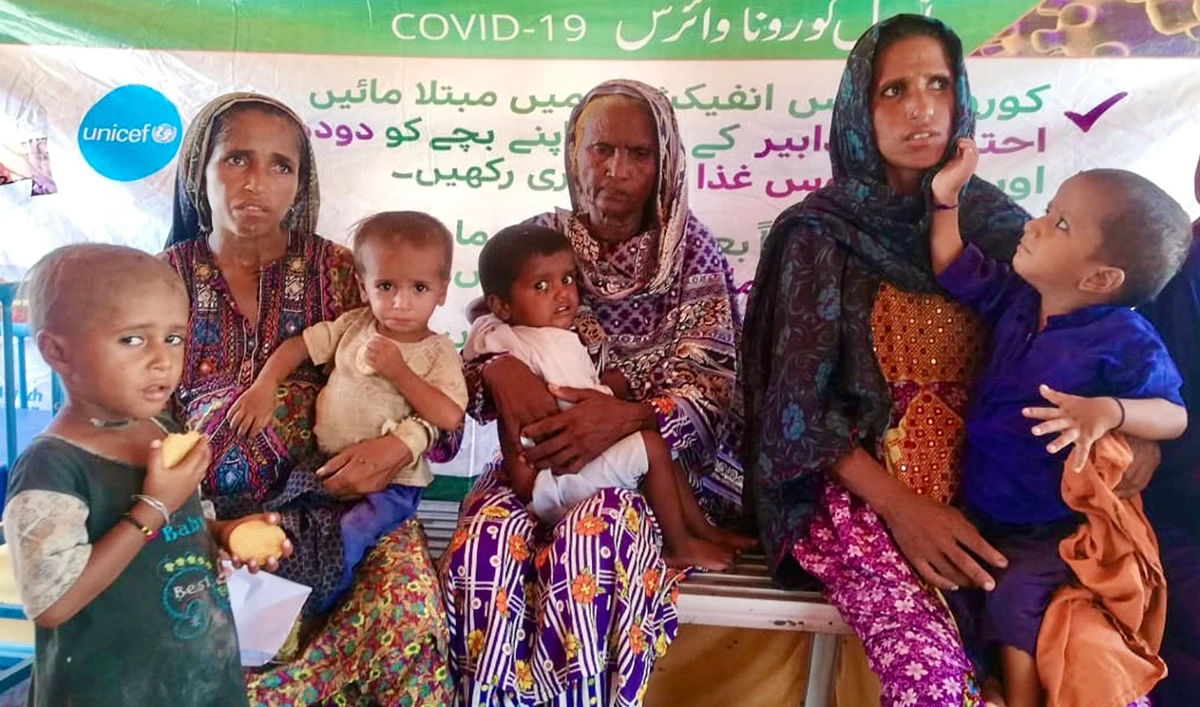
Apart from hunger and homelessness, flood survivors are now under threat from waterborne diseases, including dengue, malaria and diarrhoea.
To deal with these diseases, Shah said, the government had provided all available medicine stocks to field hospitals and makeshift health facilities.

Arab News also visited a shelter camp in the Jafarabad district of Balochistan, where Pooran, a 32-year-old laborer who only gave his first name, wanted to go back to his home, but was worried about his future.
“How will we start from scratch? I am very poor and my appeal to the government is to help us settle down by rebuilding our homes,” said Pooran, who was staying at the camp with his wife and four children.
“My wife, Sohni, gave birth to a baby boy in the tent hospital, but I am worried about her health as we are unable to provide her good food.”
Uzma Shaheen, a nurse at a temporary hospital in Jafarabad, said skin diseases, diarrhea and pregnancy complications were on the rise after the floods. “We are trying our best but lack resources to deal with medical emergency of so many people, including children,” she told Arab News.
Parveen Bibi, 28, who was staying at the same camp, said it was hard for them to live among strangers in the tent village.
“I want to go back home and my only request to the government is they should help us rebuild our home which was completely destroyed by floodwater,” she told Arab News.
Julien Harneis, a United Nations (UN) resident and humanitarian coordinator in Pakistan, said all UN agencies were working in collaboration with the federal and provincial authorities in Pakistan to provide relief to and prevent waterborne diseases and malnutrition among the flood-affected people.
“The priority is to prevent waterborne diseases and acute malnutrition,” he told Arab News.
Harneis said there were people who did not have access to hygienic food and caught a lot of diseases, which make children very much vulnerable.
“We need to get clean water, provide good food and make essential health services available to these people,” he added.
The UN is currently working with the National Disaster Management Authority (NDMA) as well as provincial and local administration to complete a rapid assessment of needs in flood-battered areas.
“We have already done one rapid assessment in Balochistan and Sindh, but those need to be reevaluated as more water came after that,” Harneis said. "But we are hopeful of completing the full assessment in the next few days."