- Pakistan’s national currency has gained about five percent value against the greenback since January this year
- Analysts say the rupee has a ‘depreciation bias’ in the long term, though it will continue to strengthen for the foreseeable future
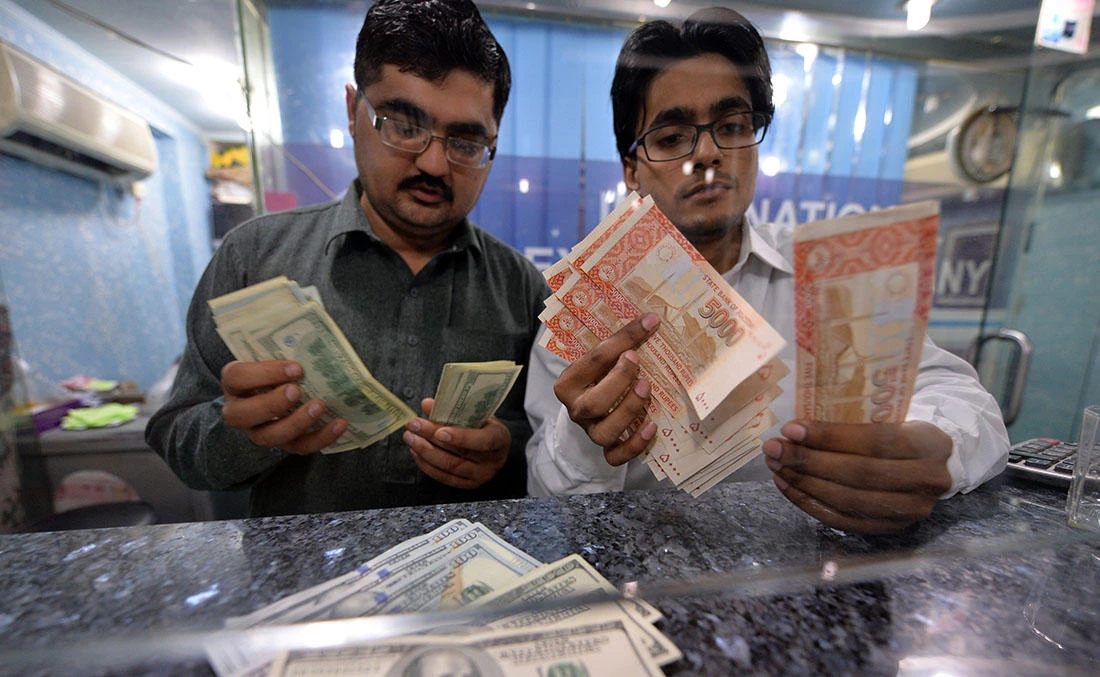
KARACHI: Pakistan’s national currency, which recently hit a 22-month high against the US dollar, remained “the world’s best performing currency” despite receiving some trade shocks toward the end of the week, said currency traders and financial analysts on Friday.
Backed by strong remittance inflows, resumption of a stalled International Monetary Fund (IMF) program and sale of Eurobonds, the rupee gained its value by about five percent since the beginning of the year before closing at Rs152.74 against the greenback in interbank market.
“In the last three months, Pakistan’s national currency has been continuously appreciating which has made it the world’s best performing currency,” Samiullah Tariq, head of research at the Pakistan-Kuwait Investment (PKI), told Arab News. “The trend is expected to continue at least for the foreseeable future.”
According to forex traders, the currency lost its value by 0.5 percent in the last two trading sessions.
“The demand for US dollar has increased due to some import activity ahead of the Muslim fasting month of Ramadan and Eid,” Malik Bostan, chairman of the Exchange Companies Association of Pakistan, said while talking to Arab News. “This has obviously increased the rate of the American currency in the last couple of days.”
“The importers were earlier adhering to the policy of wait and see before they entered the market to purchase US dollars,” he said. “Otherwise, we were expecting to witness the rupee at 150 against the dollar in the open market that closely follows the interbank rates.”
Bostan informed that about $10 million changed hands in the open market every day, adding that 95 percent of this amount went to banks while the remaining five percent were bought and sold for travel purposes.
Analysts said the rupee held its ground despite weekend shocks due to the inflow of remittances along with an influx of money in Roshan Digital Accounts (RDA), an initiative launched by the government last September to attract investment from overseas Pakistanis.
The State Bank of Pakistan announced on Thursday that RDA deposits had reached $806 million, after an inflow of $212 million during the month of March.
Workers’ remittances also reached $18.7 billion during July-February FY21, which was about 24 percent higher than the corresponding period last year. Such currency inflows continued to strengthen Pakistan’s foreign exchange position which increased to $20.84 billion following the arrival of $498.7 million from the IMF, according to the central bank data.
“Although the rupee still inherits a depreciation bias in the long term, we expect it to strengthen further in the short term,” Tahir Abbas, head of research at Arif Habib Limited (AHL), commented.
“We attribute this to the strengthening of some macroeconomic variables along with attempts by the State Bank of Pakistan (SBP) to curb market speculation,” he added.
Apart from these factors, the USD Index that estimates the value of the American currency in global market fell 4.2 percent during the current fiscal year to date (FYTD). According to Arif Habib Limited research, the weakening of dollar is yet another reason why the rupee has gained strength in the last few months.