- foodpanda plans to expand delivery reach from six million to up to 12 million households
- Company eyes $2 billion in economic activity this fiscal year, up from $1.2 billion in FY24
KARACHI: Pakistan’s food delivery sector is set for a major boost as Delivery Hero, the Berlin-based parent company of foodpanda, plans to double its operations in the country within the next three years, its top official said on Friday, citing growing investor confidence in Pakistan’s economic stabilization.
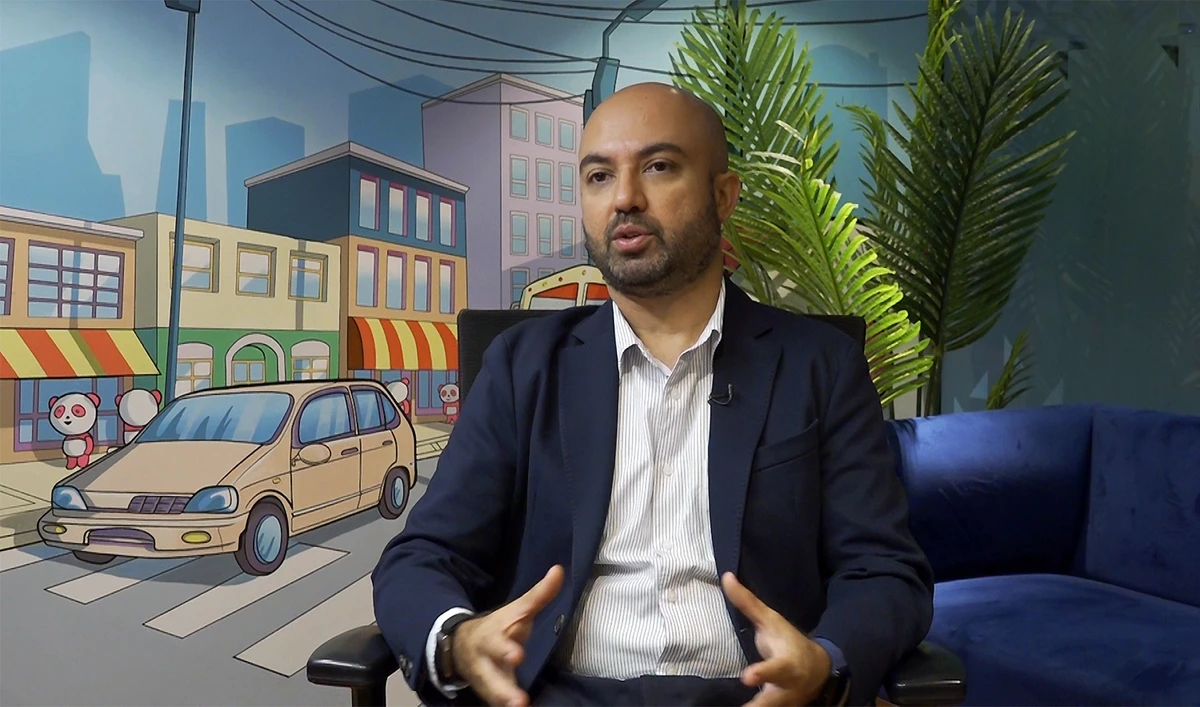
According to foodpanda Pakistan chief executive Muntaqa Peracha, the company is targeting over $2 billion in economic activity by the end of the current fiscal year, up 50 percent from the $1.2 billion generated in 2023-24.
“Now that we’re at that point and the economy looks relatively stable we’re hoping to further accelerate that to get to a point of doubling our business over the next, you know, 24 to 36 months,” he said in an interview with Arab News.
foodpanda, which connects millions of users in 35 Pakistani cities with restaurants, home chefs and its own pandamart grocery stores, now handles up to 20 percent of the total food business for its restaurant partners. It also employs thousands of freelance riders across its delivery network.
Peracha said the company plans to expand its pandamart grocery business from seven cities to 12 over the next year, while also growing its virtual kitchens and onboarding more retailers through its online “shops” vertical, which allows local stores to sell goods online.
“We’re looking to expand our categories within the cities that we operate in right now,” he continued. “So that means more pandamarts opening up, more shops coming online, more restaurants being contracted, more home chefs working with us.”
foodpanda currently offers food delivery in 35 cities across Pakistan and aims to deepen its presence in these locations before eventually scaling to the country’s top 50 urban centers. The company will open six to eight new kitchens and expand its shops feature to 20 cities through partnerships with local retailers.
Despite Delivery Hero’s recent sale of a 20 percent stake in UAE-based Talabat, foodpanda has no immediate plans to go public in Pakistan.
“Let’s see how that goes. It’s been very good for Talabat, and we would like to see how that happens and if there’s an opportunity and it makes a business sense, we will see at that point in time,” Peracha said.
NAVIGATING DISRUPTIONS
While the business outlook is optimistic, foodpanda continues to face significant operational challenges. Heavy rains, political processions and Internet shutdowns routinely disrupt deliveries, affecting the income of thousands of riders who work on a daily-wage model.
“During those times, what we do is we go to micro closures. What that means is, certain parts of the city that are heavily impacted, we shut those down so that we don’t expose our riders to dangerous areas,” he explained.
Pakistan ranks among the world’s most climate-vulnerable nations, having faced repeated climate-induced floods, most notably in 2022, when over 1,700 people were killed and millions displaced.
But more than the monsoon downpours, Peracha pointed to prolonged Internet outages as a greater threat to his company’s operations.
“If it’s an elongated nationwide blackout, then, you know, the whole day’s business can be impacted by 30, 40, 50 percent,” he said.
“Those days obviously are challenging and it’s not as much to do with us losing business,” he continued. “It’s also got to do with the riders. The riders earn based on the number of deliveries that they do.”
To counter such disruptions, the company has implemented a continuity strategy allowing riders to access Wi-Fi at pandamarts, supply hubs and partner locations.
“We open up our Internet at our kitchens, at our supply hubs where the riders are on boarded,” he said. “We also open up Internet at our offices, and as well our, pandamarts. So the riders come there, they connect over there, they get their orders, and then they go and, pick those up.”
Peracha added that foodpanda has fully automated its demand planning and order personalization processes, supported by engineering and data teams based in Singapore and Berlin.
“There’s a complete team that’s sitting in Singapore and Berlin that’s working on this,” he said, explaining that much of the focus is on optimizing rider logistics “for our riders in terms of how they get an order, what the route should be [and] if they get multiple orders, which one should they deliver first?”
He said the system also determines order allocation in areas where “thousands of riders” operate simultaneously.
“There are thousands of orders in a city as well,” he continued. “So how do we optimize for that?”
As part of its current fiscal year target, the company aims to generate economic activity to around $2 billion and increase its footprint from six million households to as many as 10 to 12 million.
“That’s the real impact that we’d like to see,” he added