- Analysts say CGT cut, withdrawal of withholding tax on National Clearing Company and slashing turnover tax positive for equity market
- Pakistani exporters of value-added textiles unhappy because government ignored demands including restoration of zero rating of general sales tax
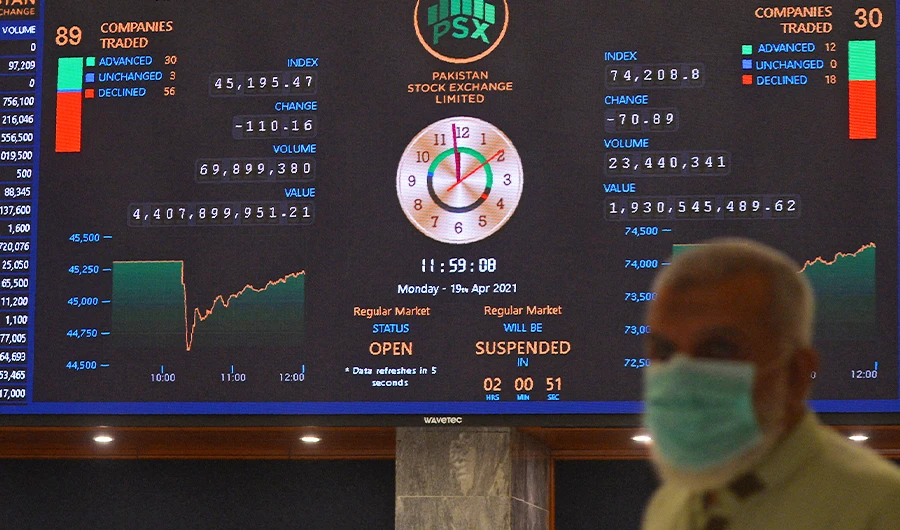
KARACHI: Buoyed by the federal government’s step to cut capital gain tax to 12.5 percent, Pakistan’s equity market opened on a high note on Monday — the first day of trading after the fiscal budget was presented on Friday, equity analysts said.
Pakistani finance minister Shaukat Train on Friday presented what has been called a “pro-growth” and “people-friendly” fiscal budget for 2021-22, with a total outlay of Rs8.4 trillion.
Some of the proposals in the budget include reducing capital gains tax to 12.5 percent from 15 percent, removing withholding tax (WHT) on National Clearing Company of Pakistan Limited (NCCPL), a Pakistan capital market institution providing clearing and settlement services to Pakistan Stock Exchange Limited, and slashing turnover tax to 1.25 percent from 1.5 percent.
Pakistan’s stock market started off the day Monday with a 662 point surge and remained bullish throughout the trading session, before closing at 48,726 points, gaining 421 points due to profit taking.
“Stocks closed higher led by selected scrips across the board as investor weighed federal budget FY22 relief in the capital gains tax, withholding tax to brokerages and IMF relaxations on industrial tariff,” Ahsan Mehanti, the chief executive of Arif Habib Corporation, told Arab News. “Record higher global crude oil prices, relief for pharma and services exporters in the federal budget FY22 played a catalyst role in bullish close.”
Major activity was witnessed in energy sector shares because subsidies announced in the budget are believed will resolve the circular debt issue.
“Pakistan’s federal budget is positive for the stock market,” Samiullah Tariq, Head of Research at Pakistan Kuwait Investment, told Arab News. “Overall the sentiment of investors is very positive and they are optimistic about the growth numbers presented by the government.”
Not everyone is happy, though, especially Pakistani exporters of value-added textile who say the government did not incorporate their anticipated demands for restoration of Zero Rating of General Sales Tax (GST) and the No Payment No Refund System, suspension of collection of Export Development Fund (EDF) surcharge, and reduction of the WHT rate to 0.5 percent.
“Imposition of 17 percent GST has made textile exporters, especially Small and medium Enterprises (SME) exporters, financially unviable as their liquidity remained stuck up,” Jawed Bilwani, chairman of the Pakistan Apparel Forum, said at a press conference in Karachi on Monday. “The small and Medium textile operators throughout the year face financial crunch that makes it difficult to discharge export commitments, pay utilities and salaries to staff and laborers and also reluctant to take new export orders.”
Exporters say due to elimination of zero rated facility, 33 percent or 2,102 small and medium textile enterprises have closed down their business.
“It is on record that 33 percent SME exporters have closed their export business as compared to last year due to imposition of 17 percent which blocked exporters liquidity,” Bilwani said adding: “With the continuation of 17 percent GST in 2021-22, many more SME textile exporters who managed to survive last year are feared to close due to liquidity. The GST on exports and refund after months is the key hurdle in the boost in exports.”
Value-added textile exports contribute around 62 percent in total exports, provide 42 percent urban employment, particularly to the female workforce, earn the nation the highest foreign exchange and support approximately 40 allied industries, according to exporters.