- Finance minister says super tax of 4 percent will be applicable to all sectors
- For specified 13 sectors, another 6 percent added and total of 10 percent tax imposed
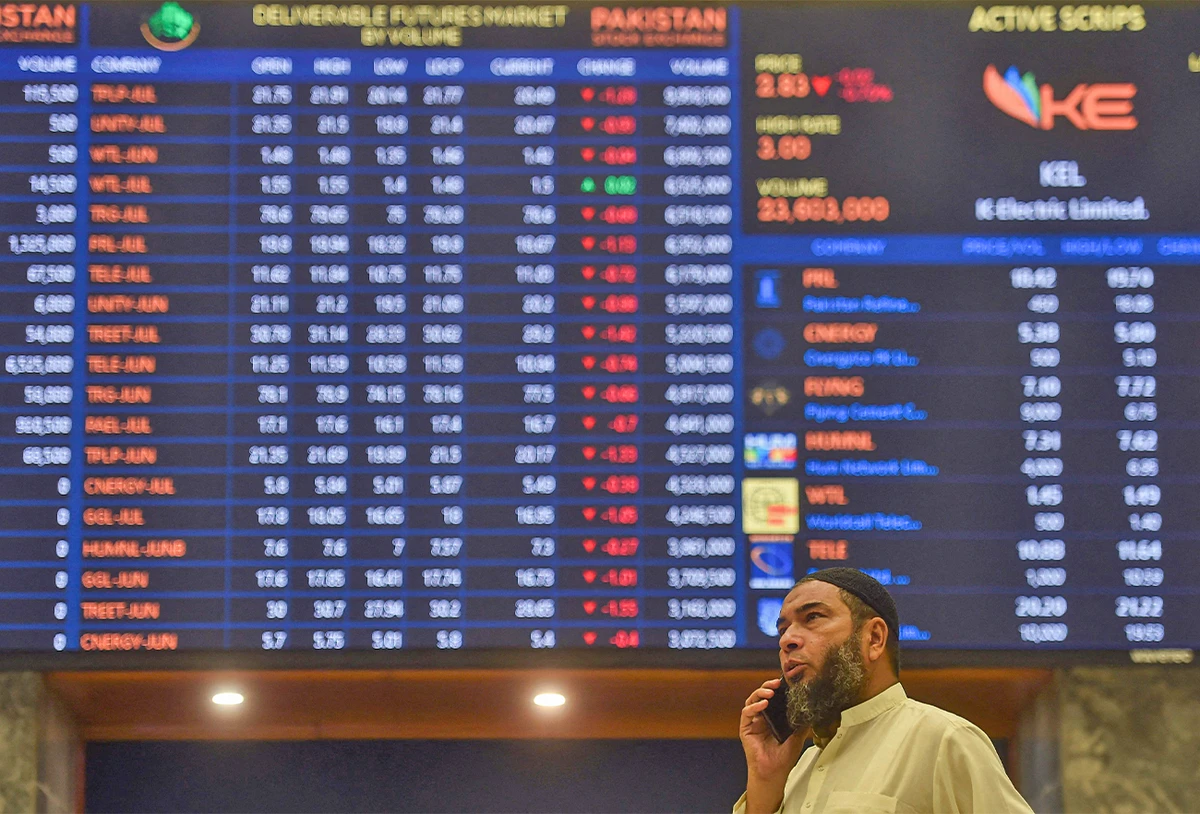
KARACHI: Pakistan’s stock market on Friday witnessed a bloodbath as it plunged by over 1,650 points after Prime Minister Shehbaz Sharif announced a 10 percent “poverty alleviation tax” on major Pakistani industries.
The benchmark KSE-100 index, which opened on a positive in the morning, closed the weekend trading session in red, posting a massive decline of 1,665 points, or 3.9 percent. At one point, the KSE-100 index lost as much as 2,053.35 points, sending the market into shock and forcing administrators to briefly halt the session in the afternoon.
Sharif announced on Friday his government was imposing a 10 percent super tax on major Pakistani industries, including cement, steel, sugar industry, oil and gas, fertilizers, LNG terminals, textiles, banking and automobile, and cigarette manufacturers, urging the affluent to help the poor as Pakistan grapples with double-digit inflation.
“Panic selling [was] witnessed at PSX in scrips across the board after PM’s announcement for 10 percent super tax levy on large-scale industries for a year to bridge gap in fiscal deficit,” Ahsan Mehanti, chief executive officer (CEO) of Arif Habib Corporation, told Arab News.
“Falling rupee and likely SBP policy impact of IMF monetary targets played a catalyst role in bearish close.”
Sharif said his government had decided to tax people who earned over Rs150 million annually at 1 percent, those who earned over Rs200 million annually at 2 percent, those who earned over Rs250 million annually at 3 percent and those who earned over Rs300 million at 4 percent. He said it was a responsibility of the Pakistani state organs to ensure taxes were collected from the rich and spent on the poor.
Shortly after the PM’s speech, Finance Minister Miftah Ismail clarified that a super tax of 4 percent would be applicable on all sectors.
“But for specified 13 sectors, another 6 percent will be added for a total of 10 percent. So, their tax rates will go from 29 percent to 39 percent,” Ismail said in a Twitter post. “This is a one-time tax needed to curtail the previous four record budget deficits.”
Pakistani financial experts say the new measures will help the government raise up to Rs300 billion ($1.44 billion).
“As per our estimate, this measure can result in additional tax collection of Rs250-300 billion for government. This may help achieve the revenue and deficit target set by the IMF,” Muhammad Sohail, CEO of the Karachi-based Topline Securities brokerage firm, told Arab News.
“After the new measures, the government is likely to set a revenue target of Rs7.4 trillion ($36.8 billion) up from the initial target of Rs7 trillion (34.6 billion) set in the budget for FY23.”
The South Asian country is struggling to shore up its depleting foreign exchange reserves, which have dropped down to $8.2 billion, hardly enough for imports of less than 45 days. Islamabad, however, has received a much-needed support from China with the rollover of $2.3 billion loan.
“I am pleased to announce that Chinese consortium loan of RMB 15 billion (roughly $2.3 billion) has been credited into SBP account today, increasing our foreign exchange reserves.” Ismail said on Twitter Friday.
The country will pay less interest on the Chinese loan as compared to the payment made since availing the facility in 2019. Beijing was charging 2.5 percent plus Shanghai Interbank Offered Rate (SHIBOR), but now the rate is reduced by 1 percent that will help Pakistan save $23 million annually, Ismail had informed early this month.
In the absence of foreign inflows and rising demand of dollar for import payments, Pakistan’s national currency depreciated to an all-time low earlier this week, with the US dollar trading at Rs211.93. The Pakistani rupee recovered on Friday and the greenback was trading at Rs207.48, mainly due to the Chinese inflows.
Pakistan is desperately seeking the revival of the $6 billion International Monetary Fund (IMF) loan program it secured in 2019. Over the last few weeks, Islamabad has taken tough measures to convince the IMF to release bailout payments, including increasing the prices of petroleum products thrice in a month. The imposition of super tax on industries is the latest of such measures.
Pakistan’s stock market fell by nearly 3 percent on June 13 after higher taxes for corporates and banks were announced in the annual budget.
In the budget for the next fiscal year that starts on July 1, Pakistan raised the tax rate on banks to 42 percent from 39 percent, increased capital gains tax to 15 percent if assets are sold within a year, and raised withholding tax to as much as 5 percent.