- PM Sharif hints taxing non-productive real estate assets making profits on speculation
KARACHI: Pakistan’s Prime Minister Shehbaz Sharif on Tuesday said the South Asian nation needed a "charter of economy" for the continuation of growth-oriented economic policies, hinting at taxing non-productive real estate assets lying vacant for speculative purposes.
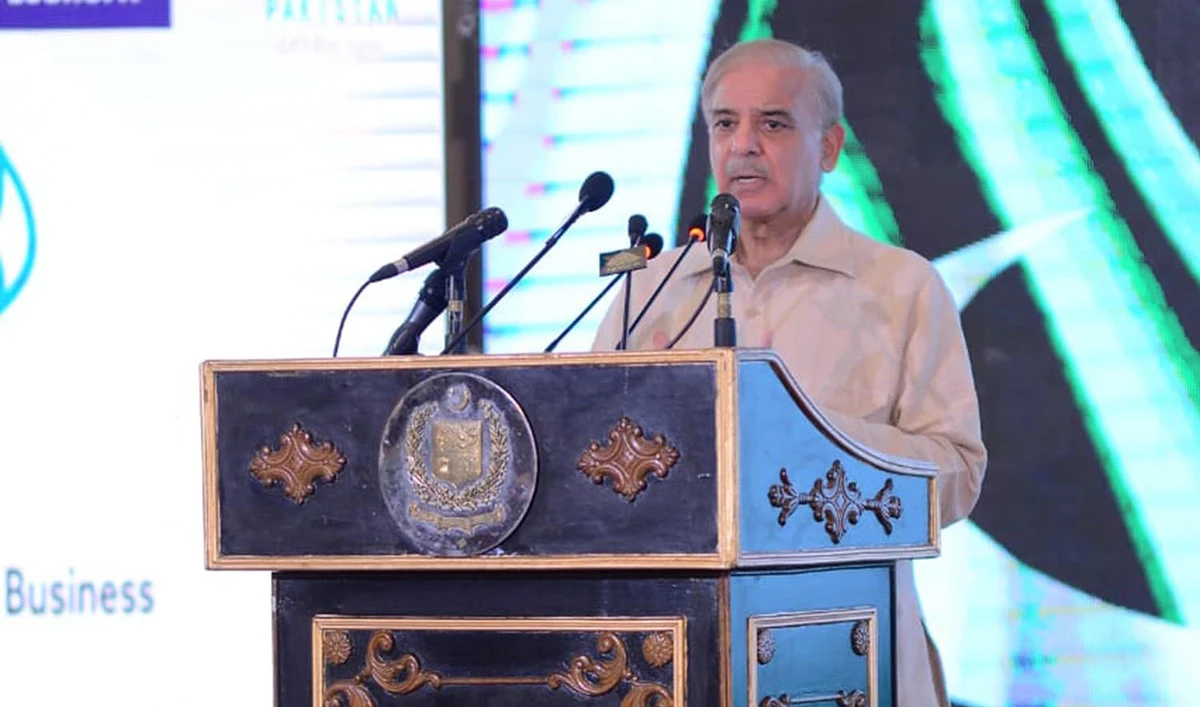
PM Sharif said this at a pre-budget business conference in Islamabad, aimed at adopting a collective approach to deal with the country's economic woes. Agriculturists, information technology (IT) experts and businesspersons attended the event and shared their proposals for different sectors.
The prime minister said political stability was a must for economic stability in the country, faced with a widening current account deficit, currency depreciation and double-digit inflation.
“We need a charter of economy for the continuity of policies and achievement of targets set by any government,” the prime minister said, adding that this “charter of economy will not be changed.”
He said taxing the non-productive assets had become "obligatory" for the government to support the feeble economy.
“The lands that are lying vacant for speculation purposes, it is a disservice to the nation... let it come to a halt,” Sharif told the attendees. "I think the real estate that are making windfall profits, we should tax and raise money for the nation."
He said his government could use this money for productive purposes and devise a mechanism for refunds.
Speaking earlier at the conference, Finance Minister Miftah Ismail said Pakistan needed $41 billion to pay back foreign debts and shore up its foreign exchange reserves in the next fiscal year.
“We need $41 billion over the next 12 months and I think it will be arranged... we are re-engaging IMF (International Monetary Fund) and I am very confident that soon we will have an agreement with the IMF,” Ismail said at the conference.
“Next year the debt repayment will be $21 billion to countries and multilateral institutions. I guess next year the current account deficit would be $12 billion, we can bring it down but it would slow down the economy.”
Pakistan’s current account deficit stood at $13.78 billion from July till April, while its foreign exchange reserves have declined to $9.7 billion, less than 45 days of the country’s import payments. The South Asian country is negotiating with the IMF and other donors to stabilize its external account position.
The finance minister said he expect around $2.3 billion from China within next three days, which would be provided at a reduced interest rate and help Pakistan save $23 million annually.
“When Prime Minister Shehbaz Sharif spoke with Chinese Premier Li Keqiang, they not only agreed to re-roll/redeposit $2.3 billion, but reduced the interest rate as well,” he said.
“They were charging 2.5 percent plus the Shanghai Interbank Offered Rate (SHIBOR) in 2019, but they have reduced it by 1 percent.”
Ismail said the government had re-engaged with Saudi Arabia, the United Arab Emirates (UAE) and other countries to help support the economy.
He said his government inherited third-highest inflation in the world, after Argentina and Turkey. “In the last four years, 20 million people in Pakistan were pushed below the poverty line as 600,000 individuals were rendered jobless due to the negative growth rate.”
The finance minister said the government was also facing an "unprecedented" fiscal deficit of Rs5.6 trillion ($27.6 billion).
“The previous government has taken Rs20,000 billion debts, while the total loan taken by all former governments in Pakistan was Rs24,954.9 billion,” he said. "In only four years, the Imran Khan government took 80 percent of loans taken by all governments in 72 years."
The finance minister said the former government committed with the IMF it would incur a primary deficit of Rs25 billion ($123 million), but this deficit was expected to be Rs1.3 trillion ($6.5 billion), which had increased the debt burden.
He said Pakistan would spend Rs3.3 trillion ($16 billion) on debt servicing this year. “For the next year, we are expecting Rs3.9 trillion for debt servicing.”