- The statement follows renewed military exchanges between Pakistan and Afghanistan, following attacks in Pakistan
- Islamabad urges greater connectivity, deeper economic integration and shared prosperity at ECO meeting in New York
ISLAMABAD: Pakistan on Saturday told a meeting of the Economic Cooperation Organization (ECO) that eliminating militancy emanating from Afghanistan was essential for lasting regional peace and stability, urging member states to work together to boost economic integration and connectivity.
Founded in 1985 by Iran, Pakistan and Turkiye, the Eurasian intergovernmental organization included Afghanistan, Azerbaijan, Kazakhstan, Kyrgyzstan, Tajikistan, Turkmenistan and Uzbekistan in 1992, seeking to promote trade, transport, energy cooperation and sustainable economic development across the region.
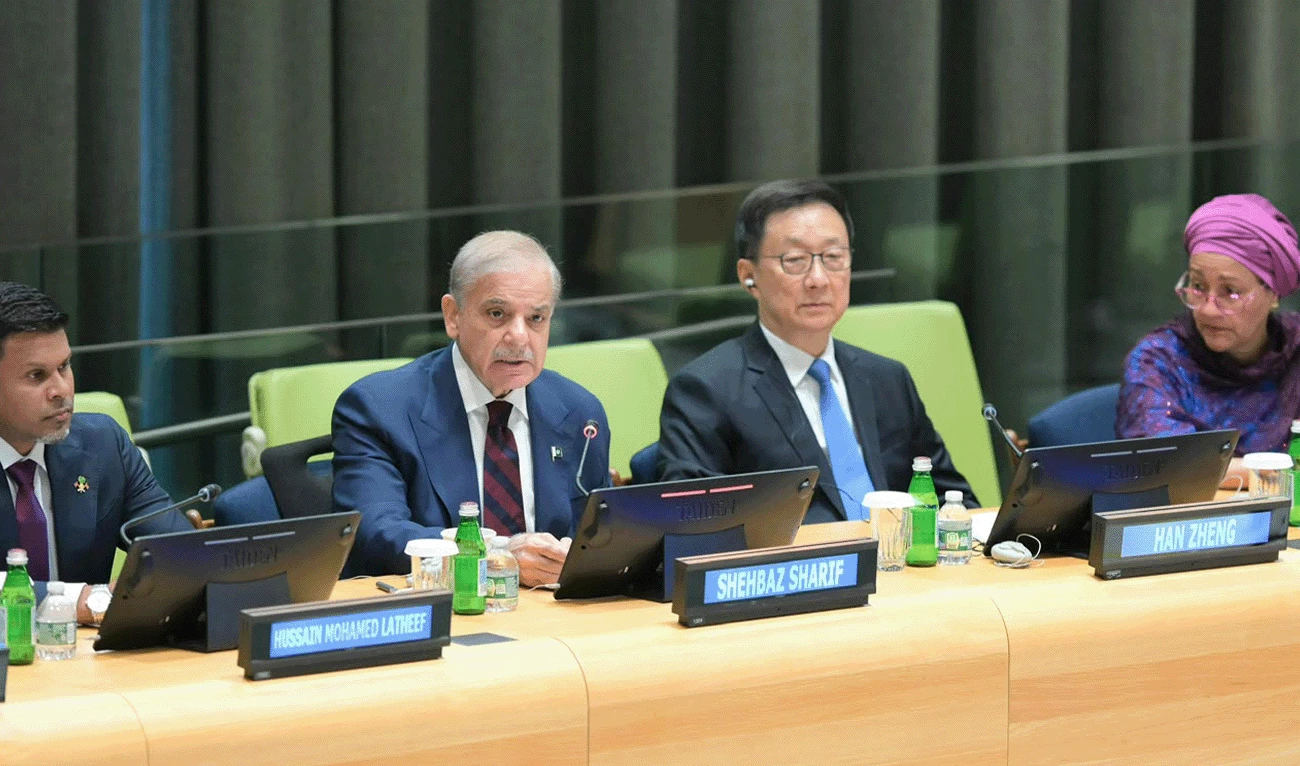
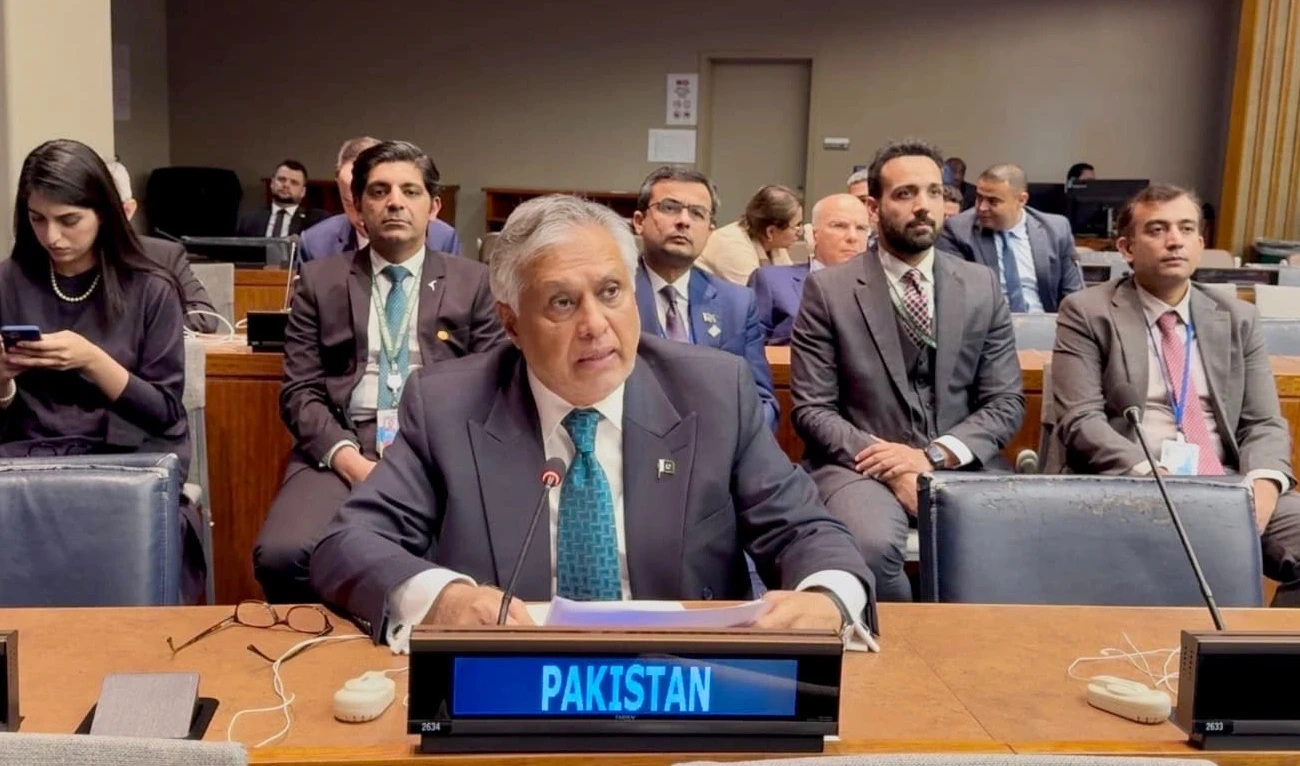
Pakistan’s Foreign Minister Ishaq Dar on Saturday addressed an informal meeting of the ECO Council of Ministers in New York, which came in the backdrop of military exchanges between Pakistan and Afghanistan, following militant attacks in Pakistan’s western regions that border Afghanistan.
Dar said Pakistan, which holds rotating chairmanship of ECO for 2026-27, remains firmly committed to the peaceful, negotiated resolution of disputes in accordance with international law, voicing “deep concern” over the prevailing security situation in the region.
“Pakistan has always desired a peaceful, prosperous, and stable Afghanistan that is fully integrated into the region and is at peace with itself and its neighbors. This aligns with our foreign policy goals of peace, development, and regional integration. To this end, Pakistan pursued and advocated for constructive engagement with the Taliban Regime,” Dar was quoted as saying by his ministry.
“Pakistan’s only expectation was for the Taliban Regime to address our legitimate security concerns. We hoped for concrete and verifiable actions against TTP (Tehreek-e-Taliban Pakistan), BLA (Baloch Liberation Army), and their affiliates, who continue to threaten Pakistan’s sovereignty and the lives of its citizens,” he said.
“We believe that peace and development in the region can only be achieved with the elimination of the terrorist threat from Afghanistan.”
There was no immediate response from Kabul to the statement.
TTP and BLA are among groups that have frequently targeted Pakistani security forces, law enforcement and infrastructure in the country’s Balochistan and Khyber Pakhtunkhwa (KP) provinces. Islamabad accuses Kabul of turning a blind eye to these groups, an allegation denied by the Afghan Taliban.
Pakistan carried out airstrikes in Afghanistan on Monday, saying it killed 28 militants, days after an attack on a police compound in Kohat killed 23 people, including 17 police personnel and six civilians. Eight attackers were also killed in the ensuing security operation. Afghan Taliban officials said Monday’s strikes killed three civilians, a toll also confirmed by the United Nations.
Pakistan’s air force struck 10 more locations in Afghanistan on Thursday after Islamabad said drones had entered Pakistani airspace from Afghanistan a day earlier. Islamabad said the sites were used to launch and store drones, while the Afghan Taliban denied carrying out such attacks.
Relations between the former allies have deteriorated sharply over the past year, with repeated cross-border clashes and airstrikes despite efforts by regional powers to mediate.
Speaking at the ECO meeting, Dar said Pakistan regarded the regional body as a vital platform for cooperation and a cornerstone of their shared aspirations in Asia.
“Our task now is to translate our collective potential into greater connectivity, deeper economic integration, and shared prosperity,” he said. “Together, let us revive regionalism, strengthen resilience, and build a more integrated and prosperous ECO region for nearly half a billion people.”