- Provincial disaster authority says 256 people died and more than 1,500 homes were damaged in Buner last year
- Survey across three affected districts found most households received no warning before floodwaters arrived
BUNER: More than a year after floods killed 24 members of his family, Omar Khan is living in a new house in Pakistan’s Buner district. He and his surviving brothers built it away from the family home that was swept away, but the fear of another flood lingers.
Buner was Pakistan’s worst-affected district in the 2025 monsoon floods, according to the national disaster authority (NDMA). The provincial disaster authority says 256 people died there.
On Aug. 15, about 150 millimeters of rain fell in an hour, sending water, mud and boulders down the mountainsides and through communities with little time to escape.
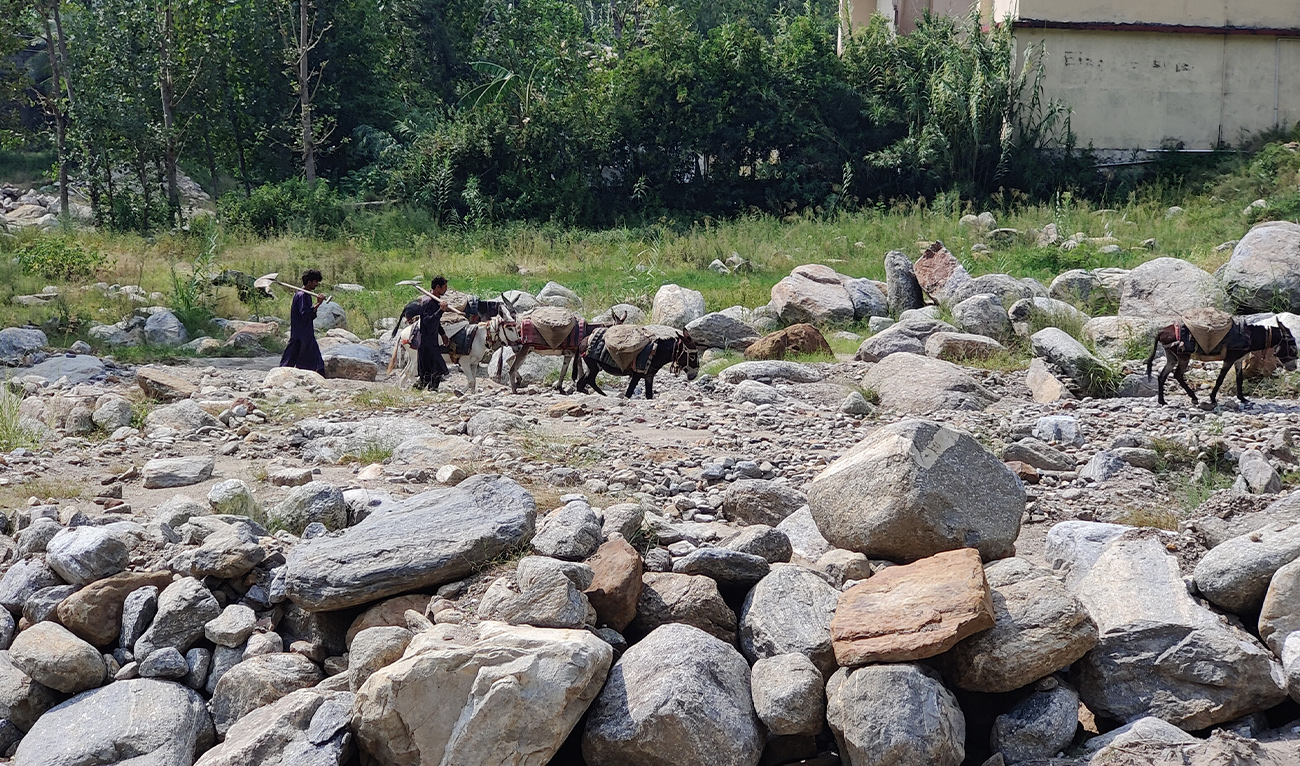
The disaster came three years after floods across Pakistan affected 33 million people and killed more than 1,730 in 2022. Those floods caused extensive damage in the southern province of Sindh. Buner’s catastrophe was a sudden flash flood in the steep terrain of northwestern Khyber Pakhtunkhwa in 2025. Both deluges exposed how vulnerable communities are when extreme rainfall overwhelms homes, roads and warning systems.
“My uncle gave us land,” Khan told Arab News. “The foundation built a house for us.”
Khan said his new house is complete and has 30 rooms, compared with 50 in the family’s old compound. The Sir Rahim Shah Akhunkhail Foundation built eight of the rooms, Al Khidmat Foundation built two and Jamiat Ulema-e-Islam (JUI), a religious political party, sponsored two, he said.
On the day the deluge came, Khan had gone to his shop in Pir Baba bazaar after his youngest daughter had seen him off that morning. As he ran home, his wife called while he was still a few hundred meters away.
“I asked her, ‘Is everything alright at home?’ She said everything is fine,” he recalled. “When I came, there was no home, nor water. Only boulders were there.”
The family compound had housed Khan, his brothers and their families. Among the 24 relatives he lost were his parents, wife and two children: a three-year-old daughter and three-and-a-half-month-old son.
“She was clutching him tightly when we found them. Even in death, she tried to protect her son,” Khan said, pointing to a tree where the bodies of his wife and son were found.
“THERE’S NO ONE HERE“
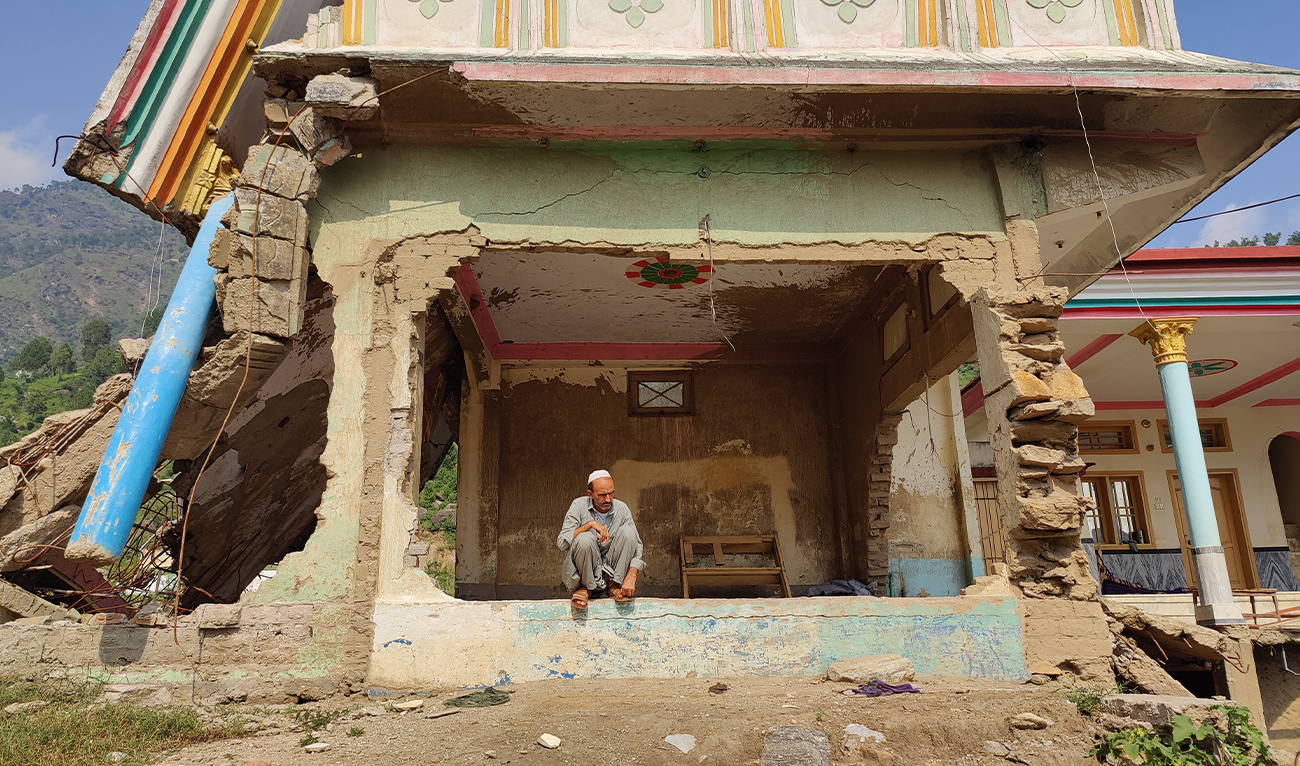
Across Buner, the provincial disaster authority recorded 273 homes destroyed, 1,319 partly damaged and 240 shops damaged. Sher Khan, Khan’s bother who also survived, said the flood struck as his family prepared for his son’s wedding.
“The flood came on Friday and on Saturday it was my son’s wedding,” Sher said. “Now we don’t live here. There is no one here.”
A World Bank survey of 1,207 households across Buner and two other badly affected districts, Shangla and Swat, found that 85 percent received no warning before the floods. The bank said Khyber Pakhtunkhwa’s preparedness had focused largely on river floods, leaving gaps in its ability to assess and respond to fast-moving floods in mountain valleys.
Zainab Naeem, a climate change expert at the Sustainable Development Policy Institute, said changing rainfall patterns were increasing the risk. She also raised concerns about deforestation and marble extraction disturbing mountain slopes, although the extent to which those factors contributed to this flood has not been established.
“When there are events like cloudburst, the soil, because it has less grip, reacts like this and causes such devastation,” Naeem said. “That’s why you get debris flow, boulders and a lot of water.”
Buner Additional Deputy Commissioner Bilal Baseer said authorities had cleared water channels and undertaken tree planting. Nongovernmental organizations were developing an early-warning system, he said, but it was not yet operational.
The provincial government set compensation at Rs2 million ($7,200) for each person killed and Rs1 million ($3,600) for a destroyed home.
Disaster authority spokesperson Anwar Shehzad said payments had been made in 90 percent of cases, with some claims delayed by difficulties determining who should receive them when several relatives had died. Sher said payments for members of his family remained pending.
And while Khan has shelter again, farther from the place where generations of his family lived, he does not yet have confidence that people will be warned before the next flood.
“We are living in the shadow of fear,” he said. “We are rebuilding our homes, restarting our lives but the memories of our lost ones and fear of another flood still linger in the valley.”