- Minister hopes the incoming government will uphold and continue agreements signed with Gulf nations by the caretaker setup
- Officials say Pakistan has issued visas to 92 international observers and 101 foreign journalists to monitor the election process
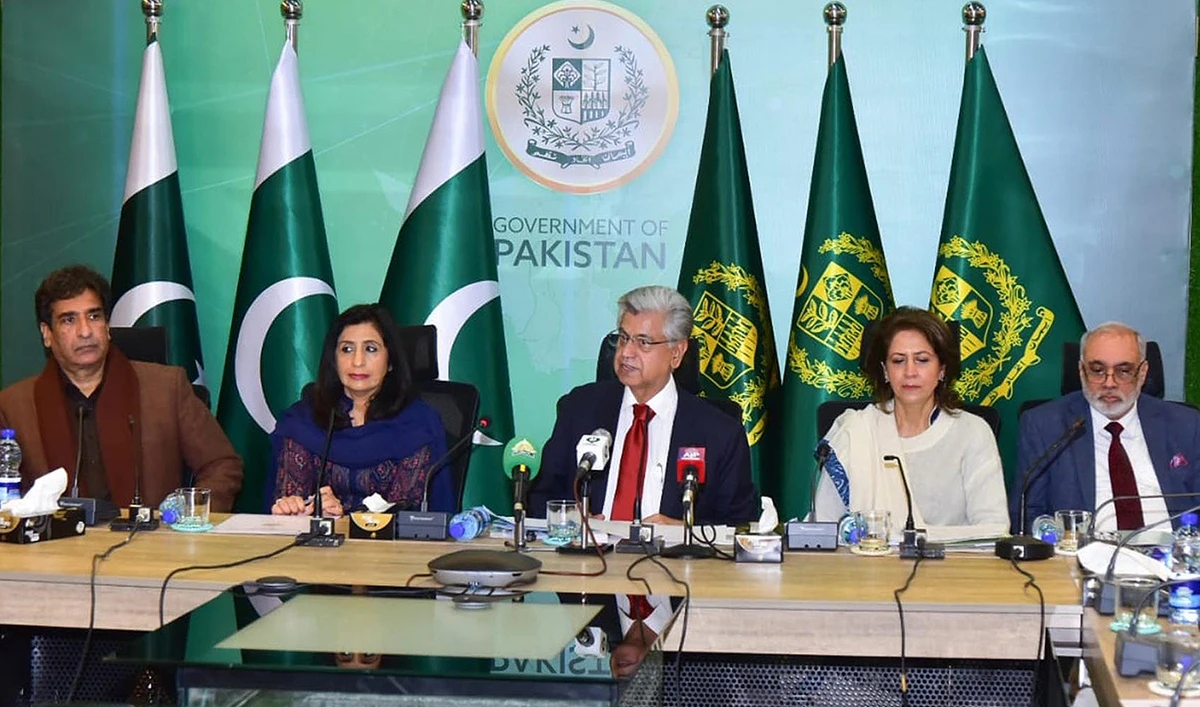
ISLAMABAD: Pakistan’s Caretaker Information Minister Murtaza Solangi said on Saturday the country had put a “three-tiered system” in place to ensure security and integrity of the upcoming national elections on Feb. 8, amid a surge in militant attacks in the country.
The South Asian country of over 241 million inches closer to the polls amid a rise in suicide and other militant attacks in its northwestern and southwestern provinces that border Afghanistan.
The Election Commission of Pakistan (ECP) has outlined that security personnel, stationed outside the polling stations, will be responsible for security and safe transportation of ballot papers as well as polling bags.
“We have very good arrangements to ensure the security and integrity of the process, providing security to polling stations in a three-tiered system,” Solangi said at a foreign media briefing in Islamabad.
“Police [will be] taking the main responsibility in the first parameter, including the polling stations, with civil armed forces (Rangers and Frontier Corps) on the outer corridor parameter and Pakistan Army as the main quick reaction force on the outside parameter.”
The minister said Pakistan had more than ample resources available to ensure a peaceful, free and fair conduct of elections, adding the army’s quick reaction force would be able to reach any troubled site in less than ten minutes.
Solangi informed that 92 international observers from international organizations and countries such as Russia, Japan, South Africa, Zimbabwe, Netherlands, Malaysia, Hungary and Sweden had been issued visas to observe the election process, along with more than 100 international journalists.
“One hundred and thirteen international journalists applied for visas,” Ambreen Jan, director-general of the Information Ministry’s external publicity wing told Arab News, on the sidelines of the briefing.
“Of them, 101 have been issued visas and the remaining cases are under process.”
Solangi also responded to questions about reservations expressed by jailed former prime minister Imran Khan and his Pakistan Tehreek-e-Insaf (PTI) party, who say they have been facing a state-backed crackdown in the form of arrests and court verdicts.
The minister said Pakistan was a “free country” where everyone, including the media, had every right to criticize anyone, including the caretaker government and the courts.
“As far as the verdicts of courts are concerned, the caretaker government has no comment about those verdicts as we do not control the courts,” he said, adding the arrests were made in the wake of violence on May 9, 2023, when Khan supporters had vandalized state buildings and public property over the ex-PM’s brief arrest in a graft case.
Solangi said the verdicts had nothing to do with the elections.
To a question about economic cooperation agreements signed by the caretaker government with the Gulf states, Solangi said all economic initiatives that took place during the caretaker setup were taken in the background of the Special Investment Facilitation Council (SIFC), which was set up last year to revive the economy, and had the cover of parliament.
“I have full faith that these economic initiatives will continue and our relationship with our partners in the Gulf and elsewhere, including the People’s Republic of China, those relations will deepen,” the minister said.
Even on Friday, he said, the SIFC had approved reforms relating to tax policy and the Federal Board of Revenue (FBR).
“But those changes will take place after we make some amendments in the FBR and Customs Act and that is the domain of parliament,” Solangi said, adding the caretaker government would forward its recommendations to the new parliament.
“We are hopeful that these will be approved because they are in the greater interest of Pakistan and its economic future.”