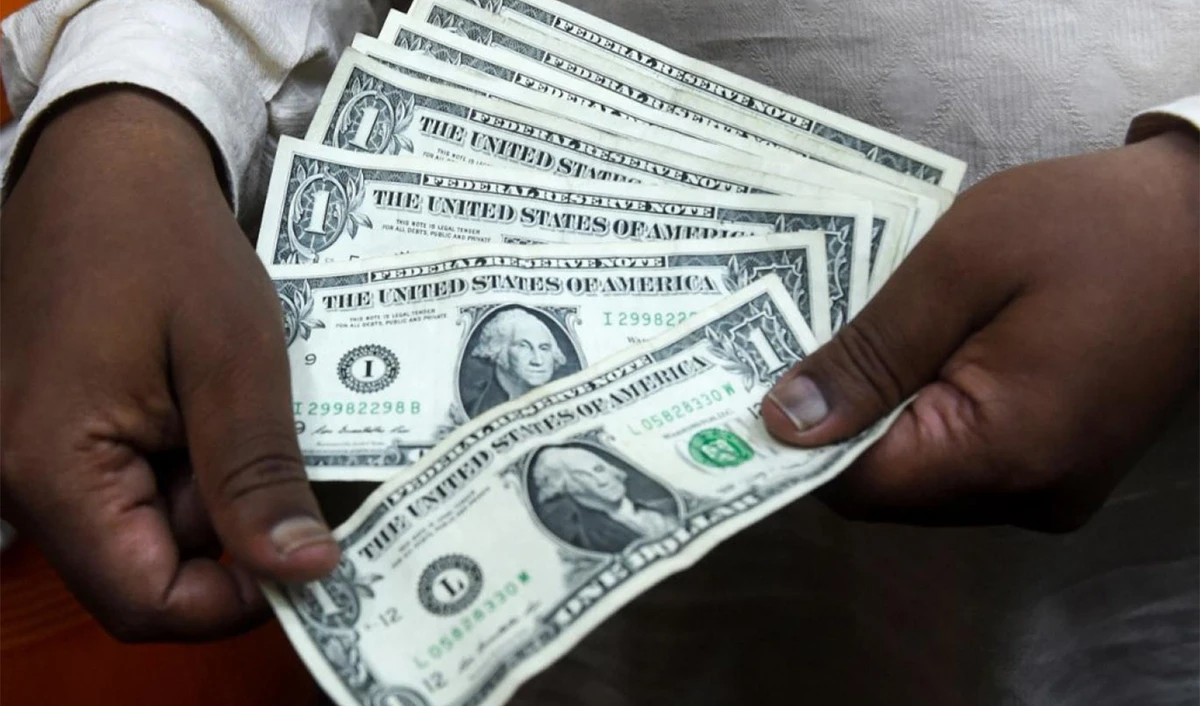
- Rupee fell Rs3.26 or 1.16 percent against the dollar in interbank market on Wednesday to close at 280.29
- Rupee gained over 6.1 percent against dollar in September following official clampdown on illegal forex trade
ISLAMABAD: The Pakistani rupee fell sharply against the dollar on Wednesday, due to a number of reasons including import payment pressure, after gaining 10.9 percent or Rs30.3 against the greenback for a consecutive 28 sessions.
The local currency fell Rs3.26 or 1.16 percent against the dollar in the interbank market on Wednesday to close at 280.29, according to the State Bank of Pakistan (SBP), down from Tuesday’s rate of 277.03.
Pakistan’s rupee had gained over 6.1 percent against the dollar in September, following an official clampdown on illegal foreign exchange trade in grey and black markets by security agencies. September’s gains and going into October had almost made up for all of the rupee’s losses in August. The rupee hit a record low of 307.1 against the dollar on Sept. 5 but made a sharp recovery since the country’s financial regulator and security agencies began taking action the next day to curb black market operations.
Wednesday’s depreciation came a day after the rupee’s 28-day winning streak broke due to a market correction, which experts told media was inevitable due to a 10 percent appreciation in the currency’s value.
“Administrative action in curbing illicit market, a drop in demand for dollars, exporters cashing in receipts, and a slight uptick in remittances had been instrumental in improved dollar flows and strengthening of the rupee [in recent weeks],” Dr. Khaqan Hassan Najeeb, a former adviser to the Ministry of Finance, said.
Th rupee had weakened considering due debt payments on foreign loans and bonds, the need for imports, and possible slower inflows in the interbank, he told Geo News, suggesting that Pakistan secure funding from donors and financial institutions to ensure a smooth ride going forward.
“With elevated gross financing needs near $24 billion in FY23, Pakistan has to ensure continued flows from bilateral and multilateral partners, commercial inflows, rollovers, and funds pledged at the Geneva International Conference for floods to ensure stability in the external sector.”
Sana Tawfik, Deputy Head of Research at Arif Habib Limited, noted that the rupee’s winning streak was backed by the FX crackdown and structural reforms in the exchange companies but fallen due to import pressure.
“Several import payments were made today [Wednesday], resulting in the pressure on the rupee,” the analyst told local media.
In line with the conditions of a $3 billion International Monetary Fund bailout deal signed in June, Pakistan cannot curb imports, leading to pressure on the currency, Tawfik said.
The rupee’s value will likely fall more as imports increased in the coming days due to fewer restrictions and an increase in demand.
“But I believe the rupee should move in a disciplined way, unlike recently when it went past 305 per dollar,” she added. “The good thing is that the authorities are active and are not allowing the spread to widen between the formal and informal market. They have controlled it, for now. If they continue to do so, we won’t see a major gap between the markets.”
“The rupee will remain range-bound. It is market-driven right now, just like the IMF says it should be. If the inflows improve, we will see an appreciation, but not an abrupt one.”
By December, Tawfik said, the rupee would be between Rs290-300 to the US dollar.