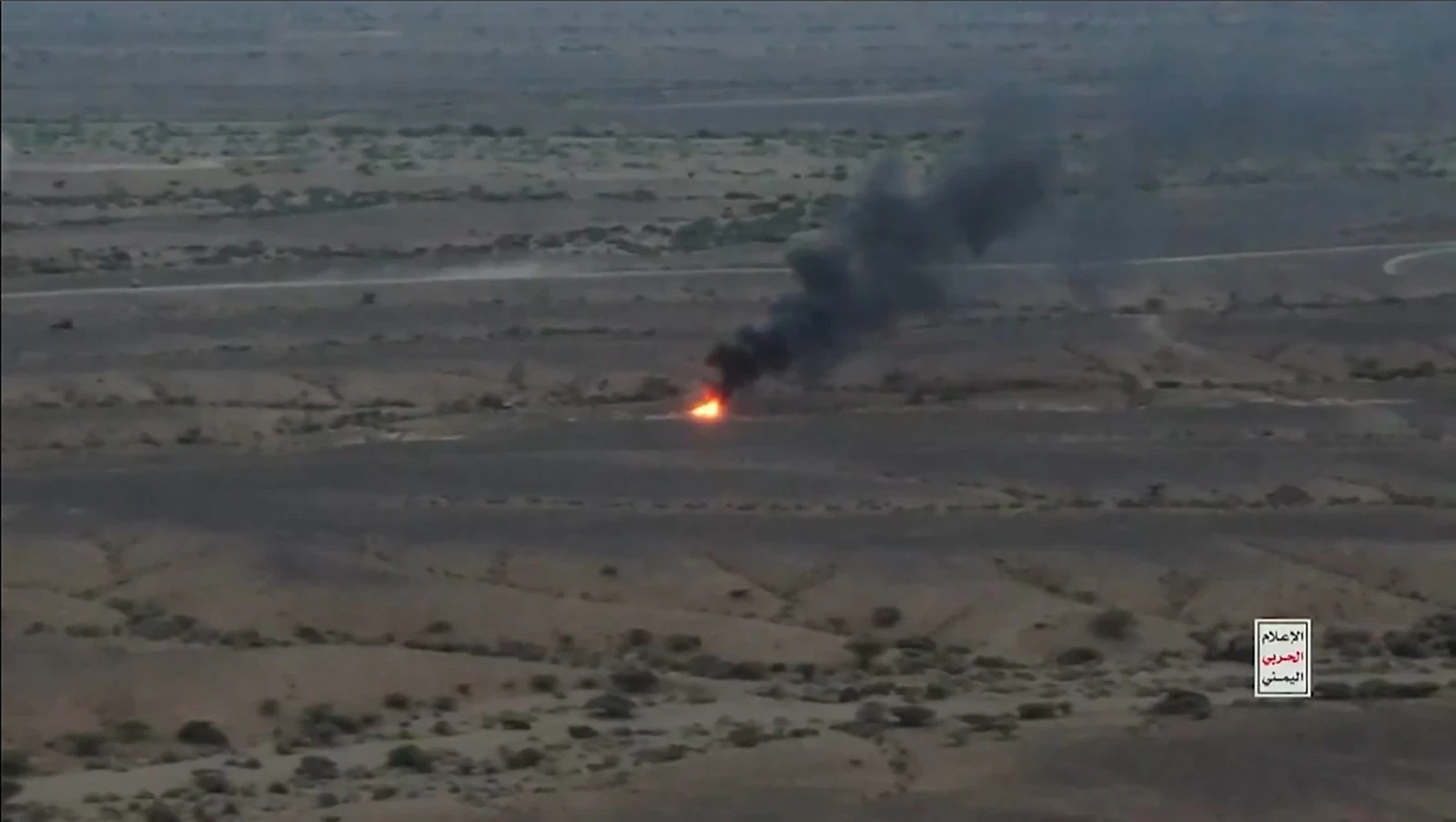
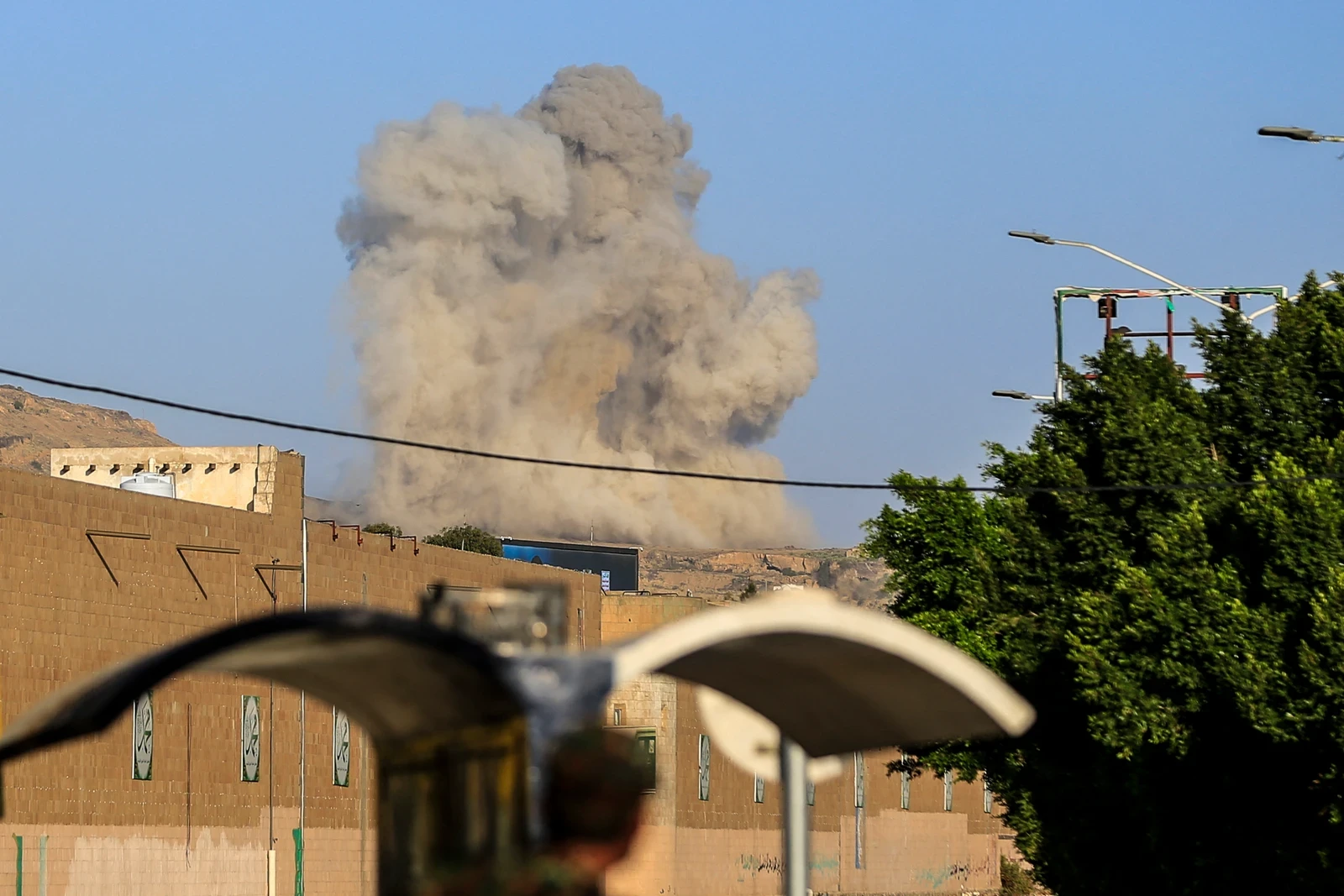
Pakistan’s militant landscape has shifted in recent months, in both scale and method. Open-source data from the South Asia Terrorism Portal (SATP) shows that Balochistan overtook Khyber Pakhtunkhwa in July as the country’s most volatile region, recording 176 attacks and 438 deaths against 143 incidents and 244 fatalities in Khyber Pakhtunkhwa over the same period. This wave carried something new: weaponized commercial quadcopters. On July 2, security forces shot down a militant quadcopter near the Pishin Scouts’ 134 Wing in Pishin district. Three days later, a commercial drone came down in Kalat district, killing one person and injuring 10.
The adoption of commercially available unmanned aerial vehicles (UAVs) by militant networks in Pakistan is a tactical evolution, not a strategic shift. It tracks a global pattern in which violent non-state actors turn to commercial drones for surveillance and strike operations. As off-the-shelf technology becomes cheaper, simpler to operate and easier to obtain, militant groups have moved quickly to weaponize it and exploit its asymmetric advantages.
The first cluster of militant drone incidents in Pakistan, six or seven in all, came in 2024 in Khyber Pakhtunkhwa’s North Waziristan district, where the Hafiz Gul Bahadur Group (HGBG) targeted military convoys and checkpoints with improvised explosive-laden bottles. Two years on, the trendlines are clear: militant drone use is no longer an anomaly but a fixture. As a tactical force multiplier, unmanned systems give these networks the advantage of surprise against security institutions and sharpen their psychological warfare. Quadcopters also work as propaganda, allowing groups to project technological sophistication and inflate their operational reach.
SATP data shows roughly 60 militant drone attacks in Balochistan and Khyber Pakhtunkhwa in the first six months of 2026, causing 36 deaths and 178 injuries. In the same period of 2025, 13 such incidents caused 13 deaths and 10 injuries. The strikes remain concentrated in Khyber Pakhtunkhwa’s southern districts, above all Bannu.
Militant networks across the ideological spectrum have improved their technical proficiency with commercial quadcopters, using them for intelligence, surveillance and reconnaissance as well as direct strikes. Increasingly they fold drones into multi-domain tactics to maximize lethality, coordinating ground ambushes with airborne strikes and dropping explosive payloads on security personnel mid-engagement. Counter-measures have driven further adaptation: once Khyber Pakhtunkhwa police fielded anti-drone jamming guns, militants shifted to multi-directional swarm attacks designed to overwhelm directional counter-UAS defenses.
Three major militant entities are now modifying commercial quadcopters for reconnaissance and kinetic strikes — the Tehreek-e-Taliban Pakistan (TTP), the Baloch Liberation Army (BLA), and Ittehad-ul-Mujahideen Pakistan (IMP), an operational alliance of HGBG, Lashkar-e-Islam (LeI) and Harakat-e-Inqilab-e-Islami Pakistan (HIIP).
IMP was first into the air, over North Waziristan and Bannu, though it has yet to announce a dedicated drone unit. The capability is driven by HIIP, which functions as a re-emergence of Al-Qaeda remnants in Pakistan, most notably elements of the 313 Brigade. By embedding itself alongside HGBG and LeI under the IMP umbrella, HIIP has resumed operations across the country. The Al-Qaeda link is corroborated by Al-Qaeda in the Indian Subcontinent (AQIS), the network’s regional franchise, which routinely showcases IMP attacks in its flagship Urdu-language journal, Nawa-i-Ghazwa-e-Hind.
Militant drone use is no longer an anomaly but a fixture.
Abdul Basit Khan
In the early phase, the TTP conducted drone strikes without claiming them, while IMP claimed UAV attacks without naming an aerial unit. Rivalry between the two settled the matter. In December 2025 the TTP began claiming its quadcopter strikes and formally announced a drone unit it calls the Air Force. Its earlier silence was tactical pragmatism: the group feared that claiming strikes and publicizing a specialized aerial wing would draw heavier counter-terrorism pressure from Pakistani security institutions.
Baloch insurgents had long flown commercial UAVs for intelligence and surveillance without arming them. The pace set by IMP and the TTP changed that. The BLA used armed drones for the first time in January 2026 during Operation Herof-2, a coordinated offensive across several Balochistan districts, claiming strikes in the strategically vital port city of Gwadar. It announced its own aerial wing, the Qazi Aero Hive Rangers (QAHR), soon after.
The state response has moved fastest in Khyber Pakhtunkhwa. The provincial police raised the department’s first UAV Division in March 2025, deploying anti-drone jamming systems across several districts and setting up ground control stations, with plans to extend that network to every district in the province. The jamming guns have thwarted 76 drone attacks so far. More recently the police deployed two specialized counter-drone systems in Peshawar and Bannu to blunt militant swarms. The division also extracts telemetry and forensic data from intercepted drones to fix launch sites, and coordinates closely with sister law enforcement agencies to synchronize aerial surveillance and threat response.
These shifts underscore how quickly Pakistan’s internal threat landscape is evolving. Traditional counter-terrorism paradigms are not yet obsolete, but the operational toolkits built around them will be unless they are overhauled. In this context, the Khyber Pakhtunkhwa Police’s plan for an Innovation Center at the School of Tactics in Nowshera is a welcome step. As a center of excellence for research, development and advanced technical training, it should strengthen the force’s capacity to run complex counter-UAS and UAV missions.
-The author is a research fellow at the S. Rajaratnam School of International Studies, Singapore. X: @basitresearcher