Rolls-Royce cuts profit forecasts as new CEO takes the helm

Updated 06 July 2015
Follow

Rolls-Royce cuts profit forecasts as new CEO takes the helm

LONDON: British engineer Rolls-Royce cut profit expectations for the third time in nine months, increasing the challenge for its new chief executive.
Shares in the 131-year-old company dropped as much as 10 percent after it also scrapped a plan to buy back 1 billion pounds ($1.6 billion) of shares halfway through the program.
Rolls-Royce has been struggling for some time with a drop in demand from energy customers for its marine equipment following a plunge in oil prices. But the firm said on Monday its aircraft engine business was also suffering during a switch from its Trent 700 engine to the newer Trent 7000, with fewer of the legacy engines being sold than anticipated.
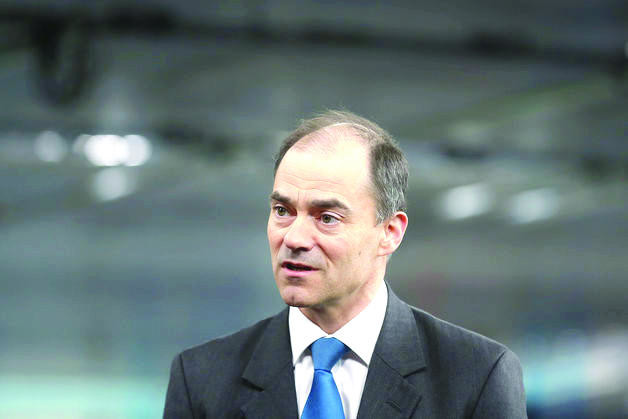
That turns up the heat on new CEO Warren East, who took the helm only four days ago. The aerospace business accounted for almost half of 2014 revenues and has been riding a surge in demand for fuel-efficient engines for passenger jets, though it has lagged rival General Electric on profit margins.
Hargreaves Lansdown analyst Keith Bowman said that while it was common for new CEOs to cut expectations, the warning was another blow for investor trust in Rolls-Royce.
“The company’s prior push to reduce earnings volatility and surprises looks to have been completely unwound, with investors today suffering another shock,” he said.

DOWNGRADES
For 2016, Rolls-Royce said lower demand and pricing for the Trent 700 engines, reduced demand for its business jet engines and some weakness in its after-sales business for smaller jet engines would cut profit estimates by about 300 million pounds — reducing analysts’ consensus forecast by around 20 percent.
For this year, underlying pretax profit would come in between 1.325 billion and 1.475 billion pounds, as much as 5 percent lower than its previous guidance, it said.


Saudi Arabia’s cultural sector is a new economic engine between Riyadh and Paris, says ambassador

Updated 25 January 2026
Follow

Saudi Arabia’s cultural sector is a new economic engine between Riyadh and Paris, says ambassador

RIYADH: Culture has become a fundamental pillar in bilateral relations between France and Saudi Arabia, according to the French Ambassador to the Kingdom, Patrick Maisonnave.

Maisonnave noted its connection to the entertainment and tourism sectors, which makes it a new engine for economic cooperation between Riyadh and Paris.

He told Al-Eqtisadiah during the opening ceremony of La Fabrique in the Jax district of Diriyah that cultural cooperation with Saudi Arabia is an important element for its attractiveness in the coming decades.

La Fabrique is a space dedicated to artistic creativity and cultural exchange, launched as part of a partnership between the Riyadh Art program and the French Institute in Riyadh. 

Running from Jan. 22 until Feb 14, the initiative will provide an open workspace that allows artists to develop and work on their ideas within a collaborative framework.

Launching La Fabrique as a space dedicated to artistic creativity

The ambassador highlighted that the transformation journey in the Kingdom under Vision 2030 has contributed to the emergence of a new generation of young artists and creators, alongside a growing desire in Saudi society to connect with culture and to embrace what is happening globally. 

He affirmed that the relationship between the two countries is “profound, even cultural par excellence,” with interest from the Saudi side in French culture, matched by increasing interest from the French public and cultural institutions unfolding in the Kingdom.

Latest estimates indicate that the culture-based economy represents about 2.3 percent of France’s gross domestic product, equivalent to more than 90 billion euros ($106.4 billion) in annual revenues, according to government data. The sector directly employs more than 600,000 people, making it one of the largest job-creating sectors in the fields of creativity, publishing, cinema, and visual arts.

Saudi Arabia benefiting from French experience in the cultural field

Maisonnave explained that France possesses established cultural institutions, while Saudi Arabia is building a strong cultural sector, which opens the door for cooperation opportunities.

This comes as an extension of the signing of 10 major cultural agreements a year ago between French and Saudi institutions, aiming to enhance cooperation and transfer French expertise and knowledge to contribute to the development of the cultural system in the Kingdom.

He added that experiences like La Fabrique provide an opportunity to meet the new generation of Saudi creators, who have expressed interest in connecting with French institutions and artists in Paris and France.

La Fabrique encompasses a space for multiple contemporary artistic practices, including performance arts, digital and interactive arts, photography, music, and cinema, while providing the public with an opportunity to witness the stages of producing artistic works and interact with the creative process.