Overcrowded classrooms are affecting the performance of teachers and students, according to several educationists.
Saudi education regulations stipulate that there must be a maximum of 30 students in classes in government school buildings and 20 students in rented buildings. There are now over 40 students in many of these classes, teachers say.
This has created an untenable situation where it becomes difficult for them to teach, and students to learn, because there is not enough time for in-depth discussion on schoolwork in 45 to 50 minutes, they say.
Budgets have been allocated to resolve this issue at big schools in densely populated neighborhoods. However, the situation persists. This indicates that there are not enough schools in certain areas now to cater for the demands of the growing population, they argue.
Ali Al-Zahrani, a teacher, said: “The problem started two years ago, forcing several schools to establish additional classrooms to resolve it. I believe this is not a radical solution.”
“The Ministry of Education is silent and not helping to find solutions. Establishing additional classes requires a budget for special equipment and salaries for new teachers. The ministry has not been successful in doing this, even though there are unemployed graduates sitting at home waiting for jobs.”
Al-Zahrani said that resolving the problem includes controlling admissions based on the academic performance of students. In addition, the ministry should transfer some expatriate students, especially those who are not Arab-speakers to private schools.
He said the ministry should pay teachers overtime to teach students in densely populated cities.
“Overcrowded classes have affected the results and the outputs of students negatively and increased the number of unemployed high school graduates.”
Awadh Al-Shehri, student affairs deputy at a public school here, said: “Overcrowded classrooms do not provide an appropriate learning environment for teachers and students because classes that exceed 25 students are hard to control and monitor. Students cannot focus or understand the information in such an environment. A lot of teachers and students are frustrated because of this.”
“Teachers with classes of more than 40 students face several problems including delays in starting because they are busy adjusting and preparing students for the lesson, and the inability to follow up with students. They are also unable to help slow-learning students or ones who have problems inside or outside school.”
Al-Shehri said schools have become less attractive for good students. “Good students cannot comprehend the lessons, or focus on or discuss issues with teachers. It weakens motivation and creativity among students. In addition, some students are distracted because they are often sitting close to bad students.”
Abdulghani Al-Amri, a school principal, said overflowing classrooms allow less interaction between teachers and students, resulting in lower grades. There are also health issues that have to be considered, with students likely to fall ill more quickly from infectious diseases in a packed classroom.
“The ill-prepared meals served at schools make the problem even worse,” he said.


Overcrowded Saudi classrooms ‘hampering learning process’
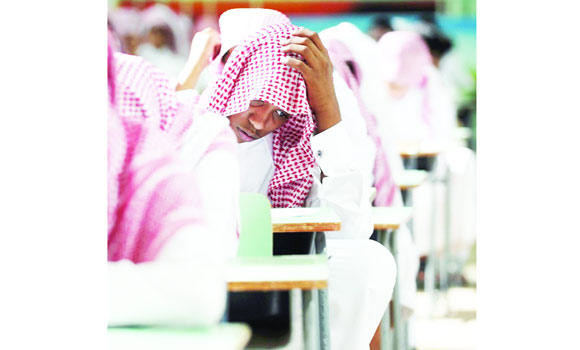
Overcrowded Saudi classrooms ‘hampering learning process’

Saudi hospital pioneers preventive type 1 diabetes treatment
RIYADH: King Faisal Specialist Hospital and Research Center introduced a groundbreaking preventive treatment aimed at slowing the progression of type 1 diabetes, the Saudi Press Agency reported on Wednesday.
The new therapy is designed for adults and children aged eight years and older who are diagnosed at stage two of the disease. It marks the first time such a treatment has been implemented in the Kingdom.
The initial application involved two patients who met all the criteria outlined in the approved protocol. The step represents a major advance in early preventive care for one of the most common autoimmune conditions affecting children and adolescents.
Both cases were treated at the hospital’s Department of Pediatrics. For families already managing type 1 diabetes, the innovation brings new hope.
Siblings of affected children often face increased risk due to shared genetic and immune factors. Preventive options like this could significantly lower those risks in the future.
The treatment targets the early, pre-type 1 diabetes stage when insulin-producing pancreatic cells begin to deteriorate. Through early intervention, doctors can slow this damage, delay the onset of symptoms and help extend the time before full disease progression.
Implementing the therapy required careful preparation. The drug was compounded in the hospital pharmacy under a precise protocol, while nursing teams received training on administration, monitoring and managing possible reactions.
Medical staff were also briefed on patient selection and follow-up criteria based on the latest clinical guidelines.
According to the SPA, experts expect the program to inspire national research focused on the early stages of the disease and on developing preventive approaches that enhance quality of life for at-risk groups.
KFSH&RC continues to gain recognition on the global stage. It was ranked first in the Middle East and Africa, and 15th worldwide among the top 250 academic medical centers for 2025.
The hospital was also named the most valuable healthcare brand in Saudi Arabia and the Middle East by Brand Finance 2025.
Additionally, Newsweek included KFSH&RC on its lists of the World’s Best Hospitals (2025), the World’s Smartest Hospitals (2026) and the World’s Best Specialized Hospitals (2026).


