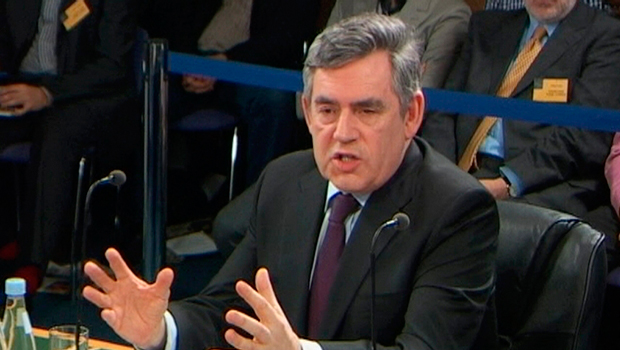
Brown, appearing just weeks before an election to discuss a war that still rankles with many Britons, acknowledged the human cost of the conflict, admitted mistakes had been made, but distanced himself from the most contentious decisions.
"Nobody wants to go to war, nobody wants to see innocent people die, nobody wants to see your forces put at risk ...
nobody would want to make this decision except in the gravest of circumstances," he told the inquiry.
"I believe we made the right decision for the right reasons." Brown, finance minister at the time of the 2003 US-led invasion, is the most prominent figure to give evidence before the five-person panel since his predecessor Tony Blair made a highly publicized appearance in January.
While Blair was criticized for saying he had no regrets about the war, Brown's opening statement expressed sorrow for the deaths of both British servicemen and Iraqi civilians.
While a far less vocal advocate of the war than Blair, critics, including senior civil servants and military chiefs, have accused Brown of failing to provide enough funding to equip troops properly.
Some relatives of the 179 British soldiers killed in Iraq say this led to unnecessary deaths and are demanding that the inquiry team, headed by former civil servant John Chilcot, press Brown for answers on the issue.
The issue of support for Britain's military remains relevant because 10,000 troops are fighting in Afghanistan and face a similar threat from insurgents.
"There was no time...when the Treasury said this is a better military option because it's cheaper or less costly," Brown told the inquiry.
"I made it absolutely clear that every application that was made for resources necessary for the conduct of the campaign in Iraq had to be met by the Treasury." The invasion of Iraq has been one of the most damaging episodes during the Labour Party's 13 years in power, provoking internal divisions and huge public protests.
With an election due by June 3 and polls indicating that Britain is on course for a hung parliament, Brown will be anxious to avoid any embarrassment.
Much of Blair's testimony related to the threat of weapons of mass destruction (WMD) falling into the wrong hands in the aftermath of the Sept. 11 attacks on the United States as the main reason for conflict.
Critics accuse Blair of deliberately misleading the public over WMD, as none were ever found, and making a pact with former US President George W. Bush to go to war almost a year before the invasion.
Brown instead focused on former Iraqi leader Saddam Hussein's failure to comply with United Nations resolutions as a justification, saying he had hoped diplomacy would prevail until the last minute.
He glossed over questions about the legitimacy of war, saying he had been satisfied after the government's top legal adviser said it was legal, and added he had pushed in vain for more efforts to be made over Iraq's reconstruction.
"We couldn't persuade the Americans that this had to take the priority that it deserved. I regret this. I can't take responsibility for everything that went wrong," he said.
"We won the battle within almost seven days but it has taken us seven years to win the peace in Iraq."