- Military says 12 militants killed in Khyber Pakhtunkhwa, 37 in Balochistan
- Operations follow sharp escalation in militant violence across both provinces
ISLAMABAD: Pakistani security forces have killed 49 militants in a series of operations across the northwestern Khyber Pakhtunkhwa and southwestern Balochistan provinces in recent days, the military said on Friday, amid a sharp escalation in violence across the country’s western region.
The operations targeted two distinct insurgencies: the Pakistani Taliban and allied groups concentrated largely in Khyber Pakhtunkhwa, and ethnic Baloch separatists fighting the state in resource-rich Balochistan. Pakistan refers to the two under the umbrella terms Fitna Al Khwarij (FAK) and Fitna Al Hindustan (FAH), respectively, and accuses India of backing both. New Delhi denies supporting militancy in Pakistan.
“These operations have yielded major successes, inflicting significant blows to the terrorist networks, killing forty-nine terrorists/Khwarij and effectively thwarting any attempt to undermine peace and stability,” the military’s media wing, the Inter-Services Public Relations (ISPR), said in a statement, referring to the intelligence-based raids.
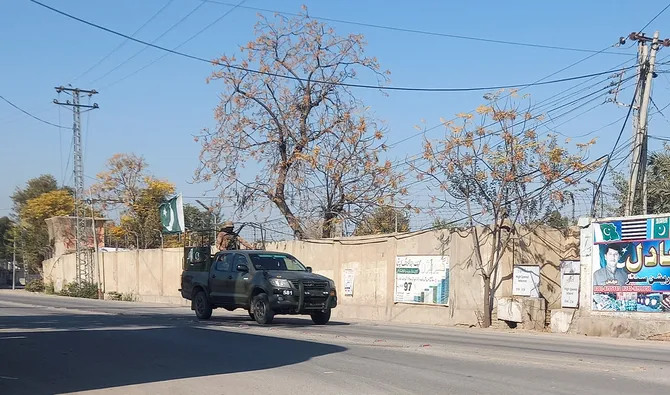
It said 12 militants belonging to FAK were killed in Bannu, North Waziristan, Orakzai and Khyber districts in Khyber Pakhtunkhwa, where security forces have been battling a resurgent Tehreek-e-Taliban Pakistan (TTP).
Another 37 militants belonging to groups designated by authorities as FAH were killed in 10 operations in the Balochistan districts of Mastung, Mach, Khuzdar and Panjgur, the military said.
Weapons, ammunition, explosives and remote-detonation equipment were recovered during the operations, it added.
Pakistan has seen a sustained rise in militant violence in recent years, with Khyber Pakhtunkhwa and Balochistan accounting for the overwhelming majority of fatalities. July was the deadliest month of 2026, according to the Islamabad-based Pakistan Institute for Conflict and
Security Studies, which recorded at least 606 deaths in militant attacks and security operations nationwide.
The security challenges in the two provinces, however, have different roots.
In Khyber Pakhtunkhwa, the TTP has waged a years-long campaign against the Pakistani state, seeking to overthrow the government and impose its own interpretation of Islamic law. Attacks have intensified since the Afghan Taliban returned to power in Kabul in 2021, with Islamabad accusing Afghanistan’s authorities of allowing TTP fighters to operate from sanctuaries across the border. Kabul denies the charge.
Balochistan, Pakistan’s largest but least populated province, also faces a decades-old separatist insurgency led by groups including the Baloch Liberation Army (BLA) and Baloch Liberation Front (BLF).
Separatists accuse the federal government of exploiting the province’s rich gas and mineral resources while leaving its population impoverished, and demand greater control over those resources or independence from Pakistan.
The government rejects accusations that Balochistan has been deliberately deprived, pointing to federal development spending, infrastructure projects and investment under the China-Pakistan Economic Corridor.
It says separatist groups have themselves impeded development by attacking workers, infrastructure and projects intended to generate jobs and economic growth.
Baloch militant groups have increasingly mounted coordinated attacks across multiple districts, targeting security forces, government installations, highways and infrastructure.
A wave of attacks in Balochistan in July killed dozens of security personnel and civilians and was followed by large-scale security operations across the province.
The military said Friday that clearance operations were continuing and that its counterterrorism campaign would continue.