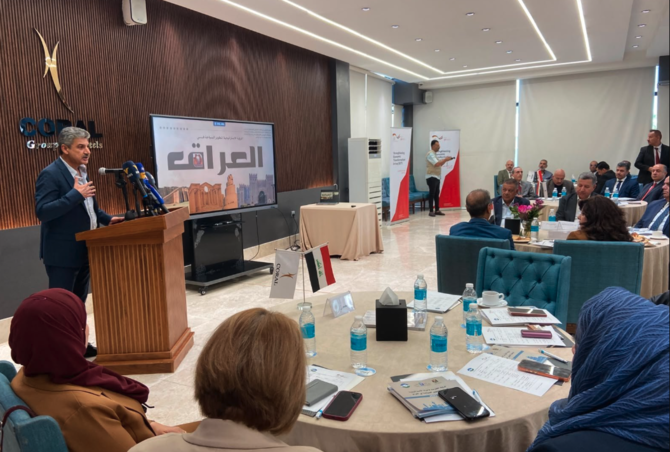

RIYADH: Iraq is targeting a 10 percent contribution from tourism to gross domestic product as part of a national strategy through 2035 aimed at revitalizing the sector and creating 1.5 million jobs.
The Tourism Authority held a workshop to discuss a proposed vision for developing a national tourism strategy through 2035, in cooperation with various ministries and with support from the German Agency for International Cooperation, or GIZ, the Iraqi News Agency reported, citing Tourism Authority chief Nasser Ghanem Murad.
Iraq is seeking to capitalize on its large cultural and religious tourism base as part of efforts to diversify the economy and create jobs.
The country has 7,664 archaeological sites, of which 3,613 have been officially announced, while the number of visitors arriving for religious tourism reached 4.22 million in 2022, up 14.1 percent from the previous year, according to Iraq’s National Development Plan for 2024-2028.
The Iraqi Tourism Authority separately lists more than 300 tourist sites and more than 15,000 archaeological and heritage sites.
Ambitious tourism targets
“The workshop aims to present and transform the strategic vision we have developed for 2035 into a strategic plan for the tourism sector, with the participation of all state ministries, governorates, and the tourism sector itself, to revitalize this sector, considering it a national responsibility,” Murad said, adding: “The plan will be submitted to the Council of Ministers for approval and will serve as the foundation for this sector.”
Matthias Bach, head of the department at the Economic Transformation Enhancement Project, told INA that “Iraq’s tourism potential is astounding. Ancient heritage and modern landmarks coexist, and as the vision paper states, Iraq is the oldest treasure and the newest discovery.”
He added that achieving the stated goals “requires coordinated action, as the vision paper calls for a unified strategy between the government and the private sector, and this is the principle behind the workshop.”
German support
Bach further noted that the workshop is the first of five to be held in Baghdad, Irbil, Karbala, Mosul and Basra, designed to test these priorities with the people who will be responsible for implementing them.
He emphasized that the aim is to hear directly from participants about what is possible and realistic, and what should come first.
The head of the department noted that the project to promote economic transformation in Iraq, implemented by GIZ on behalf of the German government, supports the Ministry of Planning and other partners in several areas of economic development, including tourism, a sector with real potential for job creation and diversifying Iraq’s economy.
Bach added that “Germany is proud, through this project, to support the transition from a strong vision paper to a practical, shared, and implementable roadmap.”
He emphasized that “the future of the tourism sector in Iraq will depend on the choices made in a room like this, where the public and private sectors sit together, and where strategy meets practice. We hope this workshop will be fruitful.”