

CAIRO: An Egyptian archaeological mission has uncovered new evidence at Tell Abu Seifi in Qantara East, Ismailia Governorate, shedding fresh light on the ancient Horus Military Road and the city of Mesen.
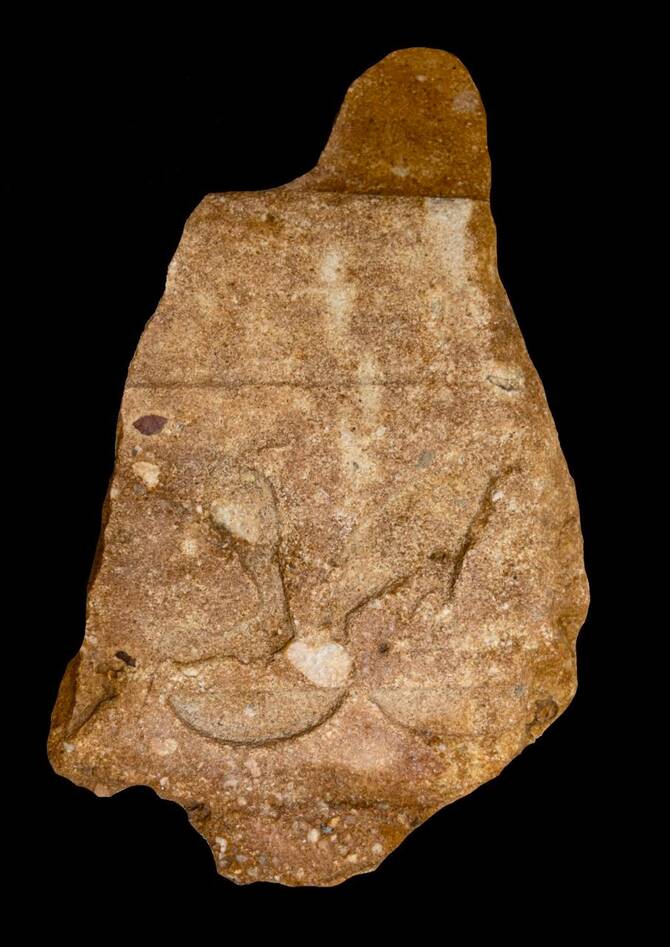
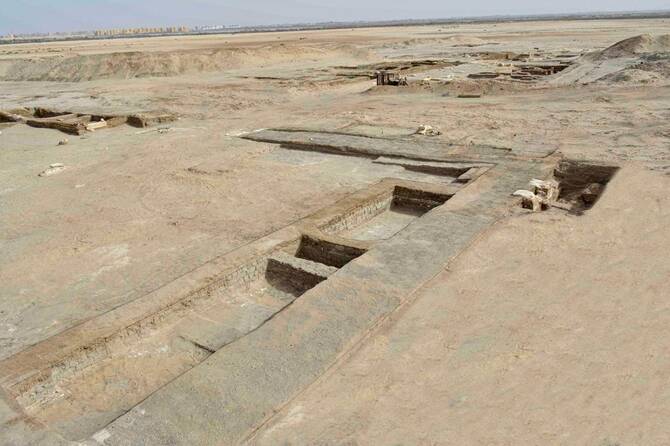
The discoveries include a lintel dating to the reign of King Ramesses II, new architectural evidence relating to the Temple of Horus, a headless and footless statue dating to the Late Period, the torso of a royal basalt statue, and fragments of falcon statues made from basalt and limestone.
Mahmoud Galal, head of the archaeological mission, said excavations also uncovered a collection of finds with administrative and military significance.
Among them was a fragment of a schist statue dating to the 26th Dynasty depicting a military scribe carrying a broken sarcophagus, which Galal said reflected the strategic and military importance of the site.

He said the results of the latest excavation season, together with previous discoveries, supported the hypothesis that Tell Abu Seifi was associated with the ancient Egyptian city of Mesen, which is mentioned in Egyptian sources dating to the New Kingdom.
Egypt’s Ministry of Tourism and Antiquities said the excavation results indicated that the site underwent several phases of development and transformation.
The Temple of Horus reached the height of its architectural development during the Ptolemaic Period, before parts of the site were reused for the construction of a Roman military barracks, or castrum, during the third century.
The archaeological mission will continue excavations and studies during future seasons in an effort to uncover the remaining architectural features of the site.

Sherif Fathy, Egypt’s minister of tourism and antiquities, said the discovery represented an important addition to the ministry’s efforts to uncover the history of archaeological sites in North Sinai and the Qantara region.
Mamdouh El-Damaty, a former Egyptian antiquities minister, told Arab News that the Horus Military Road was constructed during the New Kingdom, specifically during the 18th Dynasty.
He said the route extended from Qantara to Rafah and consisted of 11 military fortresses that served as army outposts in ancient Egypt, with Saru Castle among the best known.
El-Damaty said inscriptions at the Temple of Seti I at Karnak in Luxor shed light on the Egyptian army’s use of the Horus Military Road.

He also pointed to the Battle of Megiddo, fought during the reign of Thutmose III, as one of the most famous military campaigns associated with ancient Egypt’s expansion through the region.
El-Damaty described Mesen as one of the most important cities situated along the route.
He said excavations in the area began after 1980 under an archaeological mission headed by the late Mohamed Abdel-Maksoud, assisted by Egyptologist Fayza Heikal. The mission subsequently discovered a number of fortresses along the Horus Military Road.
The ministry said the site underwent another transformation during the late Roman period, when it was converted into a limestone quarry.
Archaeologists uncovered two large circular kilns built at the corners of the temple’s Holy of Holies area, containing remains of burned limestone.