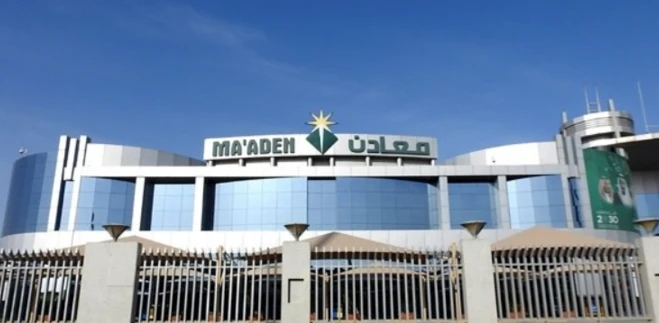
RIYADH: Saudi Arabian Mining Co. reported a 16 percent increase in second-quarter revenue to $2.9 billion, driven by its best-ever quarterly aluminum performance and stronger gold output.
The Riyadh-based miner said in a statement that earnings before interest, taxes, depreciation, and amortization increased 3 percent year on year to $1 billion, while net profit attributable to shareholders reached $600 million for the quarter ended June 30, 2026.
The results underscore the growing role of mining in Saudi Arabia’s Vision 2030 diversification drive. Maaden, the Kingdom’s flagship mining firm, is a cornerstone of its industrial transformation and ranks among the world’s top 10 companies in the sector by market value, reporting $10.3 billion in revenue in 2025.
Maaden CEO Bob Wilt said the company delivered a solid financial result despite headwinds in one of its core divisions: “Despite challenges relating to sulfur supply and logistics in phosphate, the aluminum business delivered its best ever financial performance with a very strong performance from our gold business.”
Aluminum hits a record
Aluminum was the standout division, with revenue rising 49 percent year on year in the second quarter to $1.01 billion and EBITDA more than doubling to $411 million, with a 41 percent margin, the business’s best quarterly performance since inception.
The gains came largely from pricing, with average realized aluminum prices rising 51 percent to $3,915 per tonne, helped by robust regional premia, even as production volumes dipped slightly to 242,000 tonnes.
Maaden said prices began to moderate toward the end of the quarter but that a global market deficit of approximately 1.7 million tonnes for the remainder of 2026 should continue to support near-term pricing.
“Medium to long-term market fundamentals for aluminum remain favorable,” the statement said.
Gold gains
The Gold and Growth Minerals unit produced 118,000 ounces of gold, up 10 percent year on year, with revenue rising 34 percent to $523 million and EBITDA increasing 46 percent to $334 million.
Average realized gold prices rose 33 percent to $4,413 per ounce, while all-in sustaining costs fell 6 percent to $1,236 per ounce.
Maaden said gold prices had moderated during the quarter but remained near historic highs, leaving the company well positioned to benefit from continued market strength.
Phosphate weakens
Phosphate EBITDA fell 49 percent year on year to $328 million, with margins nearly halving to 24 percent as production of diammonium phosphate, also known as DAP, dropped 28 percent and ammonia output slumped 64 percent amid sulfur supply disruptions and logistics issues.
Higher DAP prices, up 28 percent to $863 per tonne, only partly offset lower volumes.
Maaden withdrew its full-year ammonia production guidance and trimmed its DAP output forecast to 6,000–6,500 kilotons, citing producer curtailments in Morocco, the US, India, Brazil, and China as sulfur prices remained near 20-year highs.
The company also confirmed that its Phosphate 3 Phase 1 project remains on schedule to begin commissioning by year-end, while first gold at its new Ar Rjum mine is expected by the end of 2028.
First-half growth
For the first half of the year, Maaden reported revenue of $5.2 billion, up 10 percent, driven mainly by higher commodity prices across all business units, with gold and aluminum volumes broadly stable and phosphate volumes lower.
Net profit attributable to shareholders rose 10 percent to $1 billion, supported by $100 million in one-off phosphate insurance proceeds, lower finance costs, and higher equity-accounted profit from Alba and Maaden Barrick Copper, partly offset by a Manara Minerals impairment related to its Vale stake.
Total shareholders’ equity increased nearly 14 percent to $17.4 billion, with earnings per share improving to $0.26 from $0.24.