A row has broken out over the International Cricket Council’s decision to alter the format of the men’s 2027 ODI World Cup. This is scheduled to run between Oct. 4 and Nov. 21.
It will be the first to be held in Africa since 2003, hosted jointly by South Africa, Namibia and Zimbabwe, with the former allocated 75 percent of matches. As ICC full members, South Africa and Zimbabwe automatically qualify, but Namibia, an associate member, needs to qualify. Fourteen teams will compete, a change from the previous two events, which comprised 10 teams. Originally, it was planned to divide the 14 teams into two groups of seven, with the top three from each group advancing to a Super Six stage.
At the ICC’s annual conference in Edinburgh on July 15, it was decided that the format would be changed to introduce a preliminary Super Series. In a dog-eat-dog situation, the three lowest-ranked qualifiers are to compete in a round robin, with only the top team advancing to the next stage. This means that two teams will be eliminated having played only two matches. In the original format, they would have had the opportunity to play a minimum of six matches. Associate countries run on tight budgets, so the prospect of traveling to southern Africa for two matches is unattractive, from both a cricketing and financial standpoint. Two associate teams will be denied the opportunity of advancing to the next stage, a round robin of two groups of six, mainly full member, teams.
After that stage, the top three teams from each group, along with the best fourth-placed team across both groups, will advance to a Super 7 stage. This comprises a single round robin, the top four teams progressing to semifinals. At first sight, the new format seems to be more complex than the original, with the ICC declaring that its intention is to increase the competitiveness of matches and reduce the overall duration of the tournament, while maintaining a 14-team field. The last part rings hollow. It is disingenuous to say that a 14-man field has been maintained, while the number of matches has increased from 54 to 57.
Other than the two full-member host nations, the identity of other teams is yet to be finally determined. The top eight teams in the ICC ODI rankings, as of Sept. 30, will qualify. On July 31, they were India, New Zealand, Australia, South Africa, Pakistan, Sri Lanka, England and Afghanistan. The remaining places are being decided through a gruelling and complex qualification process.
The eight teams that were ranked between 13th and 20th in the 2019-2023 cycle are contesting 36 matches each in the Cricket World Cup League 2. The top four will progress directly to a global qualifier tournament held in February/March 2027. There they will be joined by the teams ranked ninth and tenth on Sept. 30, 2026, and four teams from a separate qualifier play-off. This comprises the bottom four teams from League 2, the top four teams from another parallel pathway, the Challenge league, which contains teams ranked 21st to 32nd in the 2019-2023 cycle.
This web of qualification cells appears to be too intricate for its purpose, which is to generate four teams for the World Cup tournament, while trying to give associate members an opportunity to qualify. Currently, the top four teams in League 2 are the US, Netherlands, Scotland and Oman. They are trailed by Namibia, Nepal, Canada and the UAE, a long way behind, but with 15 matches in hand. Five teams are closing in on their 36 matches. Currently, Scotland is hosting Canada and the UAE, while a three-match series was completed last week in the Netherlands, which hosted Namibia and Nepal. The only real issue in League 2 is whether Oman can defend its fourth place under pressure from Namibia.
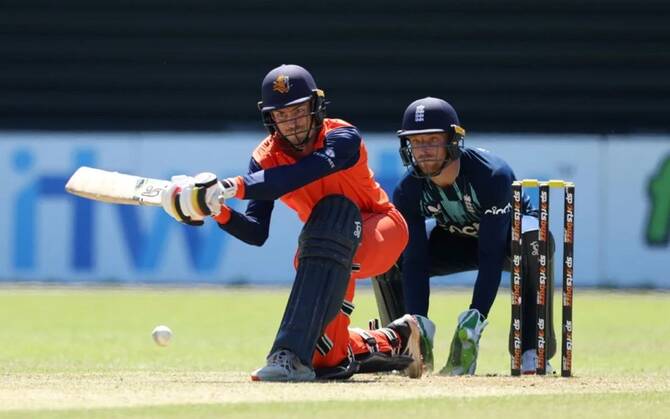
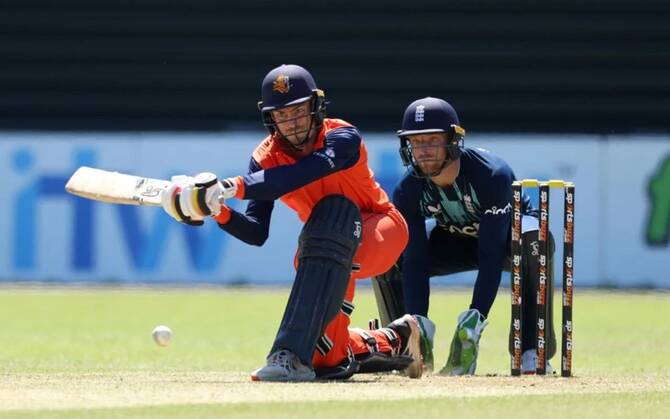
These final series of matches are being played under the cloud of the ICC’s decision. There have been strong reactions. The Netherlands opening batter, Max O’Dowd, was forthright: “So you’re telling me, associate sides have to play in a three-year 50-over tournament, to qualify for a qualifier to qualify for another tri-series qualifier to then qualify for a World Cup.” The sense of incredulity is palpable, with associate countries questioning the value of the qualification process. Their commitment to that process now carries extra risk should they reach the tournament itself.
Scott Edwards, the Netherlands captain, underlined this feeling, saying: “Qualifying for an ODI World Cup is a huge achievement for any country, so when the reality of that opportunity changes after years of planning, it’s incredibly disappointing.”
The reality is that his team and another associate may qualify for the event but be knocked out after only two matches. The prospect differs from previous ODI World Cups, where qualification guaranteed matches against full members. The sparsity of bilateral series against them is a bone of contention for associates. Edwards remarked: “The ICC talks a lot about growing the game globally but decisions like this make it harder for associate nations to play against the best teams in the world. Those opportunities are what helps countries improve and inspires the next generation of players. If we’re serious about making cricket a global sport, we should be creating more opportunities on the global stage, not less.”
Gerhard Erasmus, Namibia’s captain, said: “An ODI World Cup isn’t just another tournament, it’s our long form, and something careers are built around and generations of players aspire to.” Once qualified, he said that it should “provide a real opportunity to compete on the biggest stage,” adding that “this follows a long history of limited opportunity at associate level.” Richie Berrington, Scotland men’s captain, bemoaned that players are not “meaningfully consulted on decisions that have significant impacts on the game and on players’ careers.”
This is a theme taken up by the World Cricketers’ Association. It set out its concerns in a formal statement which embraced four areas — transparency, consultation, global growth and the human impact on players and countries who have built their careers around qualification pathways that have now materially changed.
The ICC is unrepentant, as is its wont. Cricket boards in India, Pakistan and Sri Lanka do not recognize the WCA, so its potential influence is diluted at the highest levels. Rubbing salt into the wound, the ICC believes that the change will produce a “more compelling tournament,” by minimizing matches that carry little competitive significance, thus “enhancing the overall experience for fans.”
It did not specify which fans, but it did point out that the change was approved by a board which includes three associate nation representatives. They are from France, Namibia and the UAE. It is not known how they voted, but they are three among 15. The change may appear to be a tinker, but it has created bad blood unnecessarily, while reaffirming the ICC’s autocratic tendencies. Therefore, it was with some irony that its chair officially inaugurated the Tanzania Cricket Association Cricket Arena in Dar es Salaam on Aug. 2. It seems that associates are encouraged to grow, but need to know their place.