
RIYADH: The UN’s International Fund for Agricultural Development is working to attract Saudi investors as part of its sustainable bond initiative, building on more than $1 billion in bonds issued in capital markets since 2022 to generate social and environmental impact.
Dina Saleh, IFAD’s special envoy for the Middle East, confirmed in an interview with Al-Eqtisadiah the fund’s focus on investing in Saudi Arabia’s rural sectors and supporting supply chains to boost coffee and mango production in Jazan.
She said the fund’s partnership with Saudi Arabia is now stronger and more dynamic than ever, with both sides exploring ways to deepen cooperation on water security, value-chain development, innovation, and investment in food-insecure countries.
Saleh pointed to significant potential for collaboration through Saudi-led green initiatives and regional development platforms, and to building more resilient food systems by combining Saudi resources with IFAD’s expertise in rural transformation.
On project profitability, she noted that projects with strong private-sector participation achieve income gains of close to 64 percent, and that IFAD currently has 123 active projects in more than 90 countries.
She added that climate finance made up 60 percent of IFAD’s approved loan and grant program, reaching $616.2 million, well above its 45 percent target. She also discussed food security projects and ways to boost productivity.
Full interview
How do you assess IFAD’s role in supporting rural development and food security amid current global challenges?
Food insecurity affects hundreds of millions of people worldwide amid climate, economic, and geopolitical shocks, and food crises have become a new normal. Investing in rural resilience has never been more important.
As the only international financial institution focused exclusively on transforming rural economies, IFAD plays a unique role by investing directly in smallholder farmers and rural communities, who form the backbone of global food systems.
Moving away from short-term crisis response toward building long-term resilience for smallholder producers is the most effective action against food insecurity. This means investments in water systems, climate-resilient agriculture, market access, and rural finance enable farmers and rural communities to anticipate and withstand shocks.
IFAD’s 50 years of experience investing in smallholder farmers show that prevention is not only smarter but more cost-effective for everyone, it is an investment in economic growth, food security, and stability.
Over the past decade, IFAD’s impact assessments show that Fund-financed projects increased production for 149 million people, expanded market access for 153 million people, and raised incomes for 188 million people.
What are IFAD’s main priorities in the coming years, particularly for developing and least-developed countries?
Through IFAD’s Fourteenth Replenishment, we are mobilizing investments to help countries transform their rural economies and create conditions for lasting economic growth, food security, and stability.
IFAD has three priorities: deeper market integration to help farmers access markets and value chains; expanding rural employment opportunities, especially for youth; and strengthening resilience against climate change, conflict, and economic shocks.
These programs will be implemented through country-led initiatives enabled by private-sector participation and innovation.
How does IFAD address the effects of climate change and water scarcity on the agricultural sector?
IFAD is one of the world’s largest providers of climate finance for smallholder agriculture. In 2025, climate finance made up 60 percent of IFAD’s approved loan and grant program, totaling $616.2 million, significantly exceeding its 45 percent target.
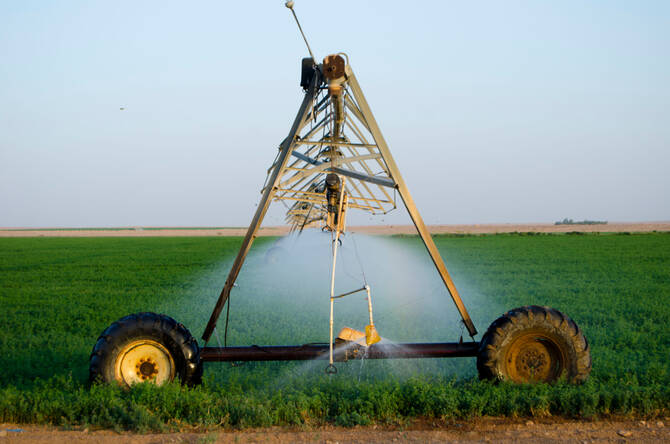
IFAD helps farmers turn climate risks into opportunities. Our investments support drought-resistant crops, water-efficient irrigation, sustainable land management, and soil and water conservation.
Climate-resilient infrastructure, such as flood-resistant roads, storage facilities, and early-warning systems, helps communities prepare for and recover from extreme weather events. At the same time, expanding access to finance and insurance enables farmers to invest in their own adaptation and growth.
IFAD also uses new tools such as risk-sharing and first-loss instruments to mobilize more financing, particularly from the private sector, to build resilience and close the large financing gap for farmers adapting to climate change.
For example, in 2022 IFAD issued its first sustainability bond, becoming the first and only UN fund to do so, and has since surpassed $1 billion in sustainability bond issuances.
How would you describe the level of cooperation between IFAD and Saudi Arabia?
Saudi Arabia is a high-value strategic partner and a founding member of IFAD. Our cooperation spans development financing, technical cooperation, food security, climate action, and rural development.
Over the years, the partnership has evolved beyond financial contributions to include policy dialogue, knowledge exchange, and collaboration with key Saudi institutions.
What are the most important programs and initiatives implemented in cooperation with Saudi Arabia in agricultural and rural development?
IFAD has worked with the Ministry of Environment, Water and Agriculture, including a technical support program backing coffee and mango value chains in Jazan.
We also cooperate with institutions such as the Saudi Fund for Development and the Saudi Agricultural Development Fund, particularly in food security, livelihoods, and resilience.
The opening of IFAD’s Riyadh office in 2019 provided an important gateway to deepen our engagement with Saudi Arabia, strengthen partnerships across the Gulf, and work more closely with regional financing institutions to expand impact where it is needed most.
How does the IFAD-Saudi partnership align with Vision 2030 goals, especially in food security and sustainability?
The partnership aligns closely with Saudi Arabia’s Vision 2030 focus on sustainability, particularly in water management, economic diversification, innovation, and food security.
Both IFAD and Saudi Arabia recognize the importance of investing in resilient food systems, supporting the private sector, fostering innovation, and addressing environmental challenges to ensure long-term prosperity.
How do you see the future of the partnership with Saudi Arabia? Are there new projects or programs currently underway?
Today, IFAD’s partnership with Saudi Arabia is stronger and more dynamic than ever. We are exploring opportunities to deepen cooperation in climate resilience, water security, value-chain development, capacity building, innovation, and investment in fragile and food-insecure states.
We also see significant potential for collaboration through Saudi-led green initiatives and regional development platforms. By combining Saudi Arabia’s resources with IFAD’s expertise in rural transformation, we can help build more resilient food systems for everyone.
What has been Saudi Arabia’s contribution to IFAD’s programs globally, and what impact have these contributions had on beneficiary communities?
As a founding member, Saudi Arabia has contributed approximately $536 million to IFAD since its establishment and remains one of the organization’s most important partners.
These resources have helped finance projects that improve agricultural productivity, strengthen food security, create jobs, and increase resilience for millions of rural populations in Africa, Asia, and the Near East.
Over the past decade, IFAD-financed projects, supported by Saudi Arabia and other partners, increased production for 149 million people, expanded market access for 153 million people, and raised incomes for 188 million people.
How can technology and innovation contribute to boosting agricultural production and achieving sustainable development?
Technology and innovation are bringing real change to rural economies and agriculture, from precision irrigation services and digital advisory tools to rural finance and market platforms.
Digital tools and artificial intelligence help farmers increase productivity, reduce waste, manage climate risks, connect to markets and financial services, and access new economic opportunities, which is especially important for the younger generations entering the agricultural sector.
Innovation is also unlocking new sources of capital, from blended finance to sustainability bonds, enabling stronger public-private partnerships that help expand investment in agriculture and rural development.
What role can Saudi institutions and the private sector play in expanding partnerships with IFAD?
Saudi institutions and private-sector actors can bring financing, expertise, innovation, and market access. Their engagement can help scale successful development models, strengthen agricultural value chains, and mobilize additional resources to support food security and rural transformation across developing countries.
Public financing alone cannot deliver the transformation needed in today’s global food systems. By blending public and private capital, IFAD reduces investment risk and catalyzes private-sector financing at scale. Projects with strong private-sector engagement consistently outperform others, achieving income gains of nearly 64 percent, compared to much lower gains without such engagement.
How do you view the challenges facing global food security? What role can the Arab region play in addressing them?
Food security challenges are becoming increasingly complex, driven by mounting and interconnected pressures including climate change, conflict, water scarcity, and economic uncertainty. The Arab region can play a leading role as a driver of investment and innovation in agriculture, water management, climate adaptation, and regional cooperation. Countries such as Saudi Arabia are already demonstrating leadership in these areas.
What lessons have you learned from successful experiences IFAD has supported in agricultural and rural development?
One of the most important lessons is that lasting change happens when rural populations are placed at the center of development efforts. Successful programs combine infrastructure, finance, technical support, market access, and strong local ownership. When rural communities are empowered, development outcomes become truly sustainable and resilient.
How can women and youth in rural areas be empowered through IFAD’s programs?
When women and youth thrive, rural communities thrive. Evidence shows that empowering women and youth in rural areas yields disproportionately high returns in productivity, income, and community resilience.
IFAD invests in women and youth to build their skills and help them access markets, value chains, technology, and finance, enabling them to become active economic players, entrepreneurs, and drivers of innovation within their communities.
We also work with governments to develop policies that improve women’s and youth’s access to land and financial services, turning rural youth into entrepreneurs capable of investing, attracting investment, and creating jobs.
We also support nine agribusiness incubation hubs in Africa, which function as incubators and employment platforms, having created more than 59,000 quality jobs and over 8,000 enterprises. With 123 active projects in more than 90 countries, we reach an estimated 19 million rural youth worldwide. Today, half of IFAD’s new projects are designed to transform the lives and roles of women.
What distinguishes the partnership with Saudi Arabia compared to IFAD’s partnerships with other countries?
Saudi Arabia combines strong development leadership, significant financing capacity, and a growing commitment to food security, sustainability, and innovation. As a founding member of IFAD and a key regional actor, Saudi Arabia plays an important role in advancing development solutions at both the regional and global levels.
Do you expect the next phase to bring expanded cooperation between IFAD and Saudi Arabia in smart agriculture, water management, and climate adaptation?
Yes. These areas represent some of the most promising opportunities to strengthen our cooperation. They align closely with Saudi Arabia’s Vision 2030 priorities and with IFAD’s commitment to helping rural communities adapt to climate change while improving food security and livelihoods.
What message would you like to send to investors and stakeholders in Saudi Arabia’s agricultural sector regarding cooperation opportunities?
Agriculture has increasingly become a strategic investment sector. Through partnership with IFAD, investors can support initiatives that generate economic and social returns while contributing to food security, job creation, climate resilience, and ultimately stability in some of the world’s most vulnerable regions.
IFAD has attracted prominent investors from France, Germany, Japan, Morocco, and Sweden through sustainability bond issuances that have exceeded $1 billion in capital markets since 2022, bonds that generate financial returns alongside social and environmental impact.