


NAJRAN: Najran region’s environmental and agricultural strengths have helped farmers boost production, promote sustainable agriculture, strengthen food security, and support the local economy.
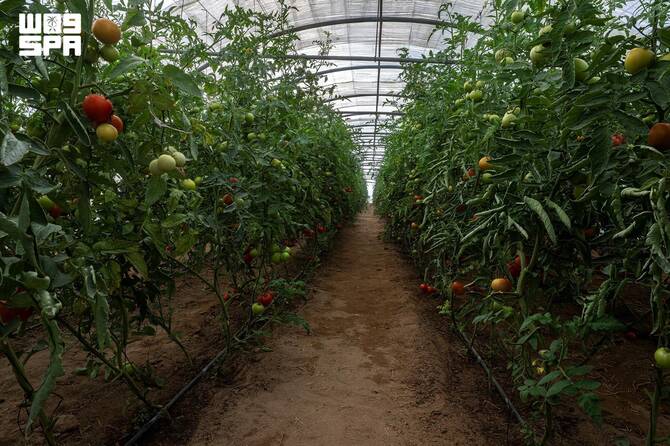
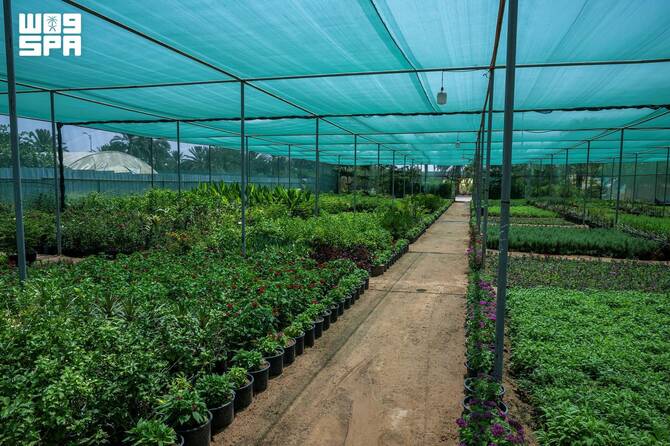
Greenhouses play a key role in modern farming by providing controlled environments that improve crop quality, increase yields, conserve water, and enable year-round production.
The region has more than 4,400 greenhouses producing over 37,000 tonnes of tomatoes and cucumbers, along with peppers, zucchini, eggplant, strawberries, figs, and leafy greens.

Equipped with advanced irrigation and climate-control systems, the greenhouses improve water efficiency, reduce waste, and protect crops from harsh weather and pests.
Meanwhile, Jazan is emerging as one of Saudi Arabia’s most promising agricultural investment destinations as the Kingdom works to build a more efficient and sustainable farming sector.
Capitalizing on its favorable climate and natural resources, the region is developing a tropical fruit and greenhouse project with investments exceeding SR600 million ($160 million).
The project spans 1 million sq. meters, including 500,000 sq. meters of high-tech greenhouses and 500,000 sq. meters dedicated to tropical fruit cultivation.
It incorporates smart farming technologies, including advanced climate-control systems and closed-loop irrigation that recycles water and cuts consumption by up to 75 percent, improving resource efficiency and supporting environmental sustainability.


