- Remains of 157 other people believed to be still buried in the debris of same Gaza City residential block
- Israeli restrictions on use of heavy machinery in the territory prevent recovery of bodies, Save the Children says
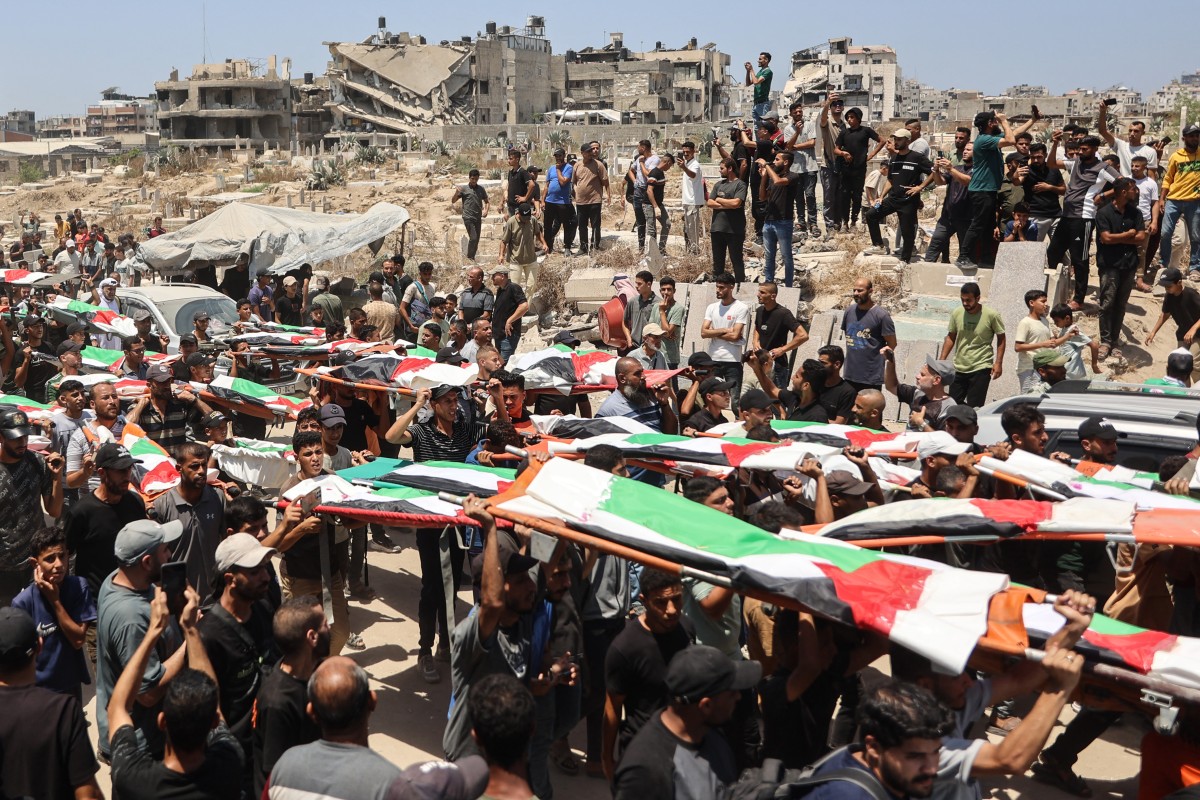
LONDON: At least 40 small coffins were among 112 laid side by side in Gaza on Tuesday as Palestinian families buried loved ones whose bodies had remained buried in the rubble of a bombed residential block for more than two and a half years.
The children’s remains were recovered from the debris of buildings in Gaza City destroyed by an Israeli airstrike in November 2023, according to media reports that cited Gaza’s civil defense.
Tuesday’s service was reportedly one of the largest mass funerals held in the enclave since the start of the latest war between Israel and Hamas. It is estimated that the remains of a further 157 people are still buried at the site.
Nearly three years after Israel launched its military campaign in Gaza following the Hamas-led attacks on Oct. 7, 2023, such recoveries of bodies remain rare.
“We are witnessing heartbreaking scenes in Gaza today, where the families and friends of dozens of children and adults were finally able to put their loved ones to rest,” said Ahmad Alhendawi, Save the Children’s regional director for the Middle East, North Africa and Eastern Europe.
“No family should go through the pain of losing their child, and then on top of this suffer the indignity of not being able to bury their bodies. Yet for countless families in Gaza, that has become their reality.”
He blamed the delays recovering bodies on restrictions imposed by Israel.
“Israeli authorities continue to restrict access for search-and-recovery teams, and prevent the entry of the heavy machinery, specialist equipment and forensic resources needed to recover those still buried beneath the rubble,” he added.
Alhendawi called for all such restrictions to be lifted immediately, saying “families have the right to recover, identify and mourn their children.” He also urged Israel to halt airstrikes “that continue to leave more families grieving the painful loss of their loved ones.”
The toll of the war on children has been staggering. At least 21,000 have been killed in Gaza since October 2023, according to the enclave’s health authority, and more than 44,000 have been wounded, many of them suffering life-altering injuries such as amputations, according to UN figures.
In a report published on June 23, an independent UN inquiry concluded that the harm was intentionally caused.
“The evidence shows that Palestinian children have been deliberately targeted and killed by the Israeli security forces,” said Srinivasan Muralidhar, chair of the UN Independent International Commission of Inquiry on the Occupied Palestinian Territory and Israel.
“Even after the October 2025 ceasefire, children continue to be killed and seriously injured, with continued disregard by Israel for the ceasefire and for the protection owed to Palestinian children under international law.”
The commission found that severe physical and mental injuries, mass trauma, orphanhood, family separation, disability, repeated displacement, starvation, and the collapse of education and healthcare have “erased childhood and will continue to affect children in Gaza throughout their lives.”
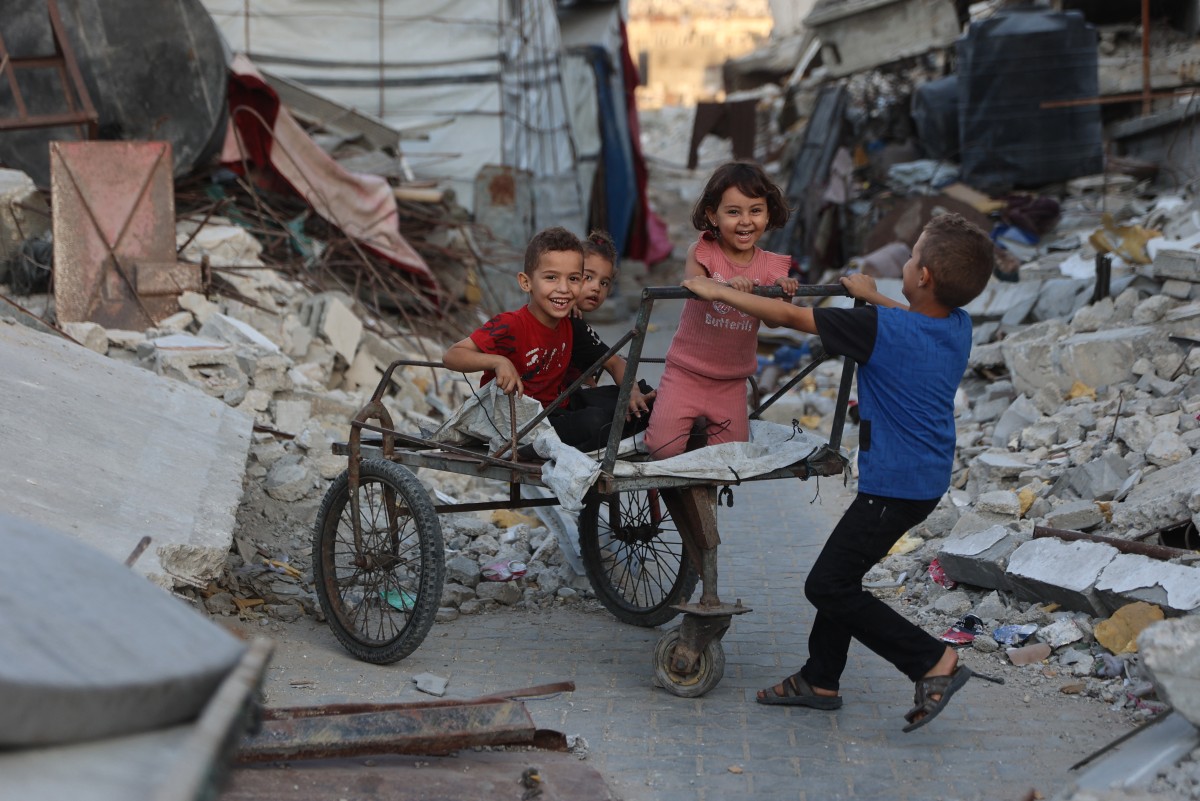
For families living through the conflict, that damage is measured in absences. Maysa Yousef, an artist and mother-of-three in central Gaza, said her children’s lives are shaped by loss more than anything else.
“In my own family, we’ve lost many people, for no reason,” she told Arab News. To the Israeli military, Gazans were “just numbers,” she added, and her children’s world has been hollowed out.
“My middle daughter lost her friends — they were all killed,” Yousef said. “She lost her teachers — all killed. My son is the same. Their entire social world is gone. His friend was killed in the first week of the war, then his teacher, then another friend, and on and on.
“With so many killed, loss has become something enormous in these children’s lives. How do you tell a child, ‘It’s fine, just carry on, they’ve gone to a better place and we’re still here?’”
Alongside grief and trauma, many children have been forced to take on adult responsibilities, such as hauling water for long distances and queuing for hours to collect limited food supplies for their families.
This is “what happens when survival becomes a child’s full-time occupation,” said Dr. Jeeda Alhakim, a specialist counseling psychologist at City St. George’s, University of London.
“Psychologists use the term ‘parentification’ to describe children taking on responsibilities that belong to adults,” she told Arab News.
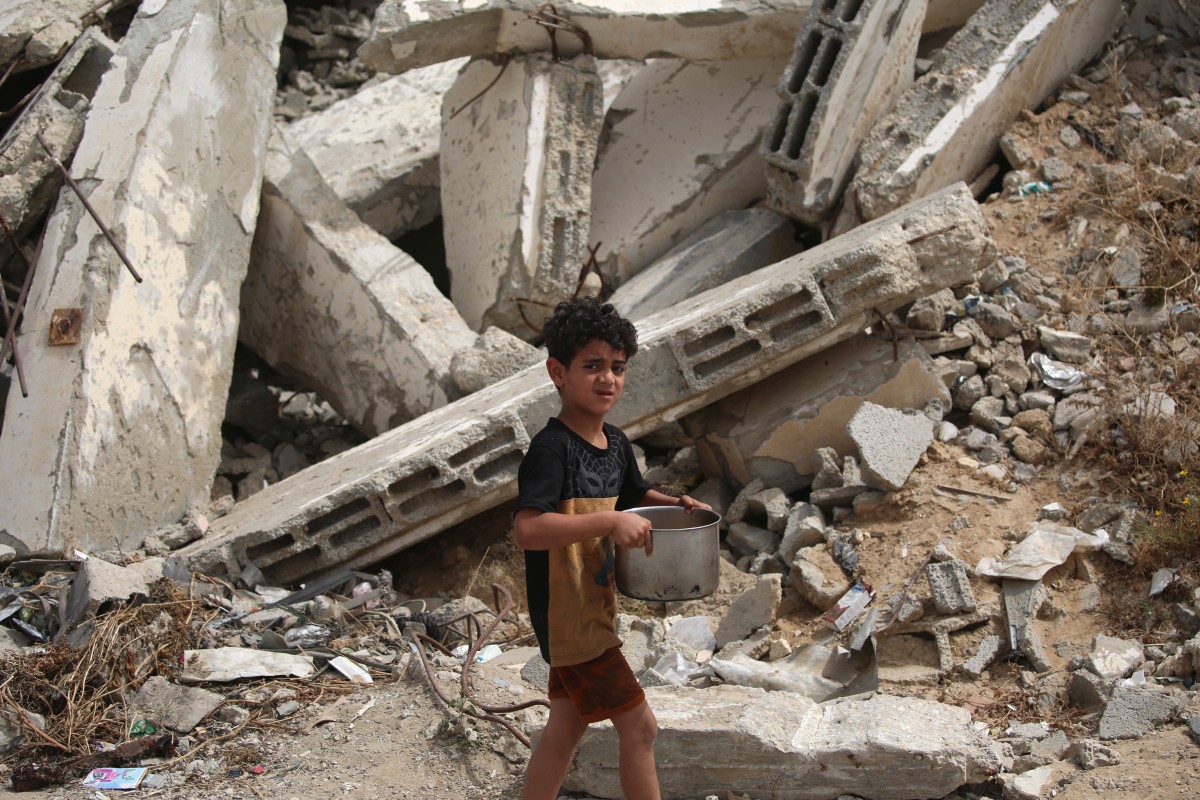
“It is worth noting that this framework was developed in Western clinical contexts and does not fully capture what is happening in Gaza, where an entire generation is carrying adult burdens not because of family dysfunction, but because the basic infrastructure of daily life has been destroyed.
“The same research consistently finds something that can be surprising: that a sense of meaning can remain more stable than expected. This is better understood through the concepts of ‘sabr’ and ‘sumud,’ a form of patient, collective endurance rooted in Islamic and Palestinian cultural frameworks that sustains dignity without requiring optimism,” Alhakim continued.
“The child carrying water is not only suffering; they may also understand themselves as contributing to their family’s survival — and that matters, psychologically.”
The block where the bodies of the 40 children laid to rest on Tuesday were recovered is one of hundreds of war-damaged sites across Gaza that remain uncleared, the bodies of victims still unrecovered.
“The numbers here keep climbing,” said Yousef, the mother-of-three. “We resist this idea but today we’re certain of it: we’re just numbers. Israel does as it pleases, and no one holds it accountable.”