

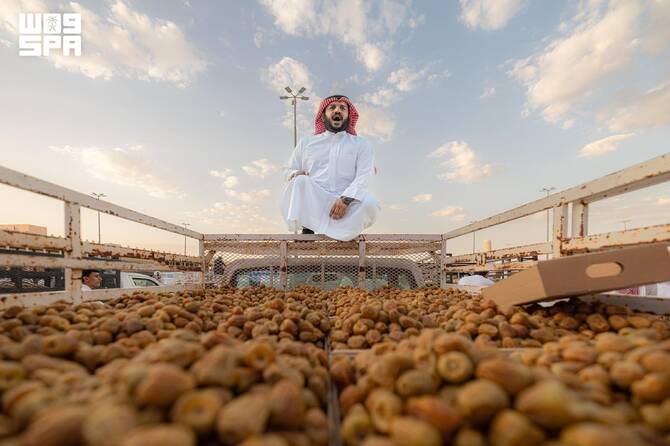

JEDDAH: The Qassim region continues to strengthen its position as Saudi Arabia’s capital of dates, with millions of palm trees producing a wide range of premium varieties.
Among them is sukkari, one of the Kingdom’s leading agricultural products and among the most sought-after dates in local and international markets, according to the Saudi Press Agency.
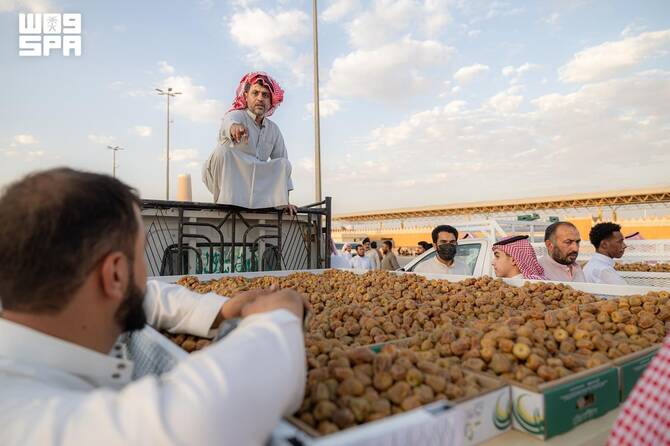
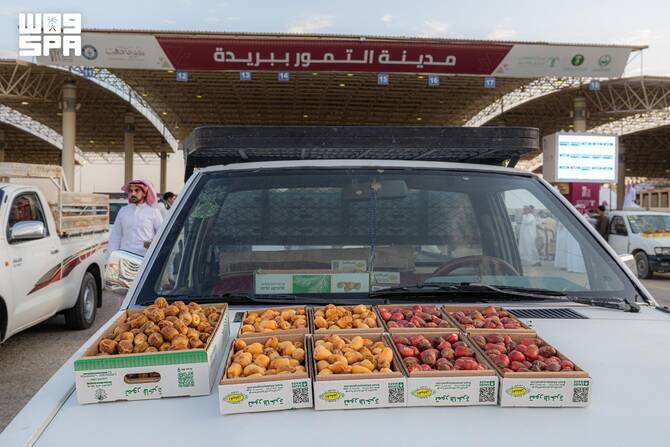
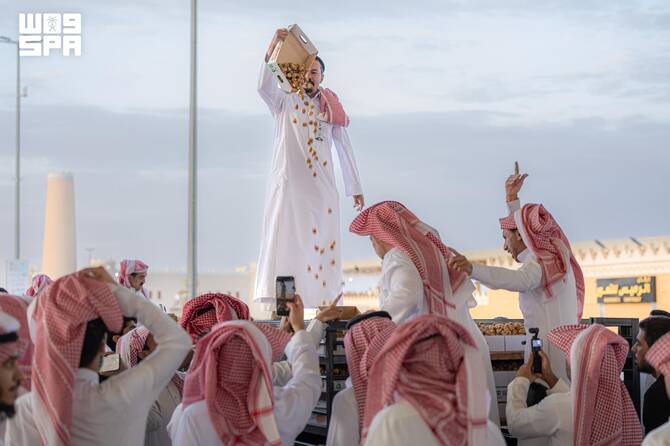
The region’s date industry takes center stage each year at the Buraidah International Dates Carnival, the world’s largest dates festival, which brings together thousands of farmers, traders, and investors.
Organized by the National Center for Palms and Dates, the event runs through to Oct. 15 and features many entertainments, including a rural farm showcasing Qassim’s agricultural heritage, and community events at King Khalid Cultural Center.
The carnival boosts commercial activity while creating new opportunities for investment and exports in the Kingdom’s palm and dates sector. It also applies the latest grading, packaging, and marketing practices to ensure product quality and transparent sales, further strengthening the competitiveness of Saudi dates in regional and international markets.
Alongside sukkari, Qassim produces a wide range of date varieties, including barhi, khalas, sagai, and nabut saif. Renowned for their quality and nutritional value, Saudi dates are in growing demand at home and abroad, supporting exports to dozens of international markets.
Khaled Al-Nuqidan, the carnival’s CEO, said the event had cemented its status as the world’s largest dates festival and was listed in Guinness World Records, reflecting the region’s leadership in the palm and dates sector and the global standing of Saudi dates.
He added the carnival attracted thousands of farmers, traders, and investors each year, providing an integrated economic and marketing platform that boosted commercial activity, increased the value of Saudi dates, and expanded investment and export opportunities.
Al-Nuqidan said that Saudi dates reached dozens of international markets thanks to their high quality and the adoption of the latest grading, packaging, and marketing practices, enhancing their global competitiveness while supporting the goals of Saudi Vision 2030.
The carnival also celebrates the region’s long-standing role as a trading hub. According to the carnival’s website, the history of the Buraidah date market was documented by Arab and Western travelers who visited the Kingdom during its early years.
Among them was French explorer Charles Huber, who wrote in “First Journey in Central Arabia,” based on his travels between 1880 and 1881: “Buraidah is a large commercial center, but it only experiences its peak prosperity during the four months following the date harvest. At this time, it is often seen outside Buraidah, with more than 1,000 Bedouin tents, (people) coming to stock up on dates, wheat, rice, and the few fabrics they need.”
The National Center for Palms and Dates has introduced a mandatory electronic system through its Seasonal Markets platform to regulate trading at the carnival, improving efficiency, transparency, and transaction reliability.
The platform formalizes contractual relationships between farmers, marketers, and buyers, creates a comprehensive database to support decision-making, and protects stakeholders’ rights through a secure electronic system.
The carnival reflects the scale of Qassim’s palm and dates sector. The region is home to more than 11 million palm trees and produces about 578,000 tonnes of dates annually. It generates an estimated SR3.2 billion ($855 million) in annual economic returns and creates more than 4,000 direct and indirect jobs.


