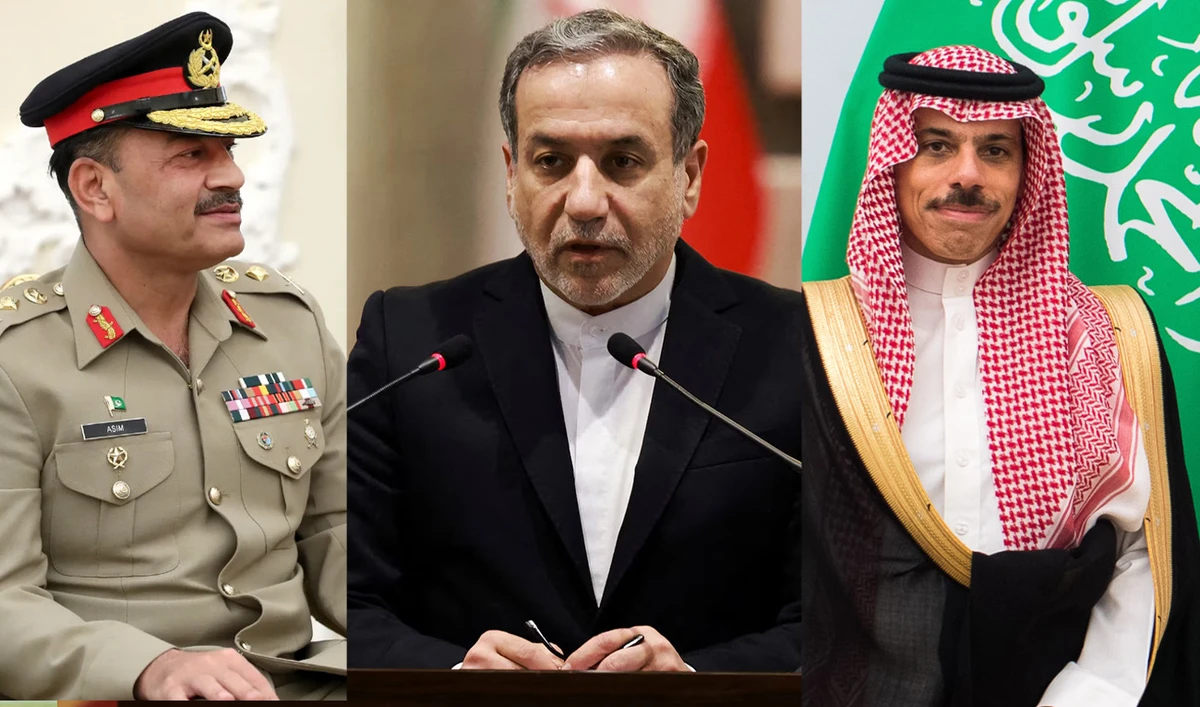
- Araghchi, Asim Munir and Saudi FM review latest diplomatic efforts to maintain regional security, find “political solution”
- Fresh contacts come a day after Trump halted planned US strikes, announced renewed talks with Tehran on Monday
ISLAMABAD: Iran’s Foreign Minister Seyed Abbas Araghchi held telephone conversations with Pakistan’s Field Marshal Syed Asim Munir and Saudi Foreign Minister Prince Faisal bin Farhan for the second time in 24 hours, Iranian state media reported on Monday, as diplomatic efforts intensified to prevent a wider regional conflict.
The latest calls follow a series of high-level contacts on Sunday, when Araghchi spoke with Munir and with Turkish Foreign Minister Hakan Fidan after Trump said he had suspended planned military action, claiming Middle Eastern countries had reached the “parameters” of a deal to end the five-month conflict. Iran has publicly disputed Trump’s account that it requested the pause but has continued consultations with regional governments.
“They reviewed and exchanged views on the latest diplomatic efforts and initiatives aimed at maintaining and strengthening security and stability in the West Asian region,” IRNA said of Monday’s calls.
“The parties also emphasized the need to utilize the potential of regional cooperation and political solutions in this direction,” the agency added.
The renewed diplomatic contacts come as Washington and Tehran prepare for another round of talks after Trump said negotiations would begin on Monday, although he declined to set a deadline for reaching an agreement. The proposed talks are expected to focus on Iran’s nuclear program and reopening the Strait of Hormuz, a key global oil shipping route.
On Sunday, Araghchi had warned that any hostile action by the United States or Israel, or participation by regional countries in such actions, would draw a “decisive and proportionate” response from Iran.
The United States and Israel launched military operations against Iran in late February, saying they aimed to curb Tehran’s missile capabilities, prevent it from developing a nuclear weapon and end its support for allied armed groups. Since then, the conflict has disrupted shipping in the Gulf and Red Sea, driven up energy prices and prompted repeated diplomatic efforts by regional states to prevent a broader war.
Trump has repeatedly issued threats since February that he would escalate the war on Iran, only to allow more time for talks, which have so far not led to a comprehensive deal.
Trump’s apparent de-escalation after days of threats of new attacks from each side was the latest twist in the war. Attacks have spread across the Gulf to the Red Sea and even a Mediterranean facility in Egypt.
Iran has largely closed the Strait of Hormuz, a conduit for 20 percent of the world’s oil and liquefied natural gas before the start of the war, causing energy prices to rise and stoking broader inflation.
The US president has argued that his stated goal of keeping Iran from gaining nuclear weapons justifies higher fuel costs in the near term, but the economic pain has put political pressure on him to find a way to end the conflict.
With additional inputs from Reuters