- Foreign ministers condemn Israeli actions in Gaza, West Bank, Al-Aqsa Mosque compound
- Jordanian FM praises Pakistan's regional diplomacy and mediation efforts amid escalating US-Iran war
ISLAMABAD: Pakistan and Jordan agreed on Tuesday to coordinate diplomatic efforts among Arab and Islamic countries in response to the worsening situation in Gaza and the occupied West Bank, as their foreign ministers discussed mounting violence and growing tensions at Jerusalem's Al-Aqsa Mosque compound.
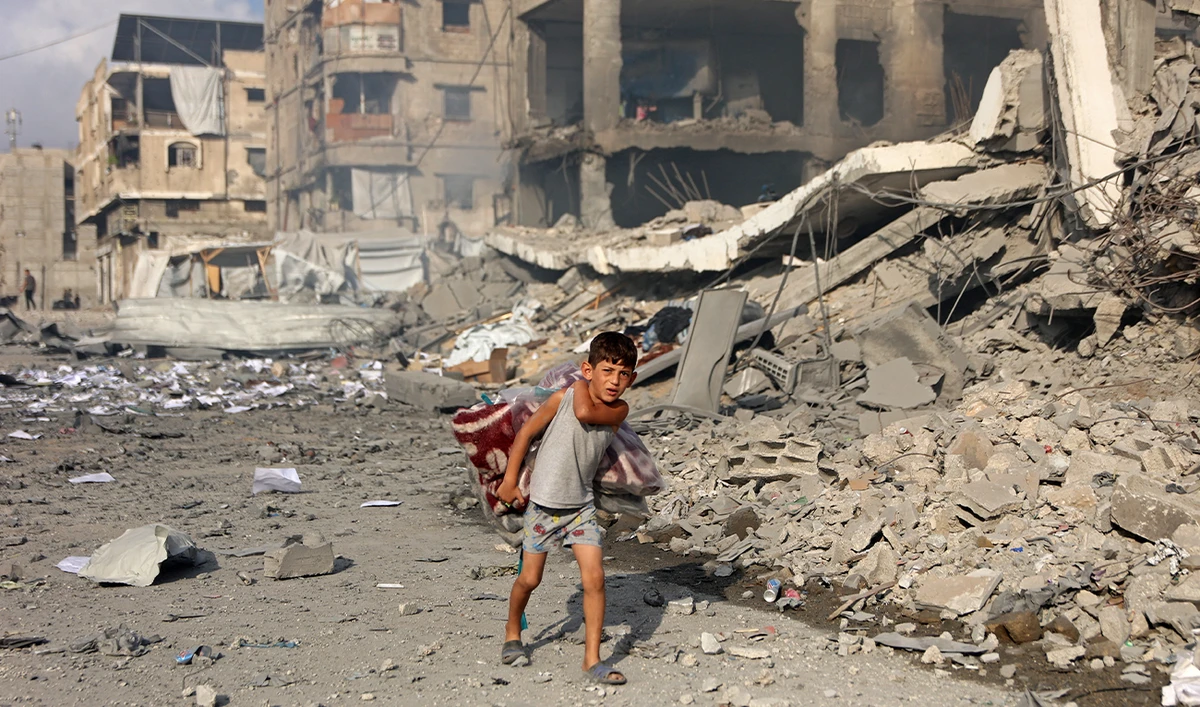
The conversation between Deputy Prime Minister and Foreign Minister Ishaq Dar and his Jordanian counterpart, Ayman Safadi, comes amid intensifying Israeli military operations in Gaza, continued violence in the occupied West Bank and heightened concerns over access to Muslim holy sites in East Jerusalem. The two ministers also discussed Jordan's proposal to convene a meeting of Arab and Islamic countries to assess the evolving situation and coordinate a joint diplomatic response.
Dar and Safadi spoke by telephone and expressed "grave concern" over continued Israeli military actions, including intensified air strikes, ongoing ground operations and escalating settler violence, Pakistan's foreign ministry said.
Dar reaffirmed Pakistan's longstanding support for the Palestinian cause and reiterated Islamabad's backing for a negotiated two-state solution.
"He reiterated Pakistan's principled support for a just, lasting, and comprehensive peace through the implementation of the two-State solution, with the establishment of an independent, contiguous, and viable State of Palestine, based on the pre-1967 borders, with Al-Quds Al-Sharif as its capital," the foreign ministry said.
The two leaders also condemned repeated incursions into the Al-Aqsa Mosque compound by Israeli settlers and far-right groups, as well as restrictions imposed on Palestinian worshippers, saying such actions violated the sanctity of the holy site, inflamed tensions and undermined prospects for peace.
Safadi also praised Pakistan's broader diplomatic role in the Middle East, where Islamabad has sought to facilitate dialogue between regional rivals and mediate the ongoing war between Washington and Tehran.
Pakistan hosted direct talks between the United States and Iran in Islamabad in April before the two sides signed the Islamabad Memorandum of Understanding on June 17, opening a 60-day window for negotiations on ending the conflict.
Follow-up talks in Bürgenstock, Switzerland, later produced a roadmap toward a final agreement, established a high-level oversight committee and working groups, and created a communication mechanism aimed at preventing military incidents and safeguarding commercial shipping through the Strait of Hormuz.
However, the diplomatic process has come under renewed strain after fighting between the United States and Iran resumed this month, prompting Pakistan to explore ways to revive negotiations.
Safadi "appreciated Pakistan's constructive role and efforts for regional peace and stability and expressed hope for positive outcomes from the ongoing diplomatic initiatives," according to the foreign ministry statement.