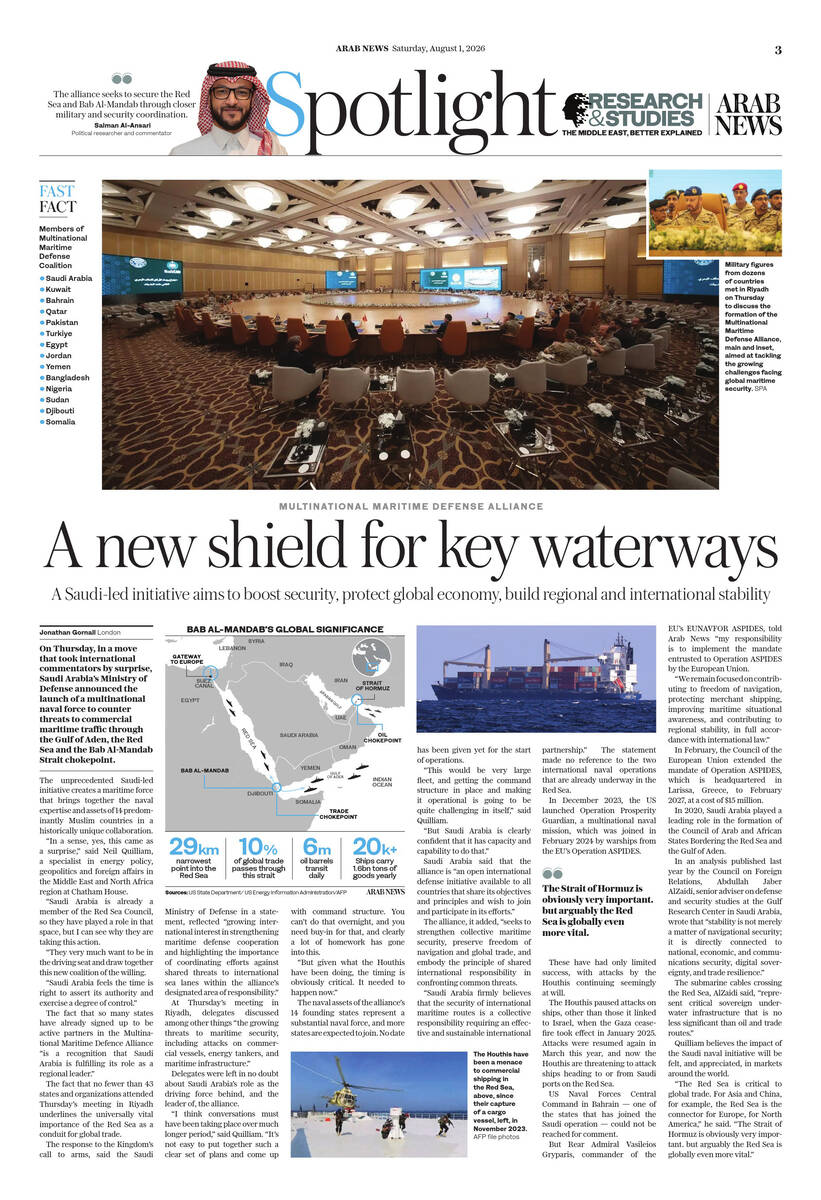
- New multinational force to safeguard global trade routes amid escalating threats in the Red Sea and Bab Al-Mandab strait
- Analysts say initiative reflects Riyadh’s growing leadership role while boosting regional and international security cooperation
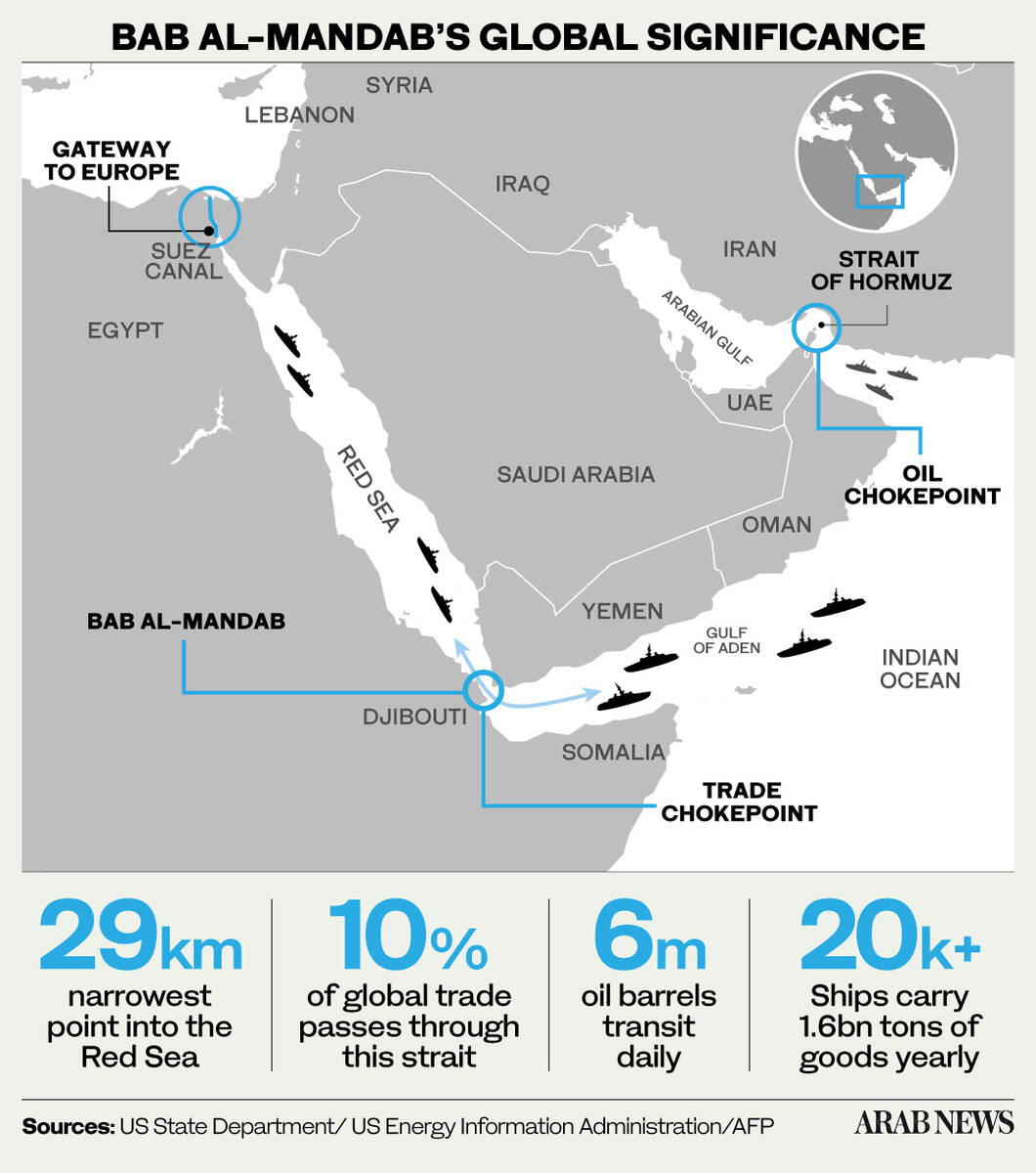
LONDON: In a move that took international commentators by surprise, Saudi Arabia’s Ministry of Defense on Thursday announced the launch of a multinational naval force to counter threats to commercial maritime traffic through the Gulf of Aden, Red Sea and the Bab Al-Mandab Strait chokepoint.
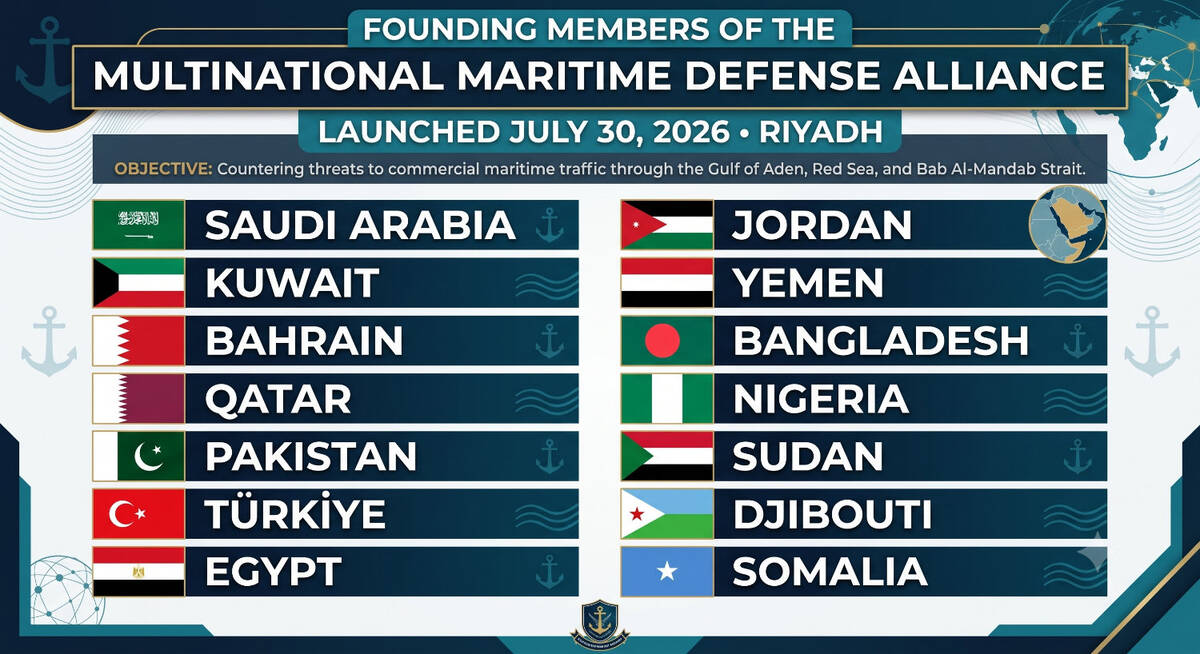
The unprecedented Saudi-led initiative creates a maritime force that brings together the naval expertise and assets of 14 predominantly Muslim countries in a historically unique collaboration.
“In a sense, yes, this came as a surprise,” said Neil Quilliam, a specialist in energy policy, geopolitics and foreign affairs in the Middle East and North Africa region at Chatham House.
“Saudi Arabia is already a member of the Red Sea Council, so they have played a role in that space but I can see why they are taking this action. They very much want to be in the driving seat and draw together this new coalition of the willing.
“Saudi Arabia feels the time is right to assert its authority and exercise a degree of control.”
The fact that so many states had already signed up to be active partners in the Multinational Maritime Defense Alliance “is a recognition that Saudi Arabia is fulfilling its role as a regional leader,” Quilliam said.
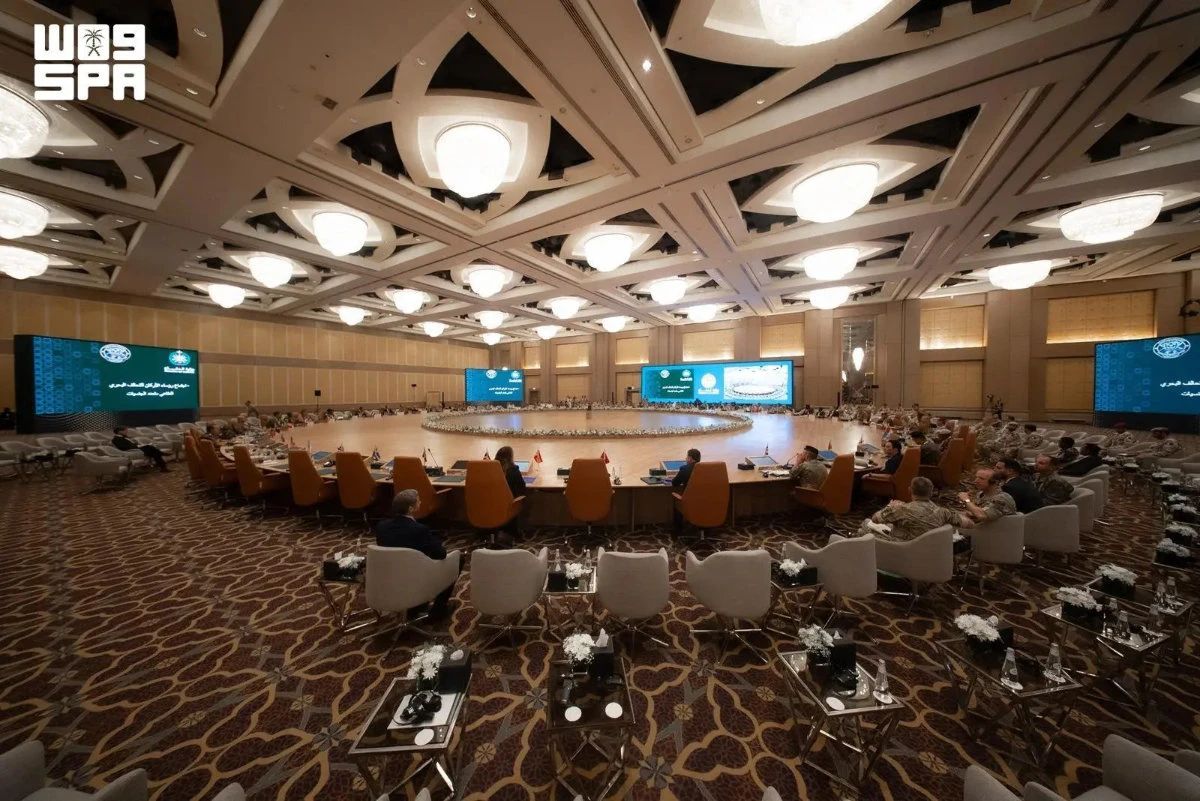
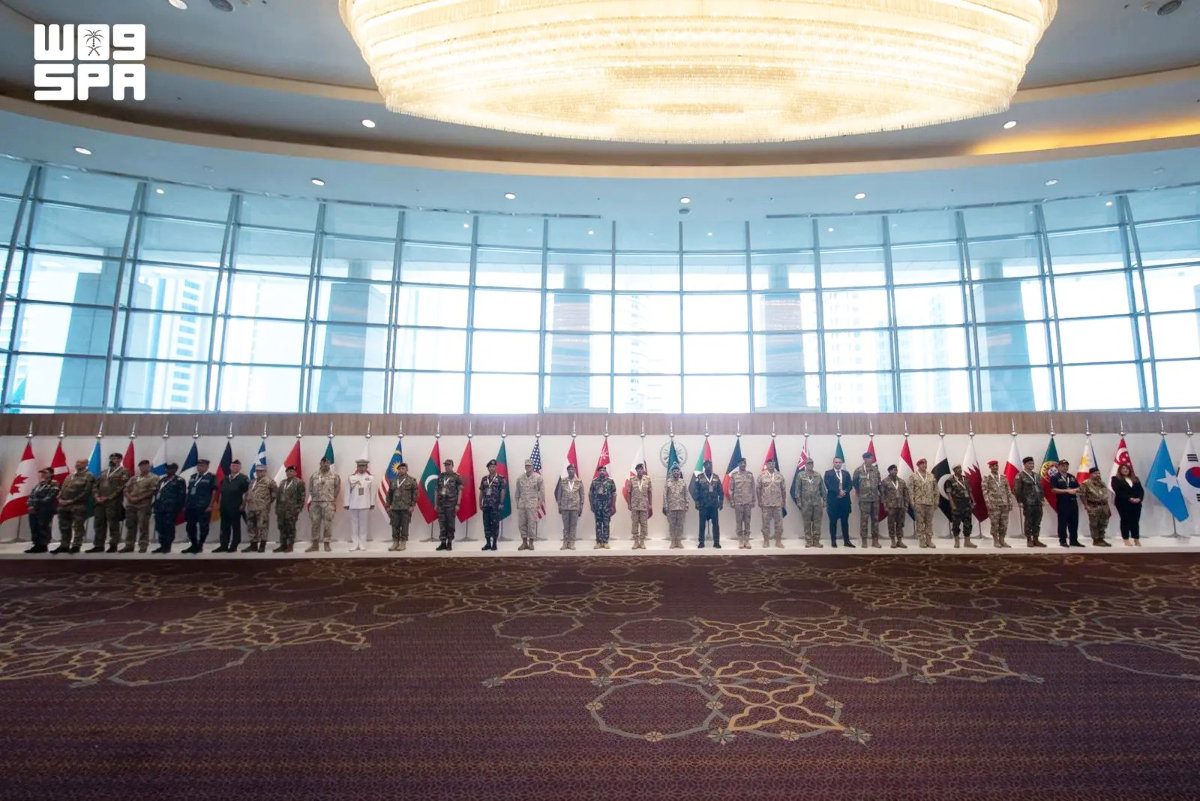
Although the Red Sea has become an important outlet for Saudi oil over the past months, the fact that no fewer than 43 states and organizations attended Thursday’s meeting in Riyadh underlines the universally vital importance of the waterway as a conduit for global trade.
The response to the Kingdom’s call to arms, said the Saudi Ministry of Defense in a statement issued yesterday, reflected “growing international interest in strengthening maritime defense cooperation and highlighting the importance of coordinating efforts against shared threats to international sea lanes within the alliance’s designated area of responsibility.”
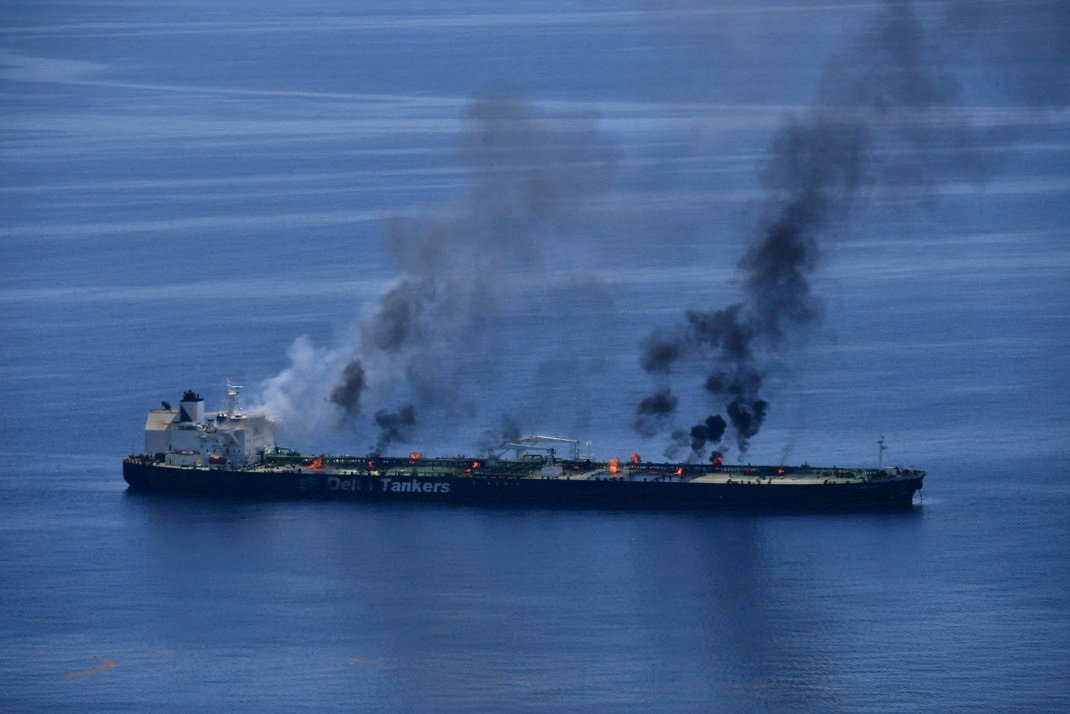
At the meeting in Riyadh delegates discussed “the growing threats to maritime security, including attacks on commercial vessels, energy tankers and maritime infrastructure, as well as the risks these pose to safe navigation, the stability of global supply chains and the international economy.”
The founder members of the alliance are Saudi Arabia, Kuwait, Bahrain, Qatar, Pakistan, Turkiye, Egypt, Jordan, Yemen, Bangladesh, Nigeria, Sudan, Djibouti and Somalia.
As things stand, neither the American nor European navies are part of the alliance. It is not clear if the US was invited to the conference. The delegation of the EU to the Kingdom was represented at the meeting but the EU is not listed as a member of the alliance.
The delegates were presented with a draft charter of the alliance, complete with details of the proposed organizational structure, command-and-control arrangements and proposed future steps. Military planners from the participating nations are now forging ahead with detailed planning work.
Delegates were left in no doubt about Saudi Arabia’s role as the driving force behind the alliance.
The meeting “also discussed the alliance’s founding arrangements, foremost among them that Saudi Arabia would serve as the alliance’s founding and leading state and host its headquarters, reflecting international confidence in the Kingdom’s leadership in advancing collective maritime security,” the Ministry of Defense said.
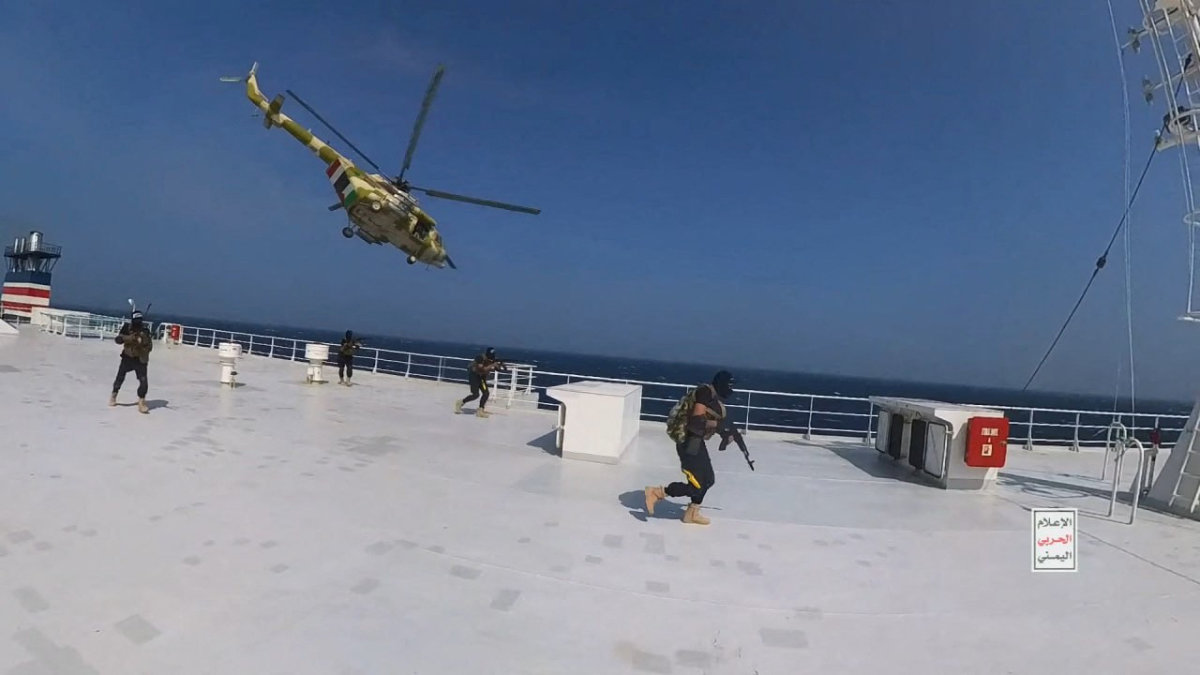
Saudi Arabia has moved astonishingly fast. It is less than a week since the Iran-backed Houthi militia in Yemen announced that it intended to impose a blockade on the Bab Al-Mandab Strait at the southern end of the Red Sea, tightening the grip on global oil supplies already being exercised by Tehran in the Strait of Hormuz.
“I think conversations must have been taking place over a much longer period,” Quilliam said.
“It’s not easy to put together such a clear set of plans and come up with a command structure. You can’t do that overnight and you need buy-in for that, and clearly a lot of homework has gone into this.
“But given what the Houthis have been doing, the timing is obviously critical. It needed to happen now.”
The naval assets of the founding nations represent a substantial force and more states are expected to join. No date has been given yet for the start of operations.
“This would be very large fleet and getting the command structure in place and making it operational is going to be quite challenging in itself,” Quilliam said.
“But Saudi Arabia is clearly confident that has capacity and capability to do that.”
The ministry’s statement said that the alliance was “an open international defense initiative available to all countries that share its objectives and principles and wish to join and participate in its efforts.”
The alliance “seeks to strengthen collective maritime security, preserve freedom of navigation and global trade and embody the principle of shared international responsibility in confronting common threats,” it said.
“Saudi Arabia firmly believes that the security of international maritime routes is a collective responsibility requiring an effective and sustainable international partnership.”
“The meeting also discussed the alliance’s founding arrangements, foremost among them that Saudi Arabia would serve as the alliance’s founding and leading state and host its headquarters, reflecting international confidence in the Kingdom’s leadership in advancing collective maritime security.
“Participants agreed that military planners from countries wishing to join the alliance would continue their work during the next phase to complete the founding procedures," the statement said.
“These include finalizing the alliance’s charter and reference documents, organizational structure, command-and-control arrangements, operational mechanisms, and the necessary technical frameworks and teams.
“This will proceed alongside the completion of national procedures by prospective member states, paving the way for the charter’s signature, the alliance’s launch, and the commencement of its operations.
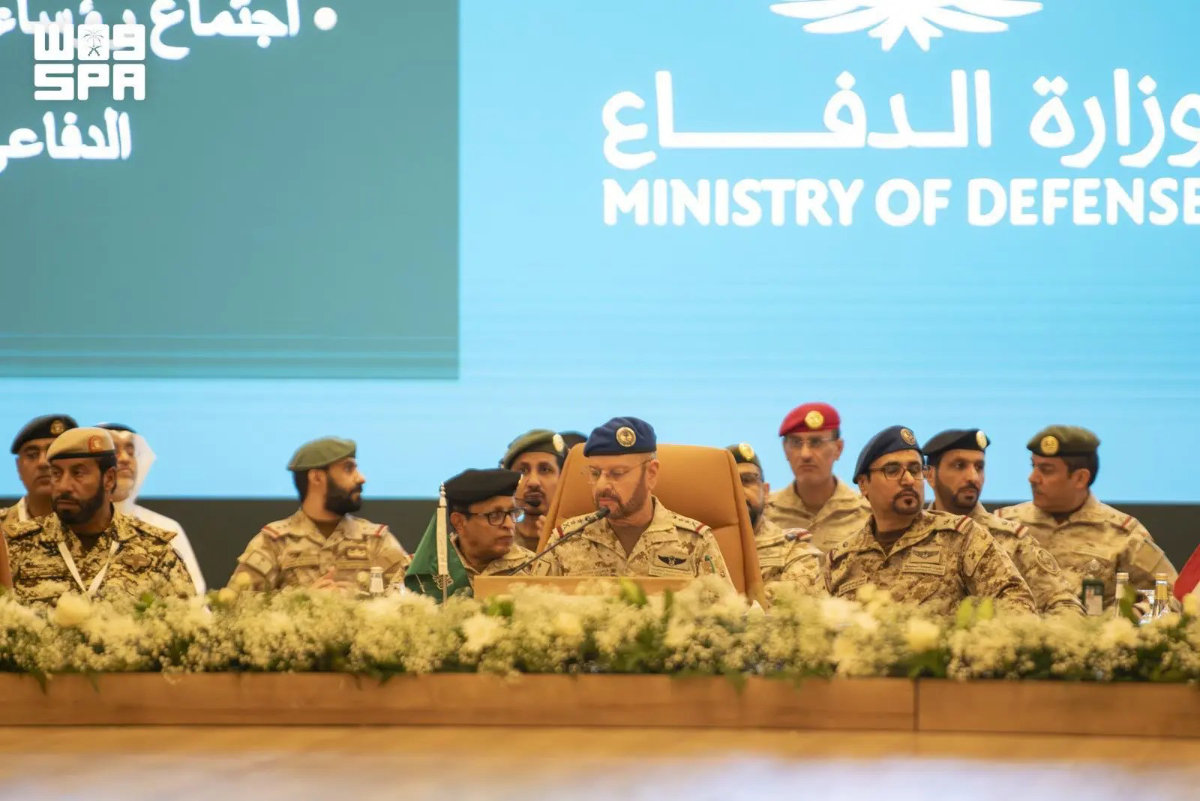
“The meeting also discussed the alliance’s founding arrangements, foremost among them that Saudi Arabia would serve as the alliance’s founding and leading state and host its headquarters,” according to political researcher and commentator Salman Al-Ansari’s translation that he posted on X.
“Participants agreed that military planners from countries wishing to join the alliance would continue their work during the next phase to complete the founding procedures.
These include finalizing the alliance’s charter and reference documents, organizational structure, command-and-control arrangements, operational mechanisms, and the necessary technical frameworks and teams.
“This will proceed alongside the completion of national procedures by prospective member states, paving the way for the charter’s signature, the alliance’s launch, and the commencement of its operations,” the statement said.
““Other countries participating in the meeting also affirmed their support for the initiative and are completing the necessary domestic procedures and approvals required to join,” it added.
The statement made no reference to the two international naval operations that are already underway in the Red Sea.
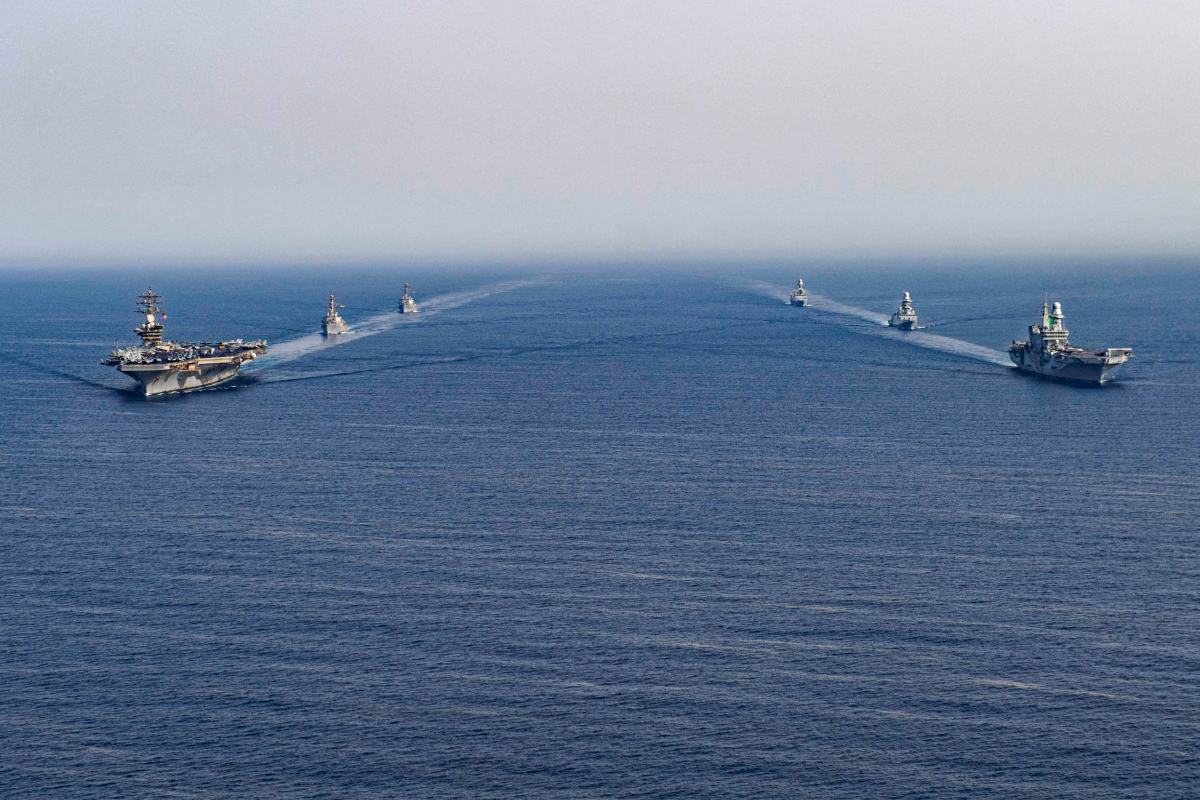
In December 2023, the US launched Operation Prosperity Guardian, a multinational naval mission, which was joined in February 2024 by warships from the EU’s Operation Aspides.
These have had only limited success, with attacks by the Houthis continuing seemingly at will.
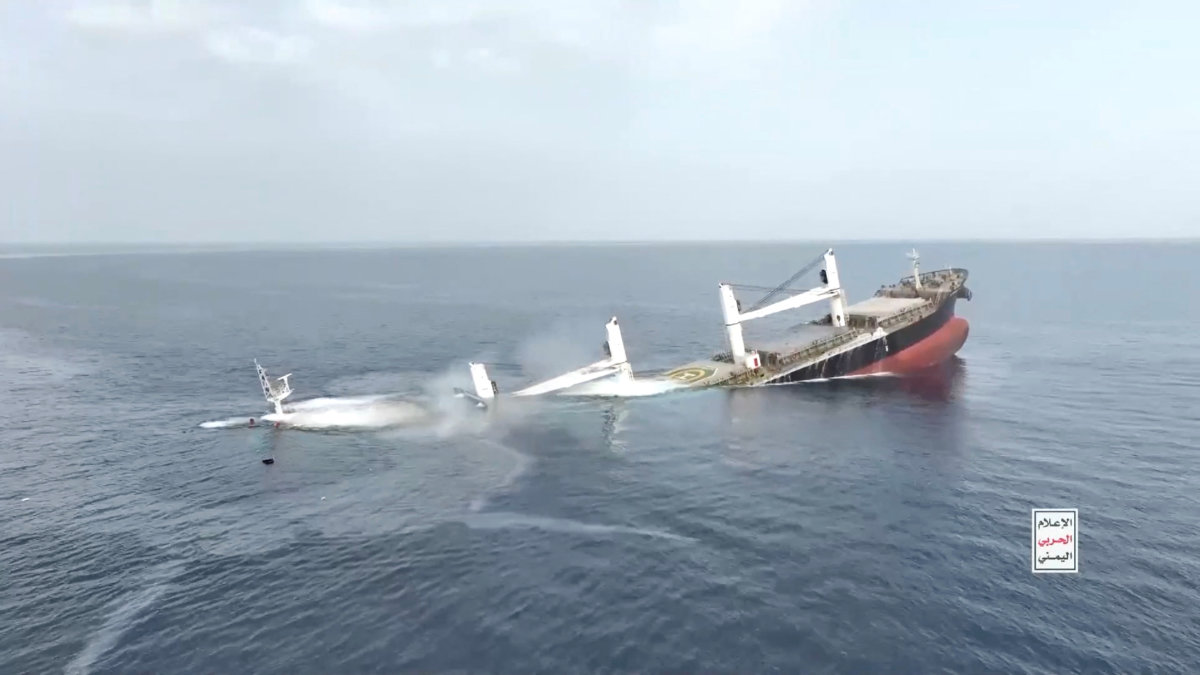
The Houthis paused attacks on ships, other than those it linked to Israel, when the Gaza ceasefire took effect in January 2025. The attacks resumed in March this year and now the Houthis are threatening to attack ships heading to or from Saudi ports on the Red Sea.
US Naval Forces Central Command in Bahrain — one of the states that has joined the Saudi operation — could not be reached for comment.
But Rear Admiral Vasileios Gryparis, commander of the EU’s Naval Force Aspides, told Arab News that “my responsibility is to implement the mandate entrusted to Operation Aspides by the European Union.”
“We remain focused on contributing to freedom of navigation, protecting merchant shipping, improving maritime situational awareness and contributing to regional stability, in full accordance with international law.”
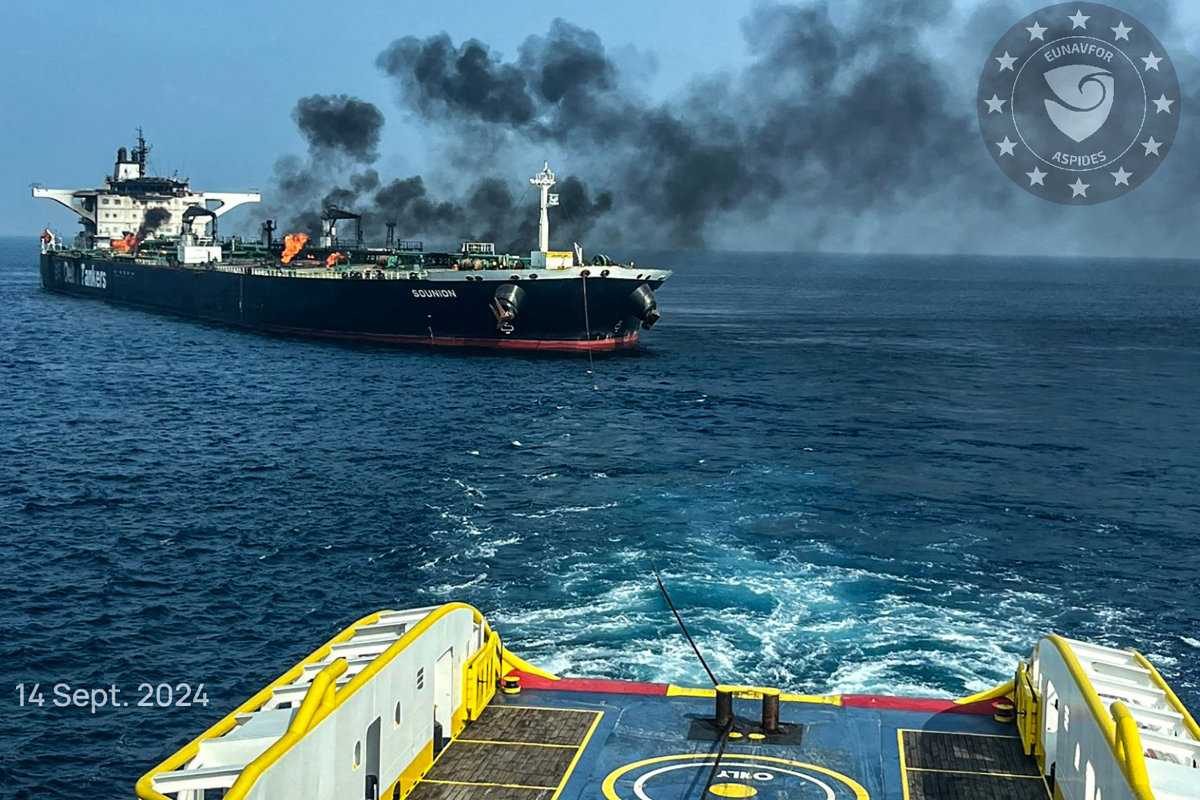
In February the Council of the European Union extended the mandate of Operation Aspides, which is headquartered in Larissa, Greece, to February 2027, at a cost of $15 million.
In 2020 Saudi Arabia played a leading role in the formation of the Council of Arab and African States Bordering the Red Sea and the Gulf of Aden but recent events have suggested other steps had to be taken to preserve the security of the vital waterway.
In an analysis published last year by the Council on Foreign Relations, Abdullah Jaber AlZaidi, senior adviser on defense and security studies at the Gulf Research Center in Saudi Arabia, wrote that “from the perspective of the Kingdom of Saudi Arabia and the Red Sea coastal states, stability is not merely a matter of navigational security — it is directly connected to national, economic and communications security, digital sovereignty and trade resilience.”
It was not just a matter of protecting shipping, he said. The submarine cables crossing the Red Sea “represent critical sovereign underwater infrastructure that is no less significant than oil and trade routes.”
“Consequently, the most effective approach to securing the region must include the protection of those cables and other digital infrastructure alongside the protection of ports, in addition to enhancing maritime domain awareness, building the capacities of littoral states and protecting the marine environment.”
Quilliam believes the impact of the Saudi naval initiative will be felt, and appreciated, in markets around the world.
“The Red Sea is critical to global trade,” he said. “For Asia and China, for example, the Red Sea is the connector for Europe, for North America. The Strait of Hormuz is obviously very important. but arguably, the Red Sea is globally even more vital.”
For the Chinese the Saudi initiative “is an important move for them and I’m sure there must be discussions and negotiations taking place around this. China will see massive benefits from this coalition coming together.”