- UKMTO reports three tanker incidents since Saturday near Hormuz chokepoint
- Saudi oil tankers resume Red Sea transit as Gulf shipping remains cautious
DUBAI/SINGAPORE: A tanker was struck by an unknown projectile off the coast of Oman, while another reported an explosion nearby, maritime authorities said, as security concerns around the Strait of Hormuz continued to disrupt shipping through one of the world’s most critical energy corridors.
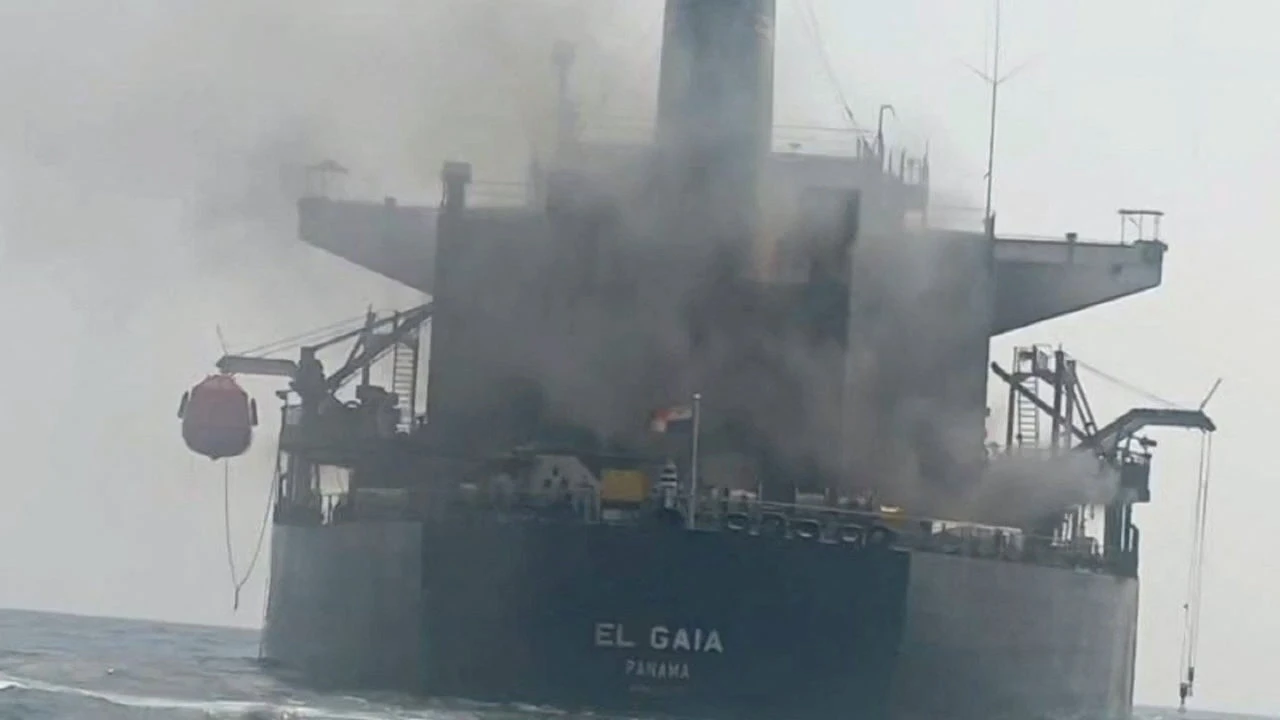
The United Kingdom Maritime Trade Operations (UKMTO) said the first incident occurred about 11 nautical miles northeast of Lima, on Oman’s Musandam Peninsula, where a tanker was hit by an unidentified projectile that damaged its engine room and left the vessel not under command.
No casualties or pollution were reported.
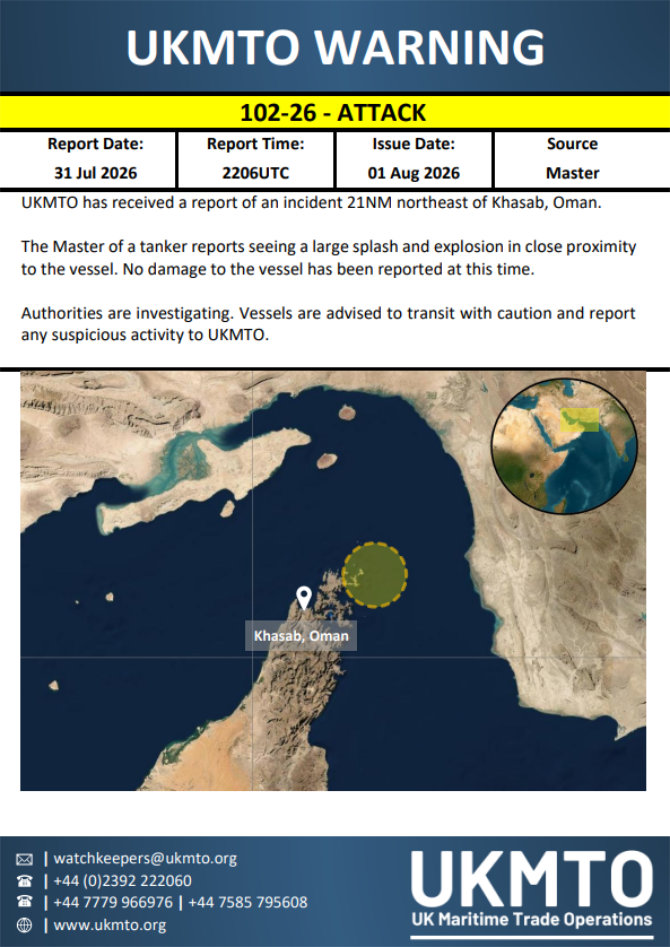
Hours later, another tanker sailing about 21 nautical miles northeast of Khasab reported a large splash and an explosion close to the vessel, although it sustained no damage. The crew was reported safe.
In a further update on Sunday, UKMTO said the master of another tanker reported hearing an explosion roughly 20 nautical miles northeast of Khasab. The vessel and its crew were unharmed, but the agency urged ships transiting the area to exercise caution and report any suspicious activity.
The incidents occurred near the entrance to the Strait of Hormuz, through which roughly one-fifth of global oil consumption normally passes, highlighting growing risks to commercial shipping following weeks of heightened regional tensions.
Shipping data released on Monday indicated that traffic through both the Strait of Hormuz and the Bab al-Mandab Strait has slowed as shipowners reassess security risks.
According to Kpler data, only 10 commodity vessels transited the Strait of Hormuz on Saturday, down from 19 on Friday — the highest daily tally since mid-July. UKMTO has reported three tanker-related security incidents since Saturday.
At the southern end of the Red Sea, commodity vessel traffic through the Bab al-Mandab Strait fell to 18 ships on Sunday from 27 on Saturday and 28 on Friday.
Despite security concerns, two tankers carrying Saudi crude crossed the Bab al-Mandab over the weekend.
The Malta-flagged Lesvos, carrying around 1 million barrels of Saudi crude, and the very large crude carrier Desh Vaibhav, carrying about 2 million barrels, exited the Red Sea with their Automatic Identification Systems (AIS) switched off, according to Kpler data.
Desh Vaibhav is bound for Reliance Industries’ Sikka port in India, while the destination of Lesvos was not immediately clear.
The Iran-aligned Houthi movement declared a maritime embargo against Saudi Arabia on July 20, broadening its campaign against shipping amid the wider conflict involving Iran, the United States and their allies.
Some vessels have also switched off their AIS transponders, making it difficult to track their movements.
Separately, Iran said on Sunday it was nearing an agreement with Oman on a new shipping route through the Strait of Hormuz, hours after Washington suspended planned military strikes to allow diplomacy to continue. Iranian Foreign Ministry spokesman Esmaeil Baqaei said negotiations were close to completion but stressed the arrangement would not amount to a reopening of the strategic waterway.
• With Reuters, AFP and AP