- Security forces say Daesh-linked network behind July 7 blasts in Damascus dismantled
- The explosions occurred while French President Emmanuel Macron was visiting Syria
DAMASCUS: Syrian security forces have uncovered a secret cache of explosives linked to the militant cell responsible for the July 7 bombings in Damascus, the Interior Ministry said on Friday.
Investigations were continuing to identify any remaining hideouts connected to the network, it added.
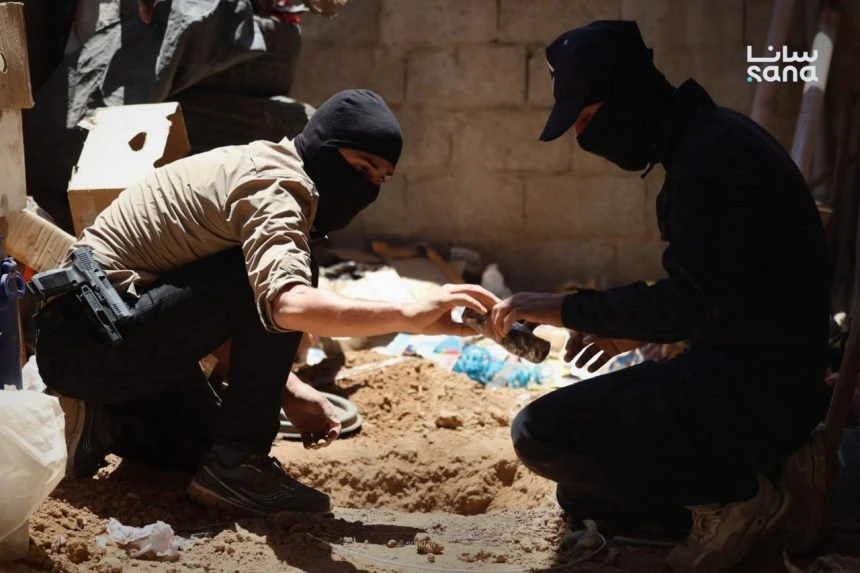
The ministry said interrogations of cell members led to the concealed storage site being uncovered, reported the Syrian Arab News Agency. Security forces seized a number of explosive devices allegedly prepared for use in a series of planned attacks. These were safely dismantled and defused by engineering teams.
The discovery came a day after authorities announced that all cell members allegedly responsible for the two explosions in Damascus had been arrested.
Brig. Gen. Ahmad Al-Dalati, commander of Internal Security in the Damascus countryside, said preliminary investigations indicated the group was affiliated with Daesh.
Speaking to Syria’s Al-Ekhbariya television, Al-Dalati said investigators launched an immediate inquiry after the bombings, reviewing surveillance footage that enabled authorities to identify one suspect and subsequently track down the remaining members of the network.
He said the arrests followed coordinated operations carried out by Internal Security forces and the General Intelligence Service’s Counterterrorism Directorate, with simultaneous raids in several districts of Damascus and its outskirts, including Al-Husseiniyah and Esh Al-Warwar.
Interior Minister Anas Khattab said the cell members responsible for the attacks were now in custody.
The July 7 explosions occurred near the Four Seasons Hotel and the Ministry of Tourism while French President Emmanuel Macron was visiting Damascus for talks with Syrian President Ahmed Al-Sharaa.
Macron had already left the hotel and was on his way to the presidential palace when the blasts occurred, killing one person and injuring 36 others.
Syrian authorities said one improvised explosive device was concealed in a rubbish container and another in a nearby parked vehicle. The Interior Ministry said two additional devices detonated while bomb disposal specialists were preparing to neutralize them.
Despite the attack, Macron continued with his visit, becoming the first European Union head of state to travel to Syria since the overthrow of former president Bashar Assad in late 2024. At a joint news conference, Macron said the bombings should not derail efforts to stabilize Syria, while Sharaa praised the French leader’s decision to proceed with the visit.
The Damascus bombings were the second such attack in the capital this month, following a July 2 explosion at a cafe that killed 10 people.
Although Daesh lost the territory it once controlled in Syria and Iraq by 2019, the group continues to operate through sleeper cells capable of carrying out deadly attacks. Syria’s new authorities have intensified counterterrorism operations as they seek to restore security following Assad’s ousting.