


RIYADH: Saudi Arabia’s water sector has attracted investments exceeding SR60 billion ($16 billion) as the Kingdom expands private-sector participation and strengthens water security, a top minister said.
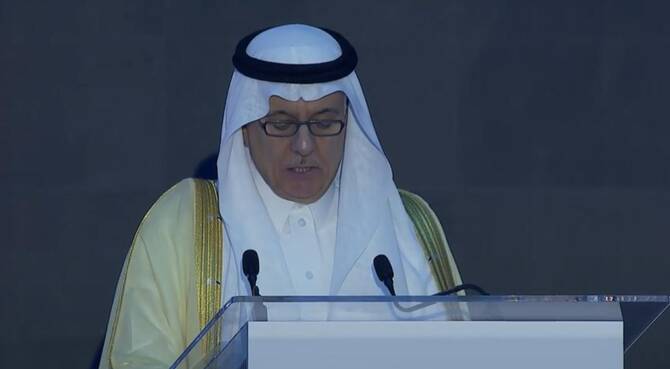
Environment, Water and Agriculture Minister Abdulrahman Al-Fadhli cited the figure at the inaugural Saudi Water Week in Jeddah but did not specify the period over which the investments were made.
He said the Kingdom has significantly expanded its desalination capacity, with daily production rising from 9 million cubic meters in 2016 to 16 million cubic meters in 2025, underscoring continued investment in water infrastructure and strengthening supply security.
This comes as Saudi Arabia continues to accelerate public-private partnerships across the water sector. The Saudi Water Partnership Co., the Kingdom’s primary water offtaker, manages a privatization investment portfolio valued at SR56 billion across 48 water and wastewater projects.
Speaking at the forum, Al-Fadhli said: “The clarity of regulatory frameworks, contracting, and the expansion of partnership models and their ownership have contributed to creating investments exceeding SR60 billion.”
He added: “These funds were used in the form of special costs to improve energy efficiency in the production system. This reflects the water sector’s shift from relying on expansion in production and services to a model that balances supply and demand, efficiency, and financial security.”
The minister said the Saudi water sector faced a range of natural, operational and institutional challenges, with the scarcity of renewable water resources posing the greatest obstacle, as the Kingdom is among the world’s most water-intensive countries and remains heavily reliant on non-renewable groundwater as its primary source.
“The sector also faces other challenges, including the growing global demand resulting from population growth, economic expansion, the diversification of water sources, and high usage rates, in addition to the financial costs of major projects and their financing,” he added.
Al-Fadhli said Saudi Arabia had addressed these challenges through a gradual reform approach, resulting in a more balanced water sector in terms of supply and demand, security of supply, financial efficiency, and environmental sustainability.
Saudi Arabia has steadily increased private-sector participation across desalination, water transmission, wastewater treatment and water reuse projects as part of its Vision 2030 transformation, with reforms aimed at improving operational efficiency, strengthening water security and ensuring sustainable resource management.
The Saudi Water Partnership Co. oversees the tendering and management of water and wastewater infrastructure projects, transmission systems, strategic storage facilities and dams. It also provides advisory services on privatization, project development and contract management.
Saudi Water Week also serves as a key milestone in preparations for the 11th World Water Forum, which will be held in Riyadh in 2027. The event is hosting the forum’s second stakeholder consultation meeting, reinforcing Saudi Arabia’s growing role in advancing international cooperation and shaping the global water sustainability agenda.


