


LONDON: Hundreds of migrants from Iraqi Kurdistan making the journey to the UK last year were kidnapped in Libya, tortured and threatened with forced organ removal, the BBC reported on Tuesday.
The more than 300 young men were detained by a militia that demanded a ransom of $5,000 each from their families and threatened to harvest their kidneys in case of late payment.
Photo evidence and verbal accounts recorded by the BBC suggest that some of the threatened operations took place.
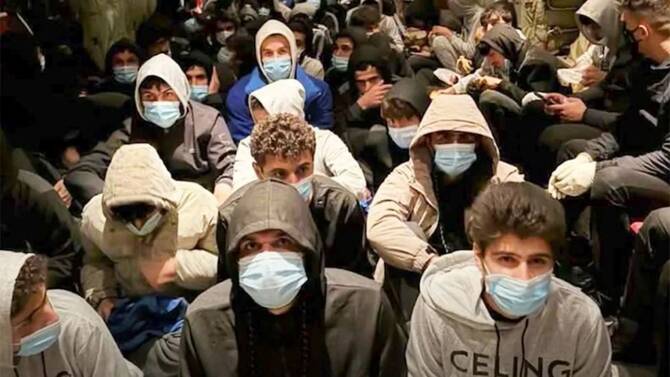
Almost 180 of the migrants were made to share a cell in extremely cramped conditions, survivors said. At least one died, and it is unclear how many remain in captivity in Libya.
The militia had intended to guide the migrants through dangerous territory in Libya to the Mediterranean for crossing.
But a dispute over payment erupted with Noah Aaron, an Iraqi-Kurdish people-smuggler who is serving a 10-year prison sentence in France for separate offenses.
Details of the kidnappings were revealed as the BBC investigated Kardo Jaf, a smuggler who was arrested last month.
Jaf and Aaron are believed to have worked together in the past, operating from a region in Iraqi Kurdistan known for its powerful smuggling rings.
Most of Libya is controlled by rival militias who provide permission for smugglers to transit. One of the militias took Aaron’s group hostage, claiming he had failed to pay for a previous arrangement.
More than 100 of the hostages have been flown home to Iraq. Dozens later came forward with photo evidence of their injuries, consistent with organ removal and torture.
Kurdish authorities fear that for those returned hostages whose families did not pay the ransom, their organs were harvested as an alternative.
Conditions in captivity were extremely harsh, with the migrants being fed one piece of bread per day — only if they paid — and forced to share a single toilet.
Hemn Merany, a senior official at the Kurdistan Regional Government’s Interior Ministry, said the risks of migration have failed to dent the flow to Europe.


