


RIYADH: RIYADH: Global energy investment is projected to rise 5 percent to a record $3.4 trillion in 2026 despite the ongoing conflict in the Middle East, with governments and companies accelerating efforts to diversify supply routes and strengthen energy security, according to an analysis.
The International Energy Agency said around $2.2 trillion is expected to flow into renewables, nuclear power, grids, storage, low-emissions fuels, efficiency and electrification this year, compared with approximately $1.2 trillion earmarked for oil, natural gas and coal.
The conflict has damaged energy infrastructure, disrupted trade routes and heightened concerns over the Strait of Hormuz, prompting both producers and consumers to reassess long-term investment strategies, the IEA said in its World Energy Investment 2026 report.
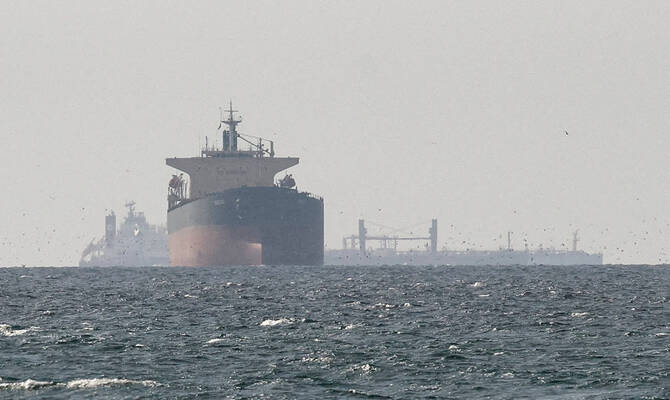
The ongoing uncertainties surrounding the Strait of Hormuz, a narrow channel along the Iranian coast, have disrupted the passage of oil and liquefied natural gas shipments since the US and Israel began airstrikes on Iran on Feb. 28.
“We are in the midst of the largest energy security crisis the world has ever faced – and I believe this will reshape investment strategies globally, with parallels to the major changes the energy world witnessed after the oil shocks of the 1970s,” said Fatih Birol, executive director of the IEA.
The report added that the ongoing conflict in the Middle East is reshaping global energy investment flows, with the region at the epicenter of both heightened risks and short-term revenue opportunities.
Infrastructure damage
The agency said more than 30 energy facilities across the Middle East have been damaged during the conflict, including refineries, petrochemical plants and upstream oil and gas production sites.
Among the most significant disruptions, two of the 14 liquefaction trains at Qatar’s Ras Laffan LNG complex were affected, with repairs potentially taking years. Around 20 tankers have also been struck.
“The total repair bill is difficult to establish with any precision, but is set to run into tens of billions of dollars. Higher domestic financing needs within the region could reduce outward capital flows, which have been a growing source of financing for infrastructure and energy projects in other regions,” said the IEA.
The conflict has also weighed on investment plans in countries heavily dependent on the Strait of Hormuz for exports.
For producers such as Iraq and Kuwait, which lack viable alternatives to the waterway, reduced export revenues have led to downward revisions in planned investments.
Saudi Arabia and the UAE, meanwhile, have been better positioned to manage disruptions due to infrastructure capable of bypassing the Strait.

We are in the midst of the largest energy security crisis the world has ever faced.
Fatih Birol, executive director of the IEA
In March, Moody’s said Saudi Arabia and Abu Dhabi could mitigate a closure of the Strait of Hormuz by rerouting a large share of crude exports through alternative pipelines.
Saudi Arabia’s East-West Pipeline, known as Petroline, links Abqaiq in the Eastern Province to the Red Sea port of Yanbu and has a nameplate capacity of 7 million barrels per day, equivalent to roughly 70 percent of the Kingdom’s OPEC+ quota.
Abu Dhabi’s Habshan-Fujairah Pipeline can transport up to 1.8 million bpd of crude to the Fujairah export terminal on the Gulf of Oman, representing around two-thirds of the emirate’s pre-conflict crude exports.
“We are already seeing intensified efforts by both producer and consumer countries to diversify trade routes and energy sources – such as advancing new pipelines and other supply infrastructure, on the one hand, and turning more to domestically available resources, on the other,” said Birol.
He added: “These range from renewables and nuclear to coal, oil and gas, in some cases – as well as broader measures to strengthen electricity systems, expand electrification and accelerate energy efficiency.”
The IEA said developing alternative routes will require significant investment in pipelines, ports and associated infrastructure, while reconstruction efforts are expected to combine immediate repairs with longer-term resilience measures.
Renewables gain momentum
The report highlighted growing interest among fuel-importing nations in domestically available energy sources, including renewables, nuclear power and, in some cases, coal.
Global investment in renewable power projects is forecast to reach approximately $665 billion in 2026, including $365 billion for solar power alone.
FASTFACT
The ongoing conflict in the Middle East is reshaping global energy investment flows, with the region at the epicenter of both heightened risks and short-term revenue opportunities.
Although growth in renewable investment has moderated after several years of rapid expansion, low-emissions sources still account for around 70 percent of total global power-generation investment.
Nuclear energy is also gaining momentum, with annual investment exceeding $80 billion and 78 gigawatts of new capacity under construction across 15 countries.
Oil and gas outlook
Despite higher crude prices boosting revenues for many producers, global oil supply investment is expected to fall for a third consecutive year to less than $500 billion in 2026.
The IEA said oil companies have largely maintained near-term spending plans, although investment expectations in the Middle East have been revised lower because of conflict-related disruptions.
“Alongside efforts to restore production capacity across the Middle East, a higher-for-longer price could boost spending on some short-cycle assets,” said the IEA.
It added: “Despite the conflict’s potential structural impacts on oil demand, companies are also anticipating renewed interest in longer-cycle projects as countries step up development of domestic oil and gas resources; new offshore capacity in Africa, Asia and Latin America; and onshore projects in Venezuela.”
Natural gas investment is proving more resilient, with spending expected to reach $330 billion in 2026, the highest level in a decade.
Qatar remains central to global LNG expansion plans, although the crisis has delayed the market-easing impact of new export capacity.
“The Middle East crisis has delayed the market-easing effects of LNG investments, and it has also renewed gas supply reliability and affordability concerns among price-sensitive importers,” said the IEA.
The rapid growth of artificial intelligence and data centers is emerging as a key driver of energy investment, particularly in the US.
Orders for new gas-fired power plants reached a 25-year high in 2025, with demand from data centers playing a significant role.
“The strong demand in the US and Middle East is limiting the availability of turbines for near-term deployment elsewhere in the world,” the IEA said.


