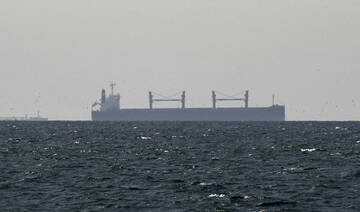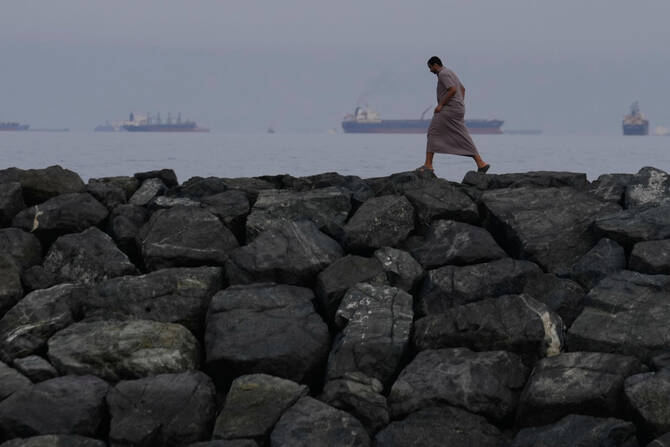

RIYADH: More than 320 oil and gas tankers were among at least 2,190 commercial vessels trapped in the Arabian Gulf on Wednesday by Iran’s blockade of the Strait of Hormuz, according to new marine data, as only limited, tightly controlled traffic continued through the vital waterway.
The stranded vessels included 12 very large gas carriers and 50 very large crude carriers. Only six vessels crossed the strait between Tuesday and Wednesday, maritime intelligence firm Kpler said, far below the roughly 120 ships that transit daily in peacetime.
Vessels that have crossed were routed along a corridor approved by Iran near Larak Island off its coast, with Lloyd’s List estimating at least 48 ships have used the passage since last week, most with links to Iran or countries maintaining friendly ties with Tehran.
Iran has imposed a chokehold on the strait — through which about 20 percent of the world’s oil and gas typically pass — since it was attacked by the United States and Israel on Feb. 28. Shipowners granted passage have faced fees of up to $2 million, dubbed the “Tehran toll booth,” although Iran has indicated it may waive such charges for vessels from friendly nations, including Malaysia.
Malaysian authorities said several tankers owned by companies such as Petronas, Sapura Energy and MISC were awaiting clearance to transit, with Tehran assuring Kuala Lumpur that no tolls would be imposed on its vessels due to strong bilateral ties. Officials cautioned, however, that passage could be delayed by the large number of ships anchored and awaiting approval.
China confirmed that at least three of its vessels had recently passed through the strait after coordination with “relevant parties,” with ship-tracking data showing two container ships exiting the Gulf on a second attempt while sailing in close formation at elevated speed. Analysts said they were the first non-Iranian container ships to leave the Gulf since the conflict began.
A handful of other vessels have also managed to exit, including a Greek-operated tanker carrying Saudi crude bound for India and several Indian-flagged liquefied petroleum gas carriers transporting critical supplies. Shipping sources said some crews have resorted to evasive measures such as sailing at night or disabling tracking transponders to reduce exposure to risks including mines, missiles and drones.
Despite these movements, energy exports from major producers such as Saudi Arabia and Qatar remain effectively halted, with hundreds of ships and an estimated 20,000 seafarers still stranded in and around the Gulf.
One Pakistani vessel carrying oil arrived at the southern port city of Karachi on Wednesday after transiting the strait, while another reached port via an alternative route. Officials said more shipments were expected in the coming weeks.
The crisis has prompted growing international diplomatic efforts. Britain is set to host talks with around 35 countries to explore ways to restore navigation, while China and Pakistan have jointly called for an immediate ceasefire and urged all parties to ensure the safe passage of commercial shipping.
US President Donald Trump on Wednesday reiterated his demand that Tehran lift the blockade, warning that Washington could launch severe military action if it does not comply.
(With AFP, Reuters)