

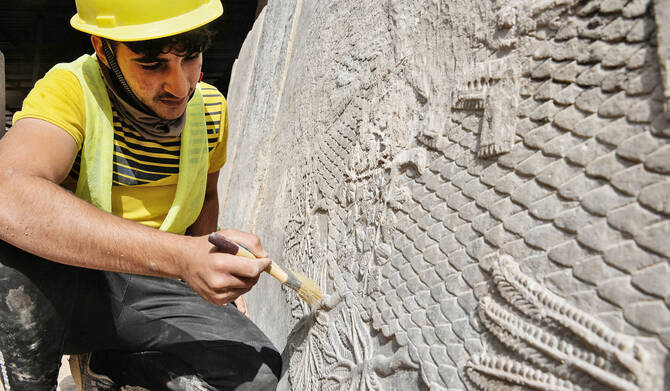

BAGHDAD: When you’re in a hole, it’s often said, stop digging. Unfortunately for international archeologists in Iraq, the Middle East war has forced them to do just that.
There are ruins in Iraq from some of the world’s earliest civilizations dating back thousands of years, and up to 60 teams would normally have been working on digs. But “all of these missions have left,” an government official in Baghdad said.
Adelheid Otto, 59, from the University of Munich, began a dig at ancient Shuruppak, modern-day Tell Fara, on Feb. 28 — the day the war began.
Her team of 18 German experts and students, and seven Iraqi archeologists, initially stayed. “We got kind of used to the rockets and drones above our heads,” she said.
But Iraqi officials urged them to depart, despite their discovery of ancient cuneiform tablets. Halting work was “like being a musician who can no longer play an instrument,” she said.
Chicago University professor Augusta McMahon was working at the 6,000-year-old Nippur site when the war began.
“We had pressure from a lot of different directions in terms of having to leave,” she said, and her eight-person team departed with an Iraqi escort on March 10.
In four decades in the region, it was her third evacuation. She had to leave Iraq in 2024, and Syria in 2011. “It is quite frustrating, along with everything else, I feel terribly bad for my Iraqi colleagues,” she said.


