

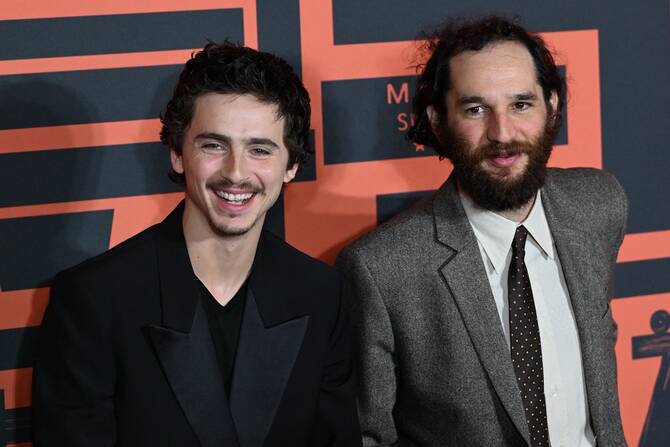

DUBAI: Director Josh Safdie’s manic character drama has had plenty of attention — and Oscar nominations (though no wins) — but GCC audiences have only recently had the chance to see if it lives up to the hype. It does: Safdie and his star Timothée Chalamet pull off the tricky high-wire act of presenting a hugely enjoyable movie centered on an essentially unlikeable (despite some attempt at redemption in the finale) lead character.
Chalamet plays Marty Mauser — a young Jewish man working in a New York shoe store in the early 1950s. Mauser is also a talented table tennis champion, convinced that the West is ready to take to the sport in the same way that Japan has, and patenting his own brand of ball — the Marty Supreme. Yep. Mauser does not lack confidence. He’s a brash, motormouthed hustler out for himself, laser-focused on his dream of becoming world champion. If his dream can only be realized by letting down — or, worse, actively exploiting — his friends and family, Marty’s not going to let that bother him. He’s charismatic, yes, but he’s also childish, crude, narcissistic, and prone to lashing out when he doesn’t get his way or feels that others don’t think he’s as great as he does. It may be set in the 1950s, but “Marty Supreme” is very much of the moment.
Chalamet is utterly convincing in a role that interestingly mirrors his “Dune” character Paul Atreides. While that character is driven by the belief of others in his messianic powers, Marty is driven solely by his own often-misguided belief in his own infallibility. And he can’t fathom why those around him don’t have the same faith in what he believes to be his destiny.
The supporting cast, particularly the two women committing adultery with Mauser — his childhood friend Rachel (Odessa A’zion) and Kay Stone (Gwyneth Paltrow), a former Hollywood starlet coming out of retirement for a Broadway run — are equally excellent.
The real star, though, is Safdie, who manages to keep the reins on Chalamet’s firecracker energy and the story’s breathless pace so that what could easily have dissolved into a farcical mess instead becomes a joyful and revealing study of ambition and talent, fragile and unchecked ego, and our ability to blind ourselves to our own flaws and the flaws of those we love. It’s a wild ride.


