- Clashes between the neighbors have killed dozens of people and displaced thousands on both sides since last month
- The organizers have urged Afghan tribal elders to convene a similar jirga to urge the Taliban to ease the tense situation
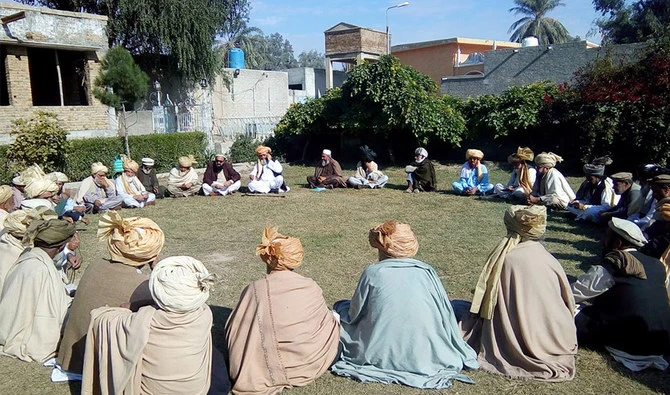
PESHAWAR: A peace jirga, comprising political, religious and tribal elders, will meet in the northwestern Pakistani city of Peshawar on Tuesday to urge Pakistan and Afghanistan to de-escalate tensions between them and work toward peace.
The development follows weeks of clashes between the neighbors, the most severe between them in decades, which have killed dozens of people and displaced thousands. Islamabad accuses Afghanistan of providing safe havens to militants for attacks inside Pakistan, Kabul denies the allegation.
The fighting has seen repeated cross-border clashes as well as airstrikes inside Afghanistan. Both sides declared a temporary truce before the Muslim holiday of Eid Al-Fitr, following mediation by Saudi Arabia, Turkiye and Qatar. The truce expired last week and renewed fighting erupted on Wednesday.
The Advocacy for Sustainable Policy and Implementation Reforms (ASPIRE), a Peshawar-based think tank, has organized the jirga along with Qaumi Islahi Tehreek (QIT) social movement, which will be attended by political and religious leaders, tribal elders, members of civil society and traders.
“The jirga has invited members of political parties and tribal elders, along with business community representatives and others from Khyber Pakhtunkhwa and tribal districts [bordering Afghanistan],” Arbab Khizar Hayat, one of the organizers, told Arab News, adding they would present suggestions to ease prevailing tensions.
“Invitation to the ruling political party in Khyber Pakhtunkhwa has also been given.”
The organizers also urged the Afghan elders to convene a similar council to urge the Taliban government to de-escalate tensions with Pakistan, according to Hayat.
Tension between Afghanistan and Pakistan has been high for months. The most recent fighting has upended a Qatari-mediated ceasefire in October that had halted earlier clashes between the two sides that had killed dozens of civilians, security forces and militants. The two sides differ widely on the casualty figures.
The fighting in February began when Afghanistan launched a cross-border raid into Pakistan, saying it was in retaliation for deadly Pakistani airstrikes on Afghan border areas that it said had killed only civilians. Islamabad had said the strikes were targeting militants.
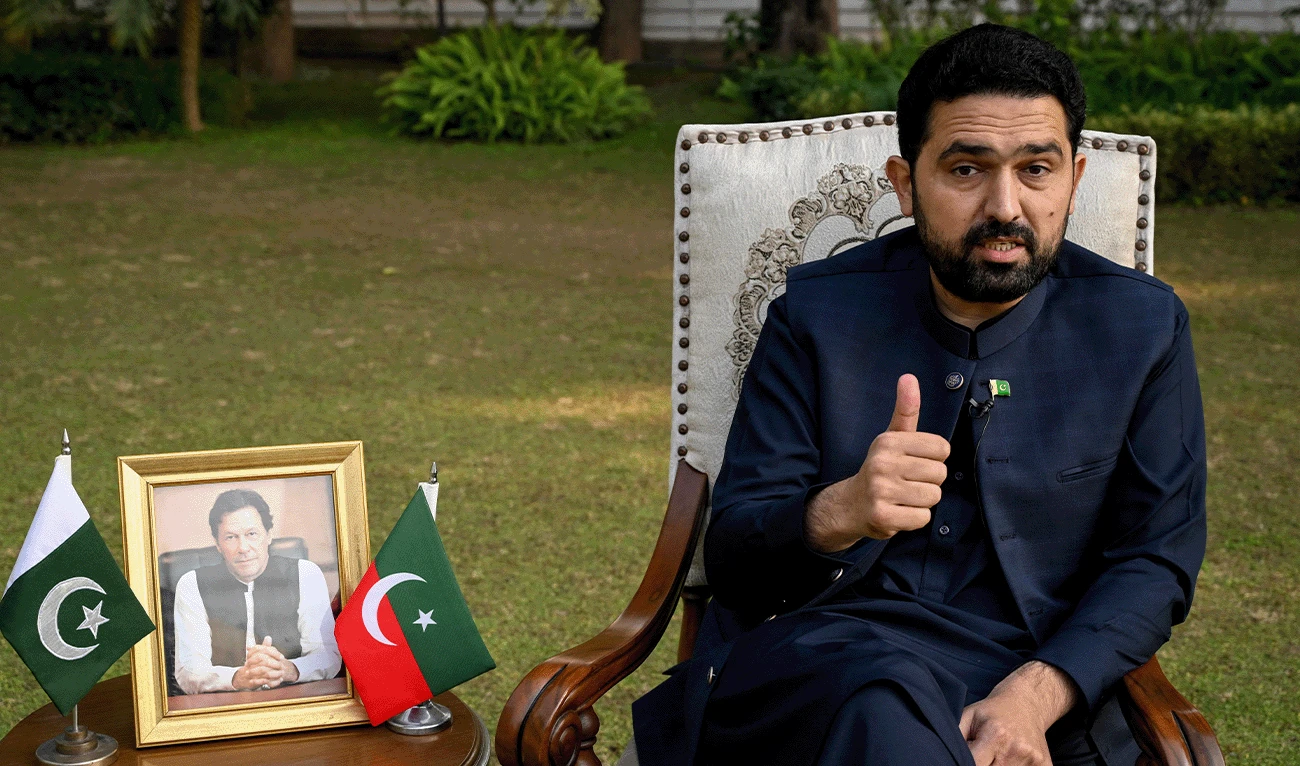
Reached for a comment on the development, Faisal Khan Tarakai, labor minister in Pakistan’s Khyber Pakhtunkhwa (KP) province that borders Afghanistan, said they welcomed “every step taken toward peace.”
“Khyber Pakhtunkhwa is already facing security issues and Afghanistan is our neighboring country and we want the issues to be resolved through talks,” he said.
“Wars have been fought for a long time. We need to give chance to talks and we need to have positive relationships with Afghanistan, for which this jirga will hopefully play its role.”
Pakistan’s KP province, which borders Afghanistan, has been grappling with a surge in militancy since the Taliban returned to power in Kabul in 2021, with attacks frequently targeting security forces, law enforcers, government officials and civilians. The provincial government has consistently backed talks to resolve the issue.
Last year, the KP government said it would hold direct talks with Kabul and send an emissary to Afghanistan to arrange a meeting to resolve outstanding issues. The central government led by Prime Minister Shehbaz Sharif said KP’s move amounted to a “direct attack on the federation” as no province could open talks with a foreign country, which was the jurisdiction of the government at the center.
Lehaz Ali, a KP-based journalist who has covered militancy ad Afghanistan-Pakistan relations, expected the jirga to hardly yield any results.
“The point on which the jirga has been called is not the subject of the provincial government, but of the central government,” he told Arab News.
“Right now, there is no working relationship of federal and the provincial government, so it will be very hard for the provincial government to convince the federal government on the importance of the issues, which will be discussed by the jirga.”
Ali said the jirga members could address the issue of closure of terminals and tensions along the border, but it would be hard for them to convince both governments to address the problems.
“It should be awaited and seen if Afghanistan side of the peace jirga would agree with Pakistan side of the jirga,” he added.