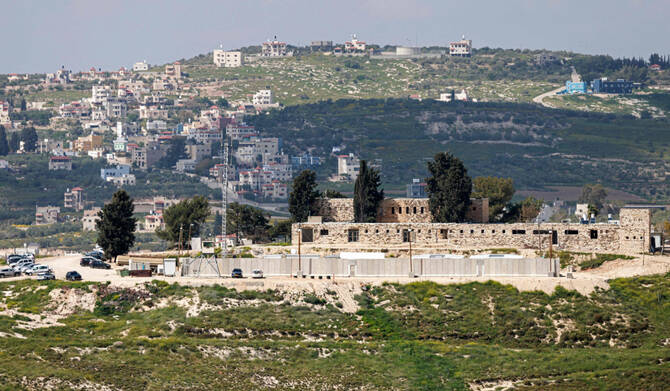

RAMALLAH: Israel has approved the establishment of 34 new settlements in the occupied West Bank, according to Israeli media reports and the watchdog Peace Now, which said the decision was taken “secretly” in early April.
“The security Cabinet secretly decided to establish 34 new settlements,” Peace Now said in a statement released.
The 34 settlements come on top of 68 others already approved since Prime Minister Benjamin Netanyahu’s right-wing government came to power in 2022.
The decision has not been officially published by any government body, and the Defense Ministry, which oversees settlements in the occupied West Bank, declined to respond to AFP’s questions.
BACKGROUND
Settlement expansion has been a policy under successive Israeli governments since 1967, but has accelerated significantly under the current coalition.
“We are not addressing this issue,” a spokesperson for the ministry said.
According to news channel i24News, 10 of the 34 settlements are already existing outposts, which are illegal under Israeli law, but will now be retroactively legalized under the decision. The remaining 24 are yet to be built.
All settlements are illegal under international law.
News website Ynet reported that military chief Eyal Zamir warned during the security Cabinet meeting on April 1 that the army could “collapse” due to increasing demands on its manpower.
That included the legalization of dozens of outposts, granting them official settlement status and therefore protection by Israeli troops.
Israel has occupied the West Bank since 1967.
Excluding East Jerusalem, more than 500,000 Israelis now live there in settlements, among some 3 million Palestinians.
Settlement expansion has been a policy under successive Israeli governments since 1967, but has accelerated significantly under the current Netanyahu-led coalition, widely regarded as one of the most right-wing in Israel’s history.
Rights groups say approvals of new settlements, land seizures, and settler violence have further increased since the start of the Gaza war in October 2023.
Meanwhile, tears, embraces, and prayers filled the courtyards of Al-Aqsa Mosque compound in occupied Jerusalem as worshippers returned to the holy site following 40 days of closure imposed by Israeli authorities.
At Bab Al-Asbat, one of the historic gates of the mosque, an elderly man from Jerusalem performed a prostration of gratitude, a scene that quickly spread across social media and symbolized the return of life to the holy site.
Since Feb. 28, the mosque compound and the surrounding Old City of Jerusalem have experienced an unprecedented shutdown not seen since the Six-Day War.
During that period, thousands of Palestinians were prevented from reaching the mosque, and the usually crowded markets of the Old City were left largely empty.
When the mosque reopened, emotional scenes unfolded as worshippers crossed its gates.
Some fell to the ground in prayer, while others distributed tissues to fellow worshippers, wiping away tears of joy after weeks of being barred from entering the compound.
Worshippers described the return to the mosque as a powerful reminder that Jerusalem is not merely a political issue but a deeply rooted part of Palestinian religious life and identity.
However, the celebrations were quickly overshadowed by tightened security measures.
At the same time, Israeli forces set up checkpoints at the mosque’s gates, checked IDs, and detained or removed several young men from the compound.