

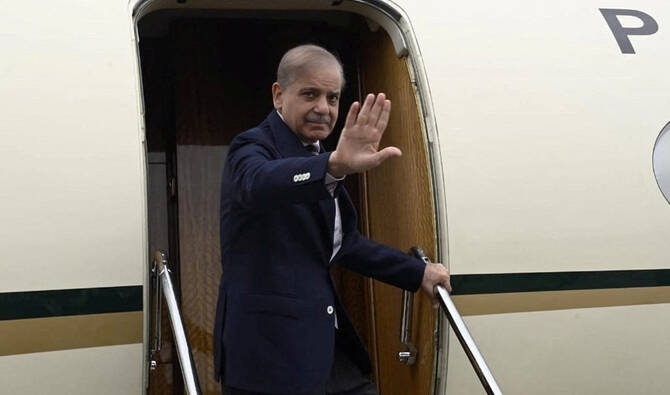

ISLAMABAD: Pakistan has launched a flurry of diplomatic activity to defuse Middle East tensions arising from the US‑Israel war on Iran, with Prime Minister Shehbaz Sharif and his deputy engaging top officials from Malaysia, Türkiye and Jordan in talks aimed at promoting dialogue and restraint.
The development follows international media reports claiming that Iran refused to engage in direct talks with the US and rejected its 15-point peace proposal, which included missile restrictions, sanctions relief, civilian nuclear cooperation, a rollback of Iran’s nuclear program, International Atomic Energy Agency monitoring and full access through the Strait of Hormuz.
Iran has been in touch with Pakistani, Turkish and Egyptian officials through back‑channel contacts that are trying to facilitate potential peace talks between the warring countries, according to the reports.
In a statement on X, Sharif said he received a call from Malaysian Prime Minister Anwar Ibrahim to discuss working together to end the ongoing hostilities in the Middle East.
“I expressed my deep appreciation to him for his strong support for Pakistan’s sincere efforts to advance de-escalation and dialogue in the Middle East,” he said in a social media post on Thursday.
“We remain firmly committed to working together and also with other brotherly countries for ending ongoing hostilities and fostering peace and stability in the region.”
Meanwhile, Deputy Prime Minister Ishaq Dar held a phone call with Turkish Foreign Minister Hakan Fidan to discuss sustained diplomatic efforts to de‑escalate tensions between the US, Israel and Iran.
“DPM/FM underscored the importance of sustained diplomatic efforts for de-escalation and reaffirmed Pakistan’s commitment to peace and regional stability,” the foreign office said in a post on X. “Both sides agreed to remain in close contact.”
Dar also spoke with Jordan’s Deputy Prime Minister and Foreign Minister Ayman Safadi about the ongoing Middle East situation, emphasizing the need for urgent de‑escalation.
“Both leaders agreed to remain in close contact on evolving developments,” the foreign office said.
Islamabad has positioned itself as a potential intermediary, reportedly conveying messages between Washington and Tehran to create space for dialogue.
The US and Israel struck Iran on Feb. 28, citing insufficient progress on nuclear talks, though mediator Oman said significant headway had been made. Since then, Iran has hit countries hosting US bases, targeted Gulf energy infrastructure, and effectively closed the Strait of Hormuz, a key conduit for a fifth of the world’s oil and liquefied natural gas.
The US said it was intensely bombing Iran before President Donald Trump gave it a deadline to reopen the waterway until Mar. 27.
Meanwhile, the Pentagon has ordered thousands of additional troops to the region, in addition to the 2,500 Marines already en route.


