

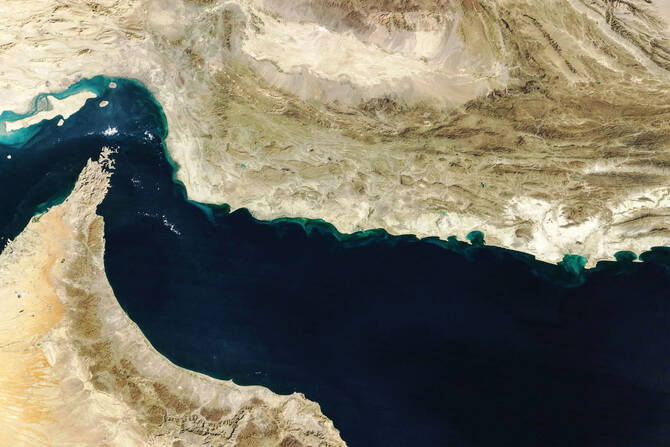

LONDON: Britain and France will chair military talks this week involving about 30 nations to form a coalition to reopen the Strait of Hormuz, a UK defense official said on Wednesday.
Britain, France, Germany, Italy, Japan and the Netherlands said last week they were ready “to contribute to appropriate efforts to ensure safe passage through the Strait of Hormuz.” A further 24 countries then endorsed this statement.
The “expectation is that there will be a further meeting, military-to-military, the chiefs of defense staff of the wider group that has now signed ... later this week,” the official said.
The chief of the defense staff of Britain’s armed forces, Richard Knighton, chaired a meeting of the initial six countries plus Canada on Sunday, The Times reported.
The British defense official said other countries would also now be potentially invited.
“We recognize that we have a role to play in bringing together this coalition and helping to lead the rest of the world to develop a plan to ensure that we can reopen the Strait of Hormuz as quickly as possible,” the official said.
Knighton was working “very closely with Fabien Mandon,” the French armed forces chief of staff, the official added.
The Times said the UK has offered to host a later summit in the southern naval port of Portsmouth or London to hammer out details and build the coalition, to ensure the waterway could be reopened “as soon as the conditions are right.”
Iran has virtually closed the vital strait since the US-Israeli strikes that started the war on February 28, causing global oil and gas prices to soar.
An international summit could seek to tackle the issue of how to get rid of mines, which several countries have accused Tehran of laying in the strait.
A fifth of the world’s oil and liquefied natural gas passes through the strait in peacetime.
Iran has said “non-hostile vessels” can transit the Strait of Hormuz if they meet safety and security regulations, according to a statement released to the International Maritime Organization.
But the statement shared on Tuesday by the IMO stressed that “vessels, equipment and any assets belonging to the aggressor parties — namely the US and the Israeli regime — as well as other participants in the aggression do not qualify for innocent or non-hostile passage.”
Meanwhile, oil prices tumbled and stock markets rallied on reports that the US had sent a peace plan to Iran.
After nearly four weeks of conflict, investors jumped on signs that hostilities could be winding down, with the safe-haven dollar losing support.
“Oil prices have moved lower ... offering some relief to equities that had been weighed down by worries over inflation,” noted Matt Britzman, senior equity analyst at Hargreaves Lansdown.
“It’s still a highly fluid situation. Trying to call how the rest of the week plays out would be unwise.”


