
RIYADH: Far from their families, expatriate women in Saudi Arabia are marking Eid Al-Fitr in ways that blend their own traditions with local customs.
In the days leading up to Eid, Jingyi Zhao keeps in touch with her family in China through daily video calls, sharing glimpses of Ramadan decorations in her residential compound while following preparations back home.
Zhao, CEO of DeiNai AI’s KSA branch, said she will not be alone on Eid. “Many of my Saudi friends invite me to their homes, happily saying they would ‘adopt’ a Chinese guest as part of the family to celebrate together. This strong sense of community has greatly eased my homesickness.”
She is one of thousands of expatriate women spending Eid in the Kingdom, carrying the traditions of their home countries while remaining fully open to experiencing Saudi Eid customs.
Living near the Two Holy Mosques gives her Eid an exceptional spiritual depth. Zhao added: “Living here adds an unparalleled spiritual dimension to Eid. I can feel the spiritual energy at the heart of the Muslim world.
“This proximity has also led me to become a kind of travel adviser to my Chinese Muslim friends who come for Umrah and Hajj.”
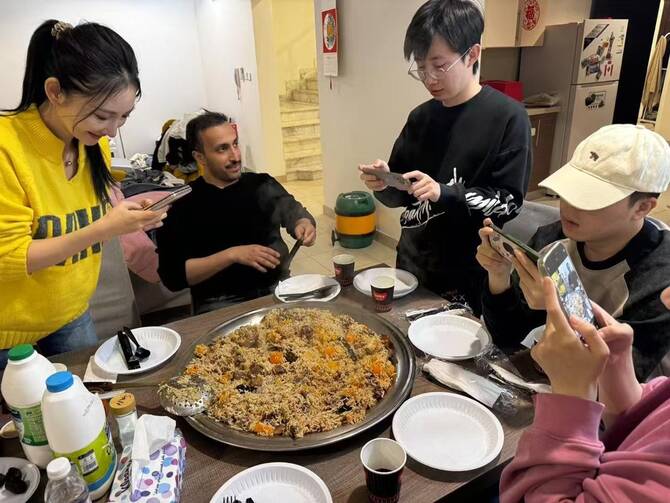
In her kitchen, the two cultures come together. “We blend both cultures — we prepare traditional Chinese dishes, and we have also learned to make sambosa and kabsa.”
Even her company has joined in, using artificial intelligence tools to create a special Eid greeting video themed around shawarma.
Commenting on the commercial rush ahead of Eid, Zhao said: “We provide marketing services to Chinese merchants, and their sales increase significantly as Eid approaches.”
In the border town of Khafji, near Kuwait, Ana Mailova from Georgia enjoys a different Eid experience.
She chose to spend the holiday with her Saudi friend and the occasion proved to be more than just a visit.
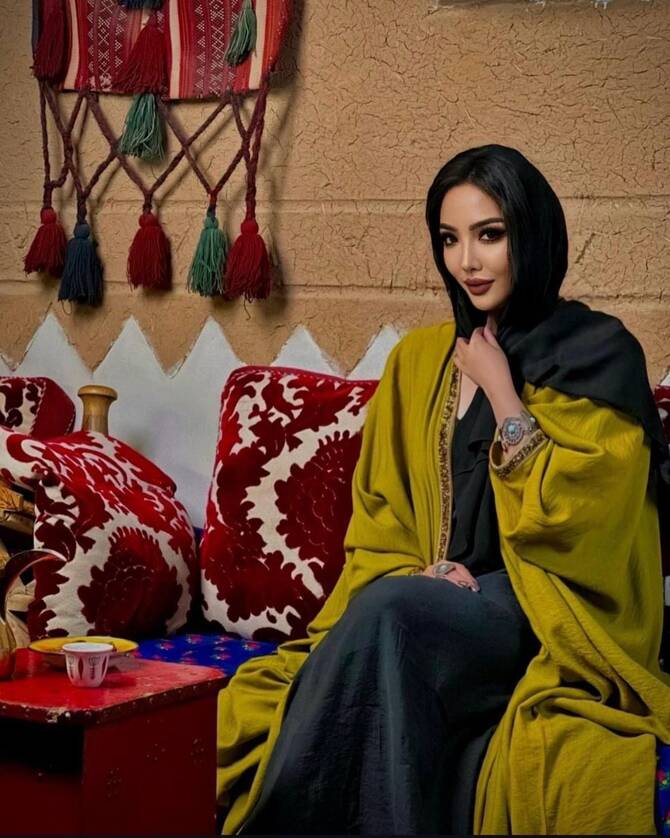
“I don’t only uphold my own traditions; I merge them with Saudi customs,” she told Arab News. “I prepare Eid sweets like maamoul and ghraybeh with my friends, and I wear the Saudi family-occasion attire, the jalabiya.”
Staying in touch with my family in Georgia remains part of the ritual, but celebrating with friends in Saudi Arabia gives the holiday a unique feel. “The highlight is the preparations and celebrations. I love how people exchange gifts and greetings. The Eid giveaways at the prayer ground create an atmosphere like no other.”
When comparing, Ana favors celebrating Eid in Saudi Arabia: “Here, the celebration feels official, with remarkable events and a festive atmosphere unlike anywhere else.”
For Kazakh expatriate Bayan Kairat, CCO at Q Motors Saudi, Eid is an opportunity to connect memories with the present. For her, food serves as a bridge to the past.
“As a Kazakh, food is central to our celebrations. During Eid, I sometimes prepare dishes from my homeland, such as beshbarmak or baursak, which remind me of my family,” she told Arab News. “Living here, however, has made me fall in love with Saudi Eid dishes like maamoul and ouzi.”
What stands out most to Kairat is the spiritual atmosphere in Saudi Arabia. “Being in the land of the Two Holy Mosques gives Eid profound significance.
“Joy, generosity, and unity are felt everywhere. I also enjoy seeing people of different nationalities celebrate together.”
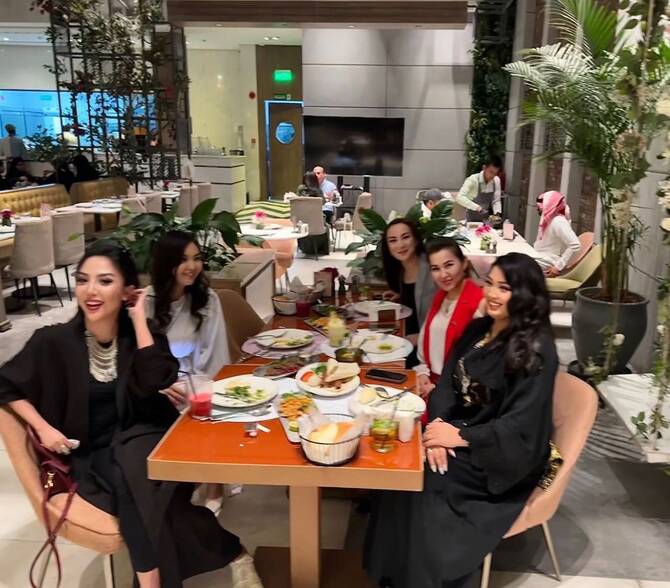
A defining aspect of her experience is that the Kazakhstan Embassy in Saudi Arabia organizes gatherings for Kazakh nationals, allowing her to feel she is celebrating with two homelands at once.
“I feel like I have two homes celebrating Eid with me — Kazakhstan and Saudi Arabia. Experiencing both cultures together is truly wonderful,” Kairat said.