BANGKOK: A senior FBI official said on Tuesday that the United States was “committed to leading the fight” against multi-billion dollar Southeast Asian fraud factories targeting Americans.
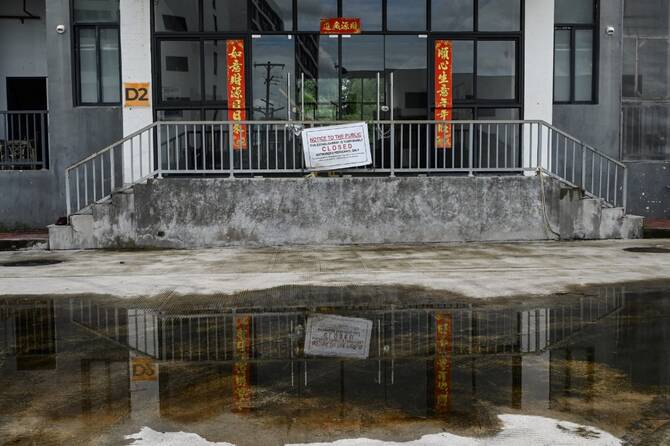
Scott Schelble, Deputy Assistant Director of the FBI’s International Operations Division, was speaking at a press briefing after traveling to Thailand, Cambodia, and Vietnam, where he visited several scam centers.
“It is impossible to fully grasp the magnitude of these operations until you see them yourself,” he said, referring to “industrial-scale” Chinese-led fraud factories that have proliferated across the region.
“Criminals should not believe that borders will protect them if they target Americans,” he said. “We know where you are and we are coming for you.”
Chinese organized crime syndicates are targeting Americans with scams “every day” through “sophisticated, well-resourced criminal enterprises that exploit borders, technology, and vulnerable people to generate enormous profits,” Schelble said.
The groups are “not bound by laws or geographical borders” and operate with “a degree of impunity because they take advantage of countries’ respective laws,” he said.
The FBI has deployed agents to work with Thai police on a joint anti-scam taskforce which has disrupted networks, identified victims, and targeted supporting financial infrastructure, Schelble said.
The FBI has partnered with Cambodian police in the past and hopes to leverage previous success to cooperate on scam compounds, he said, adding that he also had “fruitful discussions” with Vietnam.
Scam centers are a regional issue and require regional cooperation, Schelble said. “The key is to make each area an inhospitable place for these compounds to operate.”


![]()
US ‘leading the fight’ against Southeast Asian scam compounds, FBI official says
Short Url
https://arab.news/6dzuy
US ‘leading the fight’ against Southeast Asian scam compounds, FBI official says
- According to a senior FBI official, Chinese organized crime syndicates are targeting Americans with scams “every day”

Latest updates


© 2026 SAUDI RESEARCH & PUBLISHING COMPANY, All Rights Reserved And subject to Terms of Use Agreement.