

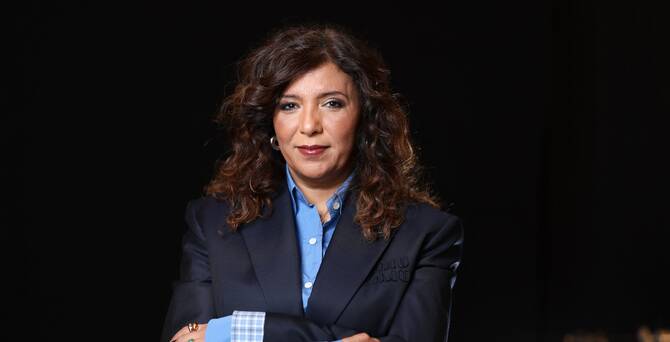
Director Kaouther Ben Hania rejects Berlin honor over Gaza

The director was due to receive the Most Valuable Film award at the Cinema for Peace gala, held alongside the Berlinale, but chose to leave the prize behind. (AFP)
Short Url
Updated 20 February 2026
Follow

Director Kaouther Ben Hania rejects Berlin honor over Gaza

DUBAI: Kaouther Ben Hania, the Tunisian filmmaker behind “The Voice of Hind Rajab,” refused to accept an award at a Berlin ceremony this week after an Israeli general was recognized at the same event.

The director was due to receive the Most Valuable Film award at the Cinema for Peace gala, held alongside the Berlinale, but chose to leave the prize behind.

On stage, Ben Hania said the moment carried a sense of responsibility rather than celebration. She used her remarks to demand justice and accountability for Hind Rajab, a five-year-old Palestinian girl killed by Israeli soldiers in Gaza in 2024, along with two paramedics who were shot while trying to reach her.


A post shared by @artists4ceasefire

“Justice means accountability. Without accountability, there is no peace,” Ben Hania said.

“The Israeli army killed Hind Rajab; killed her family; killed the two paramedics who came to save her, with the complicity of the world’s most powerful governments and institutions,” she said.

“I refuse to let their deaths become a backdrop for a polite speech about peace. Not while the structures that enabled them remain untouched.”

Ben Hania said she would accept the honor “with joy” only when peace is treated as a legal and moral duty, grounded in accountability for genocide.


Arab films win at Berlin International Film Festival

Updated 22 February 2026
Follow

Arab films win at Berlin International Film Festival

DUBAI: Two films by Arab filmmakers won top prizes at the 76th edition of the Berlin International Film Festival, where filmmakers used their time on stage to advocate for a free Palestine.

Lebanese director Marie-Rose Osta, accepting the Golden Bear for best short film for “Someday, a child,” denounced Israeli bombings in her home country and what she described as a “collapse of international law” in the region.

“In reality children in Gaza, in all of Palestine, and in my Lebanon do not have superpowers to protect them from Israeli bombs,” she said. “No child should need superpowers to survive a genocide empowered by veto powers and the collapse of international law … If this Golden Bear means anything, let it mean that Lebanese and Palestinian children are not negotiable,” she said.

Abdallah Al-Khatib, winner of the best documentary prize for “Chronicles from a Siege,” brought a Palestinian flag on stage, and called out the German government for what he called its “complicity” in Israeli “genocide” in Gaza.  

“We will remember everyone who stood with us, and we will remember everyone who stood against us, against our right to live with dignity, or those who chose to be silent. Free Palestine from now until the end of the world,” he said.

Opening the awards ceremony, Berlinale director Tricia Tuttle addressed the controversy surrounding this year’s festival, as artists called out Berlinale for not taking a stance on Palestine. She described this year’s festival as having “felt raw and fractured,” with many attendees arriving in Berlin “with grief and anger and urgency about the world that takes place outside the cinema walls.

“That grief, that anger and that urgency is real and belongs in our community. We hear you,” Tuttle said.