

Pakistan promises investor support as Indonesian investment minister visits

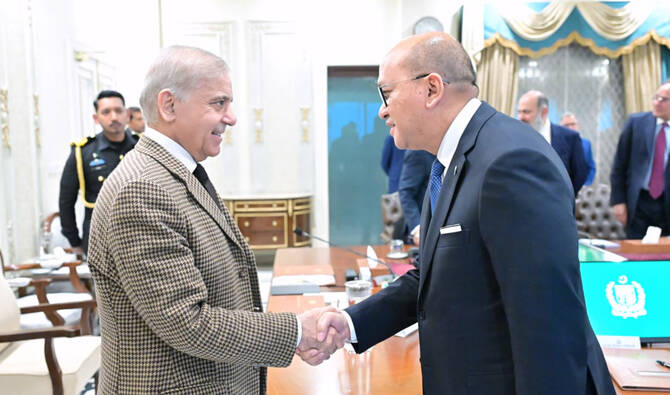
Minister of Investment and Downstream Industry of Indonesia, Rosan P. Roeslani (Right) meeting with Prime Minister Shehbaz Sharif (Left) in Islamabad on February 10, 2026. (Government of Pakistan/X)
Short Url
Updated 10 February 2026
Follow

Pakistan promises investor support as Indonesian investment minister visits

  • Islamabad points to regulatory reforms, Special Economic Zones during high-level talks
  • Meeting follows recent uptick in Pakistan-Indonesia political and economic exchanges

ISLAMABAD: Pakistan’s investment minister Qaiser Ahmed Sheikh said on Tuesday the country was fully committed to providing support to investors in a meeting with his Indonesian counterpart Rosan Roeslani, as Islamabad seeks to improve the ease of doing business.

The talks come amid a recent uptick in high-level engagement between Pakistan and Indonesia.

In December last year, Indonesian President Prabowo Subianto made a rare state visit to Pakistan, with both sides signing multiple agreements and memoranda of understanding covering areas such as higher education, scholarships, small and medium enterprises, archives cooperation, anti-narcotics efforts, health and halal trade.

“The Board of Investment remains fully committed to facilitating investors, providing end-to-end support and guidance,” Sheikh said, according to an official statement.

Sheikh told the visiting Indonesian minister that the government was prioritizing investment-led growth and had launched regulatory reforms aimed at making Pakistan a more business-friendly destination.

He cited the implementation of the Asaan Karobar Act and outlined investment opportunities across multiple sectors, including Special Economic Zones, where more than 6,000 acres of land are available.

Officials said a range of potential investment projects were presented to the Indonesian delegation during the meeting.

Later in the day, Roeslani also met Prime Minister Shehbaz Sharif, during which the two sides agreed to accelerate efforts to upgrade their existing preferential trade agreement into a Comprehensive Economic Partnership Agreement (CEPA) by 2027.

Pakistan and Indonesia have in recent months signaled interest in expanding economic cooperation, with officials on both sides highlighting opportunities in trade, investment, defense collaboration and technology as part of a broader push to strengthen bilateral ties.


-End


Pakistan-origin fintech holds workforce pay workshop in Saudi Arabia

Updated 6 sec ago
Follow

Pakistan-origin fintech holds workforce pay workshop in Saudi Arabia

  • Riyadh event promotes earned wage access to support employee liquidity
  • Abhi Saudi says flexible pay models can boost retention and productivity

KARACHI: Pakistan-origin fintech Abhi Saudi hosted a workforce-focused workshop in Riyadh, the company said in a statement on Thursday, bringing together senior business leaders to discuss employee financial well-being and flexible pay solutions as Saudi Arabia advances reforms under Vision 2030.

Abhi, a financial technology firm founded in Pakistan and operating in the Gulf through Alraedah Digital Solutions, provides earned wage access (EWA) and small and medium enterprise (SME) financing solutions.

EWA allows employees to withdraw a portion of their already-earned salary before the official payday, helping them manage short-term liquidity needs without relying on traditional credit.

Abhi partners with thousands of firms across the region, offering payroll-linked financial services to employers and their staff.

“The event focused on modern workforce strategies and flexible pay solutions, highlighting how financial well-being initiatives such as Earned Wage Access (EWA) are supporting improved employee engagement, retention, and productivity while aligning with the objectives of Saudi Vision 2030,” the company said.

The “Wages Well-being Workshop” brought together professionals from sectors including telecommunications, banking, consulting and human resources to examine how changing workforce expectations are influencing compensation models and employer responsibilities amid the Kingdom’s broader economic transformation.

According to Abhi, discussions centered on the organizational impact of rigid salary structures, the link between financial stress and workplace performance and how flexible pay models could enhance financial stability without adding operational costs for employers.

Saudi Arabia’s Vision 2030 reform agenda seeks to diversify the economy, strengthen private-sector participation and modernize labor market practices, with financial inclusion and workforce productivity forming key pillars of the strategy.