

 Shaping the future of defense integration
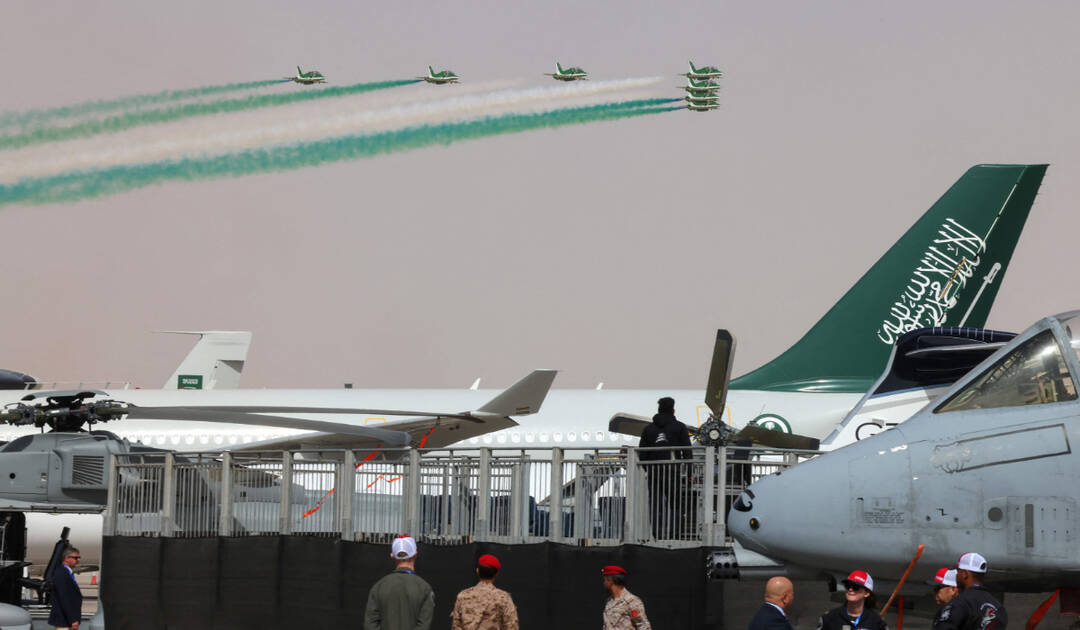

At the opening of a major international exhibition, it is tempting to talk in numbers: How many exhibitors? How many countries? How many square meters of floor space? Those figures matter, of course. But they are not the reason gatherings like the World Defense Show exist, nor are they how their value should ultimately be judged.
The real question is simpler, and harder: What happens when people who rarely sit in the same room are given the space and the structure to engage properly?
As the World Defense Show opens in Riyadh on Sunday, participants from across the globe are arriving with different priorities, perspectives and expectations. Governments, armed forces, industry leaders, innovators and emerging companies will all bring their own questions. Our role as organizers is not to provide the answers, but to design the environment in which the right conversations can happen.
As the World Defense Show opens in Riyadh on Sunday, participants from across the globe are arriving with different priorities, perspectives and expectations
That distinction matters. World Defense Show was conceived not as a static showcase, but as a working platform — one where interaction is intentional, not incidental: where local and international companies are integrated into the same exhibition environment, rather than segmented by labels or regional boundaries; and where engagement is supported through curated programs, structured delegation visits and spaces designed for dialogue, formal and informal alike.
Riyadh is an important setting for this kind of convening. The city sits at the intersection of global regions, industries and ambitions. It is a place increasingly defined by connection — between markets, ideas and people — and that spirit is reflected in the way the show has been built. Over the coming days, the focus will not simply be on what is displayed, but on who meets whom, what discussions begin and which relationships take root.
Success, in that sense, cannot be measured only at the closing of the doors. Yes, participation matters. International representation matters. Repeat attendance matters. But the most meaningful outcomes often appear later — in partnerships explored further, in collaborations developed quietly over time, and in networks strengthened well beyond the exhibition halls.
Looking ahead, the role of global exhibitions is changing. As technologies evolve and systems become more interconnected, the value of platforms that bring diverse actors together across domains and disciplines will only grow. For World Defense Show, the objective is not growth for its own sake, but relevance: remaining aligned with how industries work, how collaboration happens and how progress is actually made.
So, as Riyadh welcomes the world today, the invitation is straightforward: Come prepared not just to observe, but to engage — not just to present, but to listen. Because the future is rarely shaped in isolation — it is shaped when people meet, exchange perspectives and decide to build something together.
• Andrew Pearcey is CEO of World Defense Show, held in Riyadh from Feb. 8-12.


